


Table of Contents
Introduction: The New Era of Smart Heating Technology
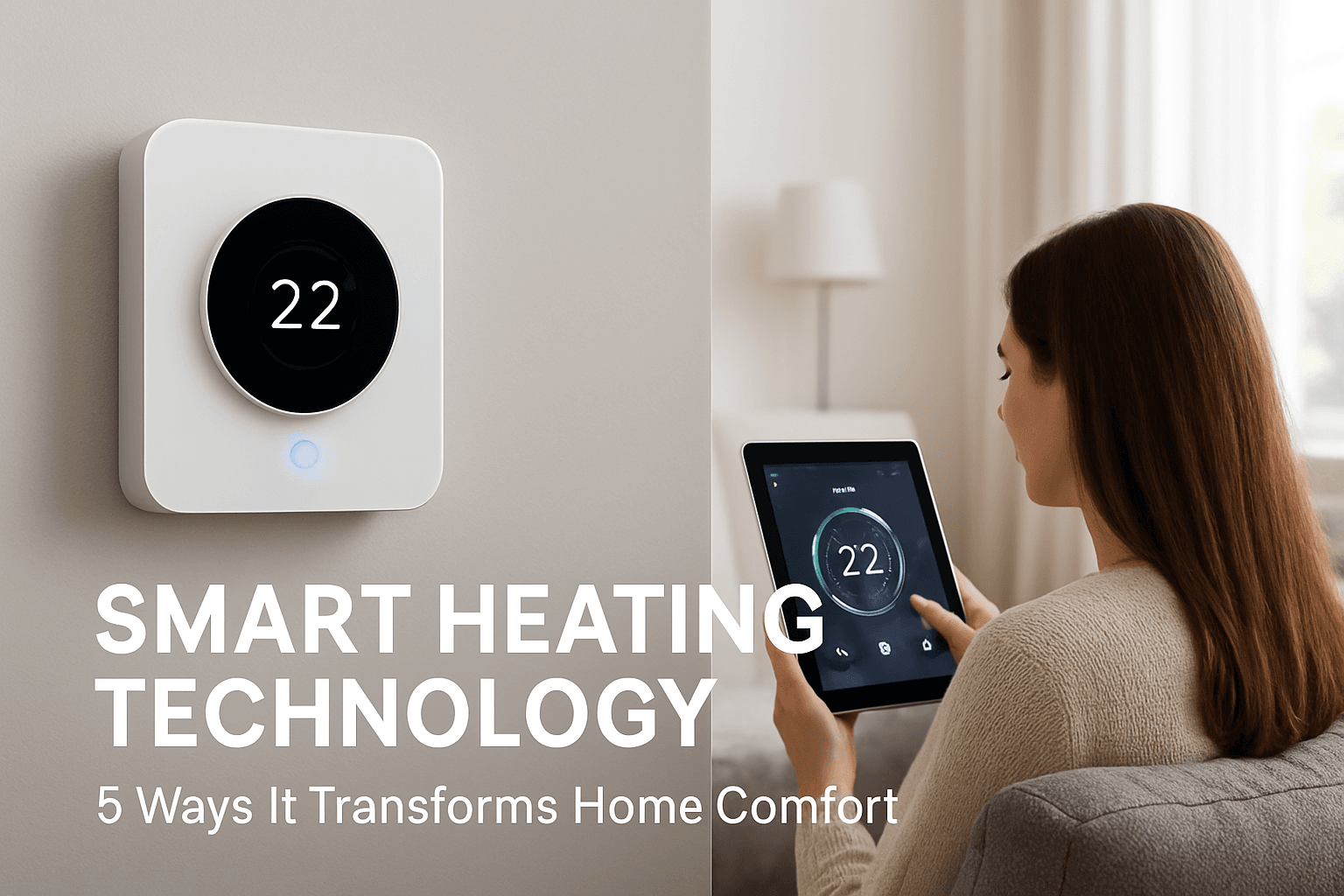
Smart Heating Technology is revolutionizing the way modern homes are heated, monitored, and optimized. No longer limited to simple thermostats or manual temperature adjustments, today’s smart systems operate as intelligent, learning-based ecosystems capable of adapting to human behavior, environmental changes, and energy demands with unprecedented accuracy.
For decades, heating systems were reactive — waiting for users to adjust settings.
Now, thanks to AI, machine learning, and interconnected HVAC sensors, Smart Heating Technology is proactive. It anticipates temperature needs, stabilizes indoor air health, monitors humidity, improves ventilation, and optimizes energy efficiency without constant human involvement.
This shift is not merely a technological upgrade — it represents a fundamental evolution in how people experience comfort, health, and sustainability inside their homes.
Read next: The Future of AI-Driven HVAC Optimization
1. Smart Heating Technology Personalizes Comfort Through AI Learning
AI-Driven Personal Comfort Profiles
Traditional heating systems treat every room — and every person — the same. Smart Heating Technology, however, introduces personalization at a level never before possible.
Advanced heating platforms learn from:
- Daily routines
- Occupancy patterns
- Preferred sleep temperatures
- Seasonal habits
- Activity cycles (morning rush, nighttime rest)
- Home zoning behaviors
Through continuous machine learning, Smart Heating Technology creates individualized comfort profiles tailored to specific users and rooms.
Behavior Tracking & Predictive Comfort Intelligence
Smart systems evaluate how long a room takes to heat, when residents arrive home, and how weather patterns might influence indoor temperatures. Then, they make precise adjustments — often before you even notice a change is needed.
For example:
- If you typically shower at 8 AM, the system preheats the bathroom.
- If you work late on Thursdays, the system delays heating cycles.
- If the bedroom cools faster than the living room, it adjusts independently.
This is comfort without manual input — a heating system that thinks ahead.
Benefits of AI-Based Personalization
- Eliminates unnecessary heating cycles
- Enhances energy efficiency
- Ensures every room maintains ideal comfort
- Reduces temperature fluctuations
- Provides consistent, effortless warmth
Personal comfort becomes seamless, predictable, and tailored to each resident’s lifestyle.
2. Smart Heating Technology Greatly Enhances Energy Efficiency
Reducing Consumption Through Intelligent Automation
Energy bills can rise sharply due to outdated heating systems that run inefficiently or heat empty rooms. Smart Heating Technology combats this problem through precise, automated efficiency systems.
Adaptive Heating Modes
Instead of fixed heating cycles, smart systems shift based on:
- Real-time energy prices
- Outdoor weather predictions
- Occupancy detection
- Time-of-day usage
- Seasonal efficiency goals
They intelligently reduce power consumption during low-use times while ensuring comfort during high-demand moments.
Dynamic Zoning for Maximum Efficiency
With traditional heating, the entire home heats uniformly — even unused rooms.
Smart Heating Technology enables dynamic zoning, where each room or zone receives individualized temperature control.
This reduces energy waste by up to 30%, according to Energy.gov.
Source: https://www.energy.gov/energysaver/programmable-thermostats
Consumption Analytics for Smarter Decision-Making
Smart systems provide real-time dashboards that display:
- Hourly heating usage
- Peak demand times
- Wasted energy points
- Predictive cost analysis
This helps homeowners make informed decisions and control costs effectively.
Outbound Link (Authority Reference)
Learn more about smart home energy research at the MIT Energy Initiative:
3. Smart Heating Technology Improves Indoor Health & Climate Wellness
Wellness-Based Climate Control Beyond Temperature
While most people associate heating with temperature alone, Smart Heating Technology introduces a more holistic approach: whole-home wellness.
Modern systems integrate HVAC sensors to monitor and control:
- Humidity levels
- Ventilation flow rates
- Allergen particles
- Air purity & pollutants
- Air pressure balance
- Mold and bacterial conditions
Smart Humidity Regulation
Balanced humidity (40–55%) is critical for:
- Respiratory comfort
- Skin hydration
- Sinus health
- Reducing airborne viruses
- Preventing mold growth
Smart systems automatically activate humidification or dehumidification cycles to maintain optimal levels for wellness.
Intelligent Ventilation Management
Ventilation sensors detect:
- Stale air pockets
- CO₂ buildup
- Harmful pollutants
- Limited airflow in sealed rooms
Then, Smart Heating Technology adjusts airflow, opens dampers, or activates fresh-air exchanges to maintain a breathable, safe atmosphere.
Proactive Allergen Control
Allergen sensors detect pollen, pet dander, dust, and mold.
The system responds automatically by:
- Boosting filtration
- Adjusting airflow patterns
- Increasing HEPA cycles
- Sending alerts to homeowners
Air Purification Integration
Some smart systems directly integrate:
- UV-C disinfection
- HEPA filtration
- Ionization modules
- Carbon filtration
This creates a clean, healthy indoor environment that supports long-term wellness.
4. Smart Heating Technology Integrates Seamlessly with Whole-Home Automation
Creating a Unified Smart Home Ecosystem
Smart Heating Technology does not operate in isolation — it connects with every major smart home system to create a unified ecosystem.
Integrations Include:
- Smart thermostats
- Smart lighting
- Smart security
- Smart blinds and windows
- Voice assistants (Alexa, Google Home, Siri)
- Occupancy sensors
- Weather-based automation
- Smart vents
- Smart humidifiers and purifiers
For example:
- Smart blinds close automatically during peak sunlight to reduce heating demand.
- Smart lights dim to reduce room temperature load.
- Security motion sensors trigger heating when movement is detected.
A Fully Automated Home Experience
This integration delivers a synchronized comfort system that optimizes:
- Energy usage
- Natural light exposure
- Indoor air quality
- Ambient temperature balance
- Daily routine adaptation
Smart Heating Technology becomes the core intelligence of the modern home.
5. Remote Access & Predictive Maintenance Transform System Reliability
Remote Climate Control Anytime, Anywhere
Modern homeowners demand convenience — Smart Heating Technology makes climate management available on any device, from any location.
Remote controls allow users to:
- Adjust temperatures
- Change modes
- Monitor air quality
- Track energy use
- Receive error alerts
- Set schedules
- Control zones individually
Predictive Maintenance: Preventing Problems Before They Occur
Heating breakdowns are costly and inconvenient. Predictive maintenance uses AI to diagnose issues before they escalate.
Smart systems detect:
- Failing components
- Abnormal heating patterns
- Airflow blockages
- Dirty filters
- Sensor errors
- Low-efficiency cycles
- Electrical malfunctions
Benefits of Predictive Maintenance
- Reduces repair costs
- Prevents system failures
- Extends equipment lifespan
- Increases energy efficiency
- Provides real-time safety monitoring
Predictive maintenance is a major leap forward, ensuring heating systems stay healthy year-round.
Conclusion: Why Smart Heating Technology Defines the Future of Home Comfort
Smart Heating Technology is no longer a luxury trend — it has become the new foundation of modern home comfort, efficiency, and wellness. As homes evolve into intelligent living environments, the role of heating systems has expanded far beyond simply delivering warmth. Today, Smart Heating Technology represents a fully adaptive, AI-powered ecosystem designed to understand homeowner needs, optimize energy consumption, and improve indoor well-being at every level.
Over the past decade, the heating industry has witnessed a dramatic transformation. Traditional thermostats and basic temperature controls have been replaced by intelligent systems that learn daily habits, anticipate comfort patterns, and adjust performance automatically. This shift marks a new era in home living — one where the home does the thinking before the homeowner even reaches for a control button.
What Smart Heating Technology Truly Delivers
With advanced data-driven automation and seamless integrations, Smart Heating Technology provides benefits that extend far beyond what older systems could ever achieve:
1. Superior Personalized Comfort
Unlike conventional systems that heat entire homes uniformly, Smart Heating Technology enables precision comfort zoning.
Rooms adapt to occupant behavior, time of day, and personal preferences. Your bedroom, living room, and office each become micro-environments tailored to how you live.
2. Significantly Lower Energy Bills
Smart heating systems reduce waste through occupancy sensors, AI learning, and predictive climate management.
They heat only what’s needed — when it’s needed — without sacrificing comfort.
3. Cleaner and Healthier Indoor Air
Integration with HVAC sensors allows constant monitoring of:
- Humidity levels
- Ventilation
- Air purity
- Allergen presence
Home comfort is no longer limited to temperature — Smart Heating Technology turns indoor environments into wellness-driven spaces.
4. Automated Convenience That Works in the Background
From smartphone control to voice commands and whole-home automation, these systems simplify day-to-day life.
You no longer manage your heating; your heating system manages itself.
5. Long-Term Savings and Predictive Maintenance
Smart Heating Technology prevents costly breakdowns through self-diagnostics and early performance alerts.
This means:
- Fewer repairs
- Longer equipment lifespan
- Lower overall maintenance costs
6. Sustainability and Reduced Environmental Impact
With energy efficiency at its core, Smart Heating Technology supports eco-friendly living.
Less energy wasted = lower carbon footprint.
7. A Future-Proof Foundation for Smart Homes
As homes become smarter, heating systems must keep up.
Smart Heating Technology integrates seamlessly with:
- Smart thermostats
- AI assistants
- Renewable energy systems
- Advanced HVAC sensors
- Home automation platforms
This makes it a long-term investment aligned with the smart home trends shaping the future.
The Bottom Line
Smart Heating Technology is redefining what it means to live comfortably. It blends intelligence, efficiency, and wellness to create living spaces that adapt, learn, and support healthier lifestyles. For homeowners seeking next-generation comfort, lower bills, and improved indoor air quality, smart heating is not just an upgrade — it’s the future.
As the demand for energy-efficient homes grows, Smart Heating Technology will continue to evolve as the core of modern climate control, reshaping how we experience comfort for decades to come.To continue improving your home’s performance and avoiding costly breakdowns, explore our essential guide:
👉 Top 7 Signs Your HVAC System Needs Professional Attention
