


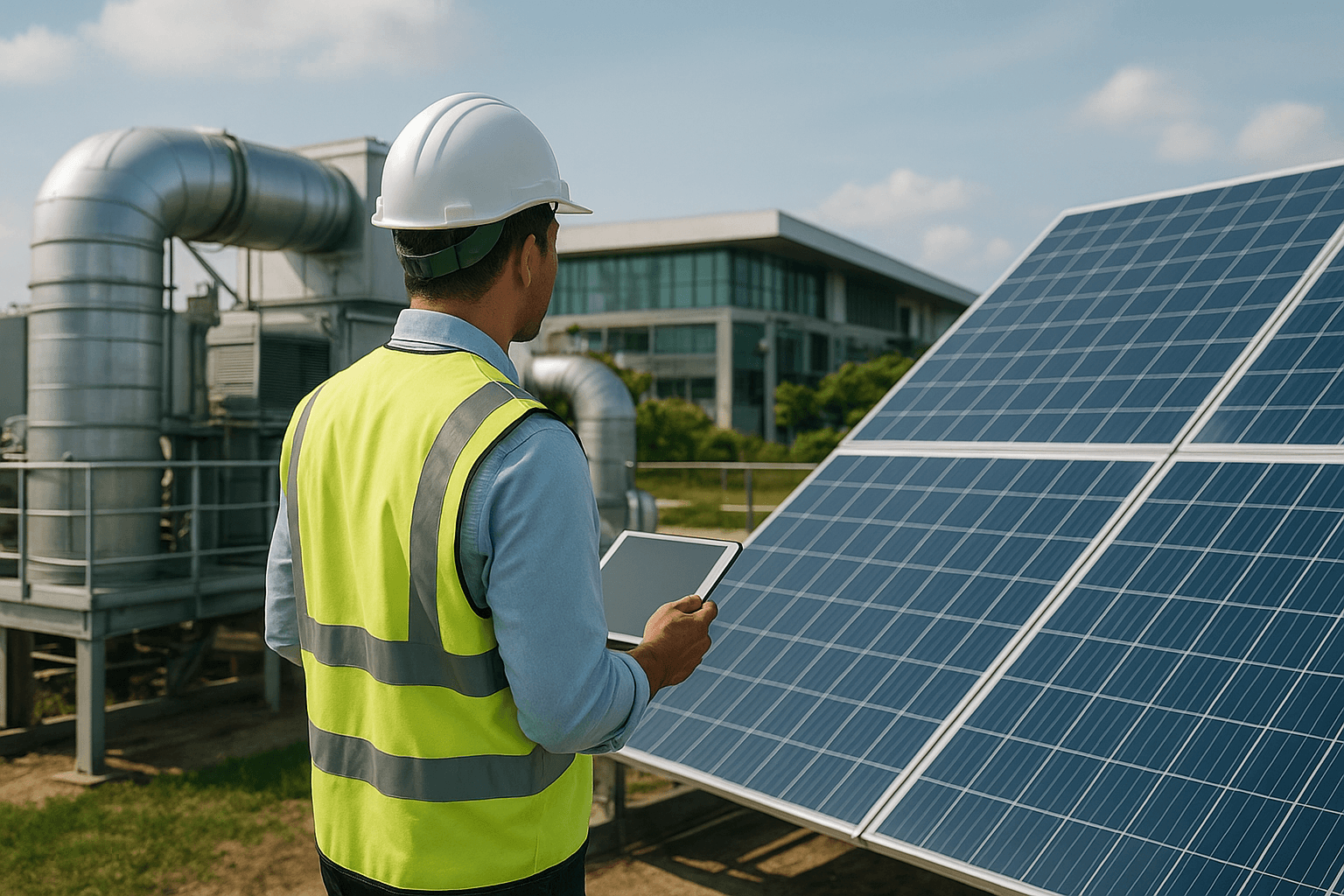
Mechanical contracting refers here to the mechanical systems – HVAC, plumbing, fire-fighting, piping, building services – as applied in large-scale infrastructure (buildings, transport hubs, utility systems). In this article we explore seven key strategies by which mechanical contracting is contributing to smart, sustainable infrastructure.
Table of Contents
. Introduction: Why mechanical contracting matters for smart infrastructure

Infrastructure – from high-rise buildings, transport hubs, utility plants, to smart cities – increasingly demands smart and sustainable design and operation. Traditional construction focused on delivering the structure and basic services; today’s infrastructure must deliver performance, efficiency, resilience, low carbon emission, adaptability. Mechanical contracting sits at the heart of that transformation because mechanical services (HVAC, plumbing, piping, fire protection, industrial piping) are among the most energy- and resource-intensive systems in infrastructure assets.
By upgrading mechanical systems, optimising design, embracing smart controls, using low-carbon materials, and enabling predictive maintenance, mechanical contractors are not merely “installing pipes and air-conditioning” but are driving the sustainable performance of the asset over its life-cycle. As one overview states: “The demand for sustainable and energy-efficient buildings has never been higher… MEP contractors in Saudi Arabia and beyond are integrating energy-efficient HVAC, smart electrical systems, and sustainable plumbing designs to support modern green building standards.” saudiprotech.com+1
In short – mechanical contracting is a leverage-point for sustainability, and the moves made here ripple across energy use, water use, operational cost, occupant health, carbon emissions, and infrastructure resilience.
In the sections that follow, we dig into seven ways mechanical contracting is impacting smart infrastructure, with real-world examples and best practices.
2. Way 1 – Energy-Efficient Mechanical Systems
Mechanical systems often account for a very large share of a building or infrastructure’s energy consumption: HVAC systems, chilled‐water loops, pumps, ventilation, mechanical ventilation for tunnels/metro, etc. Thus one of the highest impact areas is energy optimisation through improved mechanical equipment, system design, and control.
Key mechanisms
- Use of high-efficiency HVAC equipment: Variable-Refrigerant-Flow (VRF) systems, high-efficiency chillers, advanced air‐handling units. As cited in Saudi context: “Smart chilled water systems … VRF systems enable zone-based cooling … integrating renewable energy sources like solar panels into HVAC …” saudiprotech.com
- Reducing mechanical losses: optimising ductwork, pipework, insulation; balancing systems; low-loss headers; advanced commissioning.
- Heat recovery, energy reuse: mechanical systems such as ventilation heat-recovery units, waste-heat exchangers, mechanical cooling using renewable sources.
- Demand-based control: mechanical systems that vary output according to occupancy, ambient conditions, load rather than constant full-capacity.
- Integration with building envelope: mechanical systems aligned with passive design, envelope insulation, glazing, orientation to reduce load.
Infrastructure implications
In large infrastructure (transport hubs, metros, tunnels, utility plants) mechanical contracting ensures that mechanical loads are reduced – which lowers operational cost, carbon footprint, and increases the longevity of the asset. For example, mechanical systems for tunnels or underground infrastructure require special ventilation and cooling loads; optimising those reduces energy consumption significantly.
Best practices
- Early mechanical system design involvement (MEP) rather than “bolt-on” after civil design.
- Use of building information modelling (BIM) for mechanical system layout to reduce clashes, inefficiencies, and improve routing of mechanical services.
- Commissioning and ongoing tuning of mechanical systems: mechanical contractors should include commissioning as part of scope.
- Continuous monitoring of mechanical system energy use, and retrofit as needed.
Interlink note
For further reading on how MEP (mechanical, electrical, plumbing) contributes to sustainable infrastructure, see our section on Way 5 below (maintenance & life-cycle mechanical services).
3. Way 2 – Intelligent Controls & IoT Integration
Smart infrastructure means more than efficient equipment – it also means smart operation. Mechanical contracting increasingly incorporates digital controls, IoT sensors, building management systems (BMS), analytics and automation to run mechanical systems more intelligently.
What happens in mechanical contracting
- Installation of sensors in mechanical systems (temperature sensors, flow sensors, pressure sensors, occupancy sensors in ventilation zones).
- Integration of mechanical systems into BMS / building automation systems so that mechanical equipment responds to data, not just manual schedules.
- Predictive analytics: mechanical systems fault detection, performance degradation alerts, automatic adjustments.
- Remote monitoring & control: mechanical systems managed off-site or via cloud, enabling better performance across multiple assets.
Why this matters
Smart controls allow mechanical systems to operate closer to the load requirements, avoid wasteful operation, and adapt to changing conditions. For example, in a smart city building, mechanical ventilation may reduce output when occupancy is low, or increase when sensors detect high CO₂. IoT allows mechanical systems to “know” when to operate and when to idle, rather than simply on/off schedules.
Research shows that integrating ICT (information & communications technology) with mechanical/electrical systems improves energy performance throughout a building’s lifecycle: “ICT enables the integration of various building systems (mechanical, electrical, etc.) … to achieve efficient energy performance from economic and environmental perspectives.” iasj.rdd.edu.iq
Example
In the Middle East, mechanical contractors specialising in MEP have begun specifying BMS-integrated mechanical services: “Smart electrical & lighting systems … LED lighting with smart motion sensors … BMS-integrated energy monitoring” for integrated mechanical services. saudiprotech.com
Best practices
- Specify open-protocol controls (BACnet, Modbus) in mechanical contracting to allow flexibility and future integration.
- Include data-acquisition as part of mechanical system hand-over: sensors, cloud/edge connectivity, dashboards.
- Implement commissioning that verifies not only mechanical equipment but also controls operation, sensor calibration, system tuning.
- Plan for cybersecurity and data-privacy when mechanical systems are networked.
Interlink note
See Way 7 below (Integration with Smart Infrastructure & Urban Systems) to understand how mechanical contracting connects into wider smart city / infrastructure digital layers.
4. Way 3 – Water & Waste-water Mechanical Solutions
Mechanical contractors are increasingly responsible for water-related infrastructure – pumps, piping, drainage, water treatment mechanical systems, grey-water recycling, rain-water harvesting – which are critical for sustainable infrastructure.
Key aspects
- Pump systems with variable speed drives (VSDs) to reduce energy consumption in mechanical pumping systems.
- Mechanical design of grey-water recycling systems, rain-water harvesting, water-usage monitoring – reducing potable water demand.
- Drainage and plumbing systems designed for efficiency, durability, minimal leakage, and easier maintenance. In some cases mechanical-contracting firms handle fire-fighting piping, utility plumbing and drainage within infrastructure projects.
- Integration of mechanical water systems with building or infrastructure drainage and water-reuse strategies.
Why this is sustainable
Water is a critical resource and mechanical systems often represent hidden consumption or waste points. Effective mechanical design and contracting in water systems reduce consumption, reduce mechanical equipment loads (pumps, motors), reduce maintenance burden, and support resilient infrastructure. For example: “Rain-water harvesting … greywater recycling … efficient fixtures … plumbing designed with leak detection” were highlighted in an industrial project context. Flow & Control Contracting
Best practices
- Guarantee low-flow mechanical fixtures, leak detection, and separation of potable and non-potable systems.
- Use variable-speed drives in pumps rather than fixed-speed; monitor pump curves and efficiency.
- Design drainage & plumbing for easy access and maintenance, anticipating mechanical contracting scope for maintenance.
- Integrate mechanical water systems into building/infrastructure management systems (see Way 2) for leak alerts, abnormal consumption detection.
Interlink note
For mechanical contracting oriented to smart infrastructure, the water systems must interface with controls and IoT as described under Way 2; they also support sustainable mechanical operations described under Way 1.
5. Way 4 – Modular / Prefabricated Mechanical Systems
Traditionally, mechanical contracting on-site involved fabrication, assembly and installation of mechanical systems from scratch. A newer trend – particularly for sustainable and efficient infrastructure delivery – is modularisation / prefabrication of mechanical systems.
What this means
- Mechanical systems (ductwork, piping modules, mechanical service pods) are fabricated off-site in controlled conditions, then installed on-site, reducing waste, error, material excess, and time.
- Prefabricated mechanical racks or service modules are pre-plumbed, pre-wired, pre-tested before delivery to site.
- Standardised mechanical modules reduce variability, improve quality, speed installation, reduce commissioning time.
Why this supports smart & sustainable infrastructure
- Reduces on-site labour/time, reducing resource consumption and disruption.
- Improves quality and testing of mechanical systems – less re-work, fewer leaks, fewer energy inefficiencies.
- Less waste of mechanical materials on site (off-site fabrication allows recycling, better QA).
- Aligns with modern construction methods including MMC (modern methods of construction) which emphasise prefabrication and modularity. Wikipédia
Best practices for mechanical contractors
- Define mechanical system modularisation strategy early in design: identify modules, interfaces, delivery logistics.
- Ensure mechanical modules are designed for transport, installation, connection—mechanical subcontractors coordinate with structural/civil early.
- Have off-site fabrication quality control and testing, then on-site commissioning streamlined.
- Consider mechanical modules for future adaptability/upgrade: service pods can be swapped, renewed.
- Track mechanical module lifecycle: easier maintenance, lower downtime, and less waste.
Interlink note
Modular mechanical systems tie into Way 1 (efficiency) and Way 2 (smart controls) because high-quality prefabrication ensures mechanical systems align precisely with sensors/control zones.
6. Way 5 – Life‐Cycle Maintenance & Predictive Mechanical Services
Sustainable infrastructure is not just about initial installation; it’s about managing the mechanical systems over their full life-cycle, ensuring optimal performance, minimal waste, lower carbon footprint and operational resilience.
Key elements
- Mechanical contractors are increasingly offering maintenance, facilities-management, asset-management services for mechanical systems.
- Predictive maintenance: mechanical systems are monitored via sensors and analytics (as in Way 2) to detect anomalies, schedule maintenance before failure, and optimise uptime.
- Life-cycle costing: mechanical system selection and contracting focus on total cost of ownership (TCO), not just first-cost. This includes energy consumption over life, maintenance cost, replacement cost.
- Retro-commissioning and re-commissioning mechanical systems: ensuring that as infrastructure ages, the mechanical systems remain efficient and aligned with sustainable performance.
Why this is important
If mechanical systems degrade, leak, run inefficiently, the sustainability gains from initial design are lost. Maintenance is key to preserving energy savings, water savings, occupant comfort, and asset value. For example, “Our goal is to develop cutting-edge expertise in … displacement ventilation and modular plumbing assemblies … By pioneering more advanced techniques, we streamline installation processes and optimise lifecycle efficiency.” My Company
Best practices
- Include in mechanical contracting scope a clear hand-over plan: sensors/data, maintenance contracts, spare-parts strategy, performance guarantees.
- Use mechanical performance dashboards: real-time monitoring of mechanical equipment health (pumping efficiency, chiller COP, air-handling unit performance).
- Ensure mechanical contractors train facility staff or provide outsourced FM so that mechanical systems continue to perform sustainably.
- Plan mechanical equipment replacement/upgrades early, so infrastructure lifecycle supports sustainability rather than deferred maintenance.
Interlink note
This way connects backwards to the initial mechanical system design choices (Way 1) and smart controls (Way 2). One cannot sustain energy/water savings without maintenance and monitoring.
7. Way 6 – Sustainable Materials and Low-Carbon Mechanical Works
The mechanical contracting discipline intersects with materials, fabrication, sourcing, installation – offering another leverage point for sustainability: choice of materials and low-carbon mechanical works.
Key aspects
- Use of low-carbon materials in mechanical fabrication: recycled steel piping, aluminium ductwork, composites with lower embodied carbon.
- Insulation materials for mechanical systems with better thermal performance and lower environmental impact.
- Mechanical works that support circular economy: reuse of mechanical components, modular mechanical systems that can be re-used or repurposed.
- Minimisation of waste during mechanical installation: off-site fabrication (see Way 4) helps, but also mechanical contractors tracking scrap, providing recycling of metal cut-offs, and selecting mechanical components that are maintainable/upgradable.
- Alignment with green building standards (LEED, EDGE, ESTIDAMA) in mechanical works. For example, mechanical contractors working in green MEP solutions: “We integrate AI and IoT-driven sensors … ensure compliance with LEED … ESTIDAMA …” saudiprotech.com
Why this matters
Embodied carbon in mechanical systems (materials, fabrication, transport) can be significant. In sustainable infrastructure, not only operational carbon (from mechanical systems in use) but also embodied carbon must be addressed. Mechanical contractors committed to sustainable materials and processes reduce the overall carbon footprint of infrastructure.
Best practices
- Mechanical contracting procurement specifies low-carbon mechanical materials and vendors with sustainability credentials.
- Track material waste, recycling, fabrication efficiency in mechanical works.
- Choose mechanical equipment with long life, upgradeable modules, and serviceability to avoid early replacement.
- Document mechanical installation environmental credentials (e.g., recycled content, local sourcing, low-VOC materials for duct insulation) as part of sustainability certification.
Interlink note
Material sustainability links to Way 4 (modular/prefab mechanical systems) and Way 5 (life-cycle maintenance) because durable, reusable materials enhance long-term performance and reduce maintenance/upgrades.
8. Way 7 – Integration with Smart Infrastructure & Urban Systems
While previous sections focus on mechanical systems within buildings or infrastructure assets, the seventh way emphasises mechanical contracting’s role in the broader smart infrastructure ecosystem – connecting mechanical services to smart cities, utility networks, digital infrastructures, and urban systems.
What this means
- Mechanical systems in infrastructure (metro stations, airports, utility plants, water treatment facilities) interact with transport systems, energy grids, smart networks, IoT platforms. Mechanical contracting must therefore design for interoperable mechanical services.
- Mechanical contractors are working on projects that embed mechanical systems as part of “smart infrastructure” – e.g., mechanical ventilation in metro tunnels with IoT sensors, mechanical pumping systems integrated into smart water networks, mechanical HVAC in smart buildings with data-exchange to city EMS. The “Smart Green Resilient” (SGR) urban planning approach emphasises holistic infrastructure integration across physical systems, digital systems, and governance/management. Wikipédia
- The mechanical contracting scope may include connecting mechanical systems to asset-management platforms, digital twin systems, city-wide mechanical/energy dashboards. For example, companies working on smart infrastructure reference documents show such integrated mechanical/asset systems. SMEC+1
Why this is critical
Smart and sustainable infrastructure is not isolated buildings – it’s interconnected systems of buildings, transport, energy, water, digital networks. Mechanical contracting must thus move beyond standalone mechanical services to system integration. Proper mechanical contracting ensures that mechanical systems are ready for future digital upgrades, interoperability, smart-grid interactions, and urban resilience requirements.
Best practices
- In mechanical contracting RFPs, require mechanical system interoperability with city/utility networks; compatibility with data protocols, IoT readiness, upgrade path.
- Mechanical system design includes forecasting for future connectivity, sensors, expansion, integration with renewable energy systems, smart grids.
- Coordination between mechanical contractors, digital/infrastructure contractors, transport/utility contractors early in the project.
- Life-cycle planning for mechanical systems includes their role in urban resilience: e.g., mechanical systems in buildings must support emergency operations, grid outages, climate adaptation.
Interlink note
This way ties all previous six ways together: you need energy-efficient mechanical systems (Way 1), smart controls (Way 2), sustainable water systems (Way 3), modular mechanical construction (Way 4), life-cycle maintenance (Way 5), sustainable materials (Way 6) – all integrated into the smart city/infrastructure system for the full value of mechanical contracting to emerge.
9. Conclusion: The future of mechanical contracting in sustainable infrastructure
The transformation of infrastructure toward smart, sustainable, resilient systems offers mechanical contracting a central and expanding role. From the energy-hungry mechanical systems of past decades to today’s intelligent, connected, efficient mechanical services, the contract scope for mechanical contractors is evolving. It is not just “install and forget” – but “optimise, monitor, integrate, sustain”.
Key takeaways:
- Smart infrastructure is enabled by mechanical systems that are efficient, controllable, monitored and maintained.
- Mechanical contractors must increasingly offer services beyond installation: data-monitoring, analytics, life-cycle management, upgradeability.
- Modular and prefabricated mechanical construction methods reduce waste, cost and installation time while improving sustainability.
- Mechanical contracting is deeply interwoven with urban systems, digital networks, and utility infrastructures – meaning mechanical contractors must coordinate with broader infrastructure teams.
- Materials, procurement, fabrication quality, energy consumption, water systems – mechanical contracts touch all these domains.
- To remain competitive and relevant, mechanical contractors must adopt new technologies (IoT, BMS, predictive maintenance), sustainable practices (low-carbon materials, life-cycle thinking) and system-level integration (smart city readiness).
For infrastructure owners, the benefit is clear: by engaging mechanical contractors early in the project lifecycle, specifying smart mechanical systems, integrating them with digital controls and urban infrastructure, and planning for maintenance and upgrade, the asset will run longer, cost less, consume less energy and water, and deliver a better occupant/user experience.
The future is not simply “mechanical contracting” – it is mechanical contracting for smart, sustainable, integrated infrastructure. Organisations that recognise that shift and adapt their mechanical contracting models will be leaders in tomorrow’s infrastructure.
10. References & further reading
- “The Role of MEP Contractors in Building Sustainable and Energy-Efficient Infrastructure” (Saudi ProTech) – discusses how mechanical, electrical & plumbing contractors drive sustainability through energy-efficient HVAC, smart systems, water conservation. saudiprotech.com
- “Infrastructure Contracting Services in Saudi Arabia” (MSWC) – outlines how infrastructure contractors deliver roads, utilities, smart city elements and how mechanical systems integrate within those. MSWC
- “Smart Construction” (AIMPLAS) – offers insight into how advanced materials and modular construction support sustainable building and infrastructure. AIMPLAS
- Additional context: “Smart green resilient (SGR)” planning approach emphasising integrated smart infrastructure. Wikipédia
