


Table of Contents
Introduction: How Heating Innovations Are Redefining Home Comfort
Heating innovations are transforming the way we live, bringing intelligence, efficiency, and sustainability to every home. As we enter 2025 and beyond, these groundbreaking technologies are redefining what comfort means — from smart thermostats that learn your lifestyle and adjust automatically, to geothermal and solar-powered systems that harness the earth’s natural heat.
Gone are the days when heating your home simply meant choosing between gas or electric systems. Today’s heating innovations merge artificial intelligence, data-driven automation, and green energy to create homes that think, adapt, and save. This new generation of systems doesn’t just warm your rooms; it reduces energy waste, cuts costs, and supports a cleaner planet — all while maximizing year-round comfort.
In this comprehensive guide, we’ll explore 10 game-changing heating innovations every homeowner should know before upgrading or building their next home. Whether you’re focused on reducing your utility bills, improving energy efficiency, or adopting eco-friendly solutions, understanding these technologies will empower you to make smarter, future-ready choices.
By the end of this article, you’ll see how embracing heating innovations can turn ordinary homes into intelligent, sustainable living spaces — blending comfort, savings, and environmental responsibility like never before.
1. Smart Thermostats: AI Meets Comfort
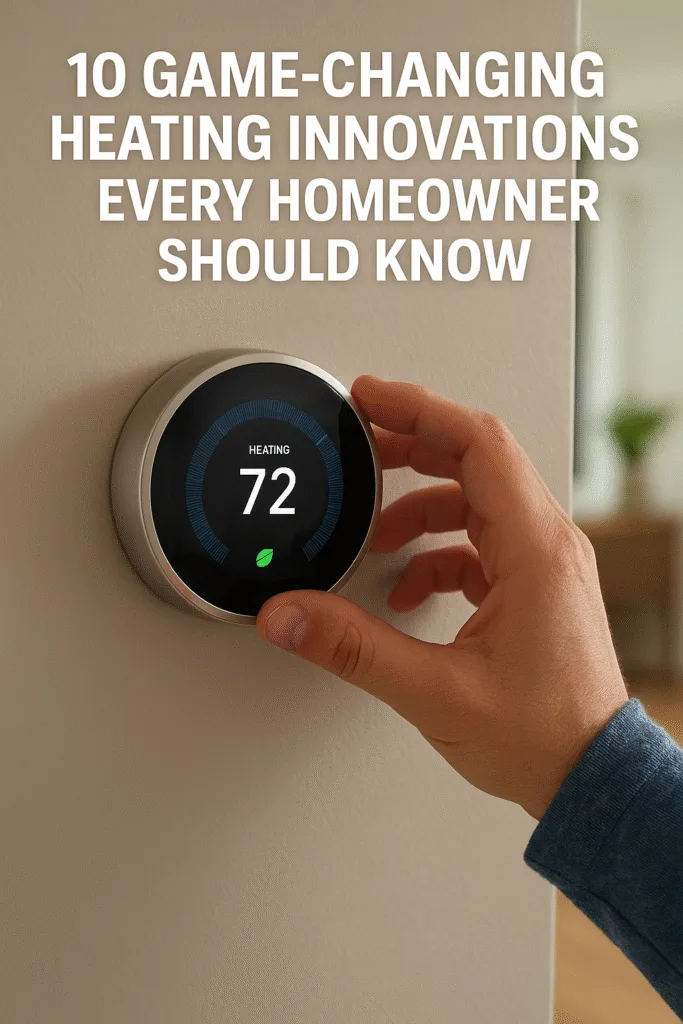
The introduction of smart thermostats is perhaps the most recognizable revolution in home heating. These devices use artificial intelligence to learn your preferences and automatically adjust the temperature to optimize both comfort and energy efficiency.
Brands like Google Nest and Ecobee have led this transformation. Their systems analyze patterns — when you’re home, asleep, or away — and fine-tune settings to reduce wasted energy. According to the U.S. Department of Energy, a well-programmed smart thermostat can save homeowners up to 10% annually on heating and cooling bills.
👉 Related topic: Learn more about energy-efficient HVAC systems that work perfectly with smart thermostats.
Resource
Check the latest smart thermostat innovations on Energy Star’s official website.
2. Zoned Heating Systems for Personalized Warmth
Imagine a home where every room feels just right — not too hot, not too cold. That’s what zoned heating systems deliver. They divide your house into multiple zones, each controlled independently.
This innovation eliminates temperature battles and improves energy efficiency by only heating rooms that need it. Paired with smart thermostats, zoned systems can adjust automatically based on occupancy or time of day.
Why it matters: Zoned heating can reduce energy consumption by up to 30%, making it a practical upgrade for modern homes.
👉 Interlink: Learn how mechanical contractors design and install advanced heating zones efficiently.
3. Heat Pumps: Efficiency That Cuts Energy Costs
Among today’s most talked-about heating innovations are heat pumps. Unlike furnaces that generate heat, heat pumps transfer warmth from the air or ground into your home. This process is far more efficient and environmentally friendly.
Modern air-source heat pumps can operate even in sub-zero temperatures, thanks to advances in inverter technology. Additionally, ground-source (geothermal) heat pumps tap into the earth’s consistent temperature, providing incredible efficiency and long-term savings.
DoFollow Resource:
Learn more about energy-efficient heat pumps on U.S. Department of Energy’s guide.
4. Radiant Floor Heating: Silent, Even Comfort
Radiant floor heating is the definition of luxury meets practicality. Instead of relying on air circulation, these systems warm your home from the floor up.
Pipes or electric coils are installed beneath your flooring, distributing heat evenly and silently. The result? No cold spots, no noisy vents, and significantly better air quality since dust doesn’t circulate as it does with forced-air systems.
Pro Tip: Radiant heating works best with tile, concrete, or stone floors and can increase a home’s resale value due to its comfort and efficiency.
👉 Related Internal Link: Read our article on sustainable home design trends to learn how radiant systems fit into eco-friendly architecture.
5. Hybrid Heating Systems: The Best of Both Worlds
Why settle for one system when you can have two? Hybrid heating systems combine a traditional furnace with a heat pump, switching between them automatically based on outdoor conditions.
When temperatures are mild, the heat pump operates efficiently. When it gets colder, the furnace takes over to ensure consistent comfort. This smart switching maximizes efficiency and reliability, offering the perfect blend of eco-conscious performance and comfort.
External Link (DoFollow):
Check how hybrid systems compare on HVAC.com’s professional guide.
6. Energy Recovery Ventilation (ERV) Systems
One of the most overlooked heating innovations is the Energy Recovery Ventilation (ERV) system. While not a heater per se, an ERV works hand-in-hand with heating systems to maintain optimal indoor air quality.
By transferring heat and humidity between incoming and outgoing air, ERVs ensure fresh air without losing thermal energy. This makes your heating system more efficient and keeps indoor environments healthier.
Fact: According to the EPA, indoor air can be 2 to 5 times more polluted than outdoor air — making ERV systems a crucial upgrade for modern homes.
7. Solar-Powered Heating Solutions
Renewable energy meets heating innovation through solar-powered heating systems. These setups use solar panels to power electric or hydronic heating elements.
Although the initial cost can be higher, long-term savings are substantial. Homeowners can cut utility bills and even generate credits through net metering programs.
Example: In sunny regions like California or Spain, solar thermal systems can cover 60–80% of annual heating needs.
👉 Internal Link: Explore how clean energy systems integrate with modern HVAC designs.
DoFollow External: Learn more at Solar Energy Industries Association (SEIA).
8. Geothermal Heating Systems: Tapping the Earth’s Energy
If you’re seeking sustainability and long-term savings, geothermal heating systems are unmatched. These systems use the earth’s stable underground temperature to provide heating (and cooling) throughout the year.
Although installation costs are higher, homeowners can recover their investment in 5–8 years through lower energy bills and tax incentives.
Why it’s a Game-Changer:
- Up to 70% more efficient than conventional systems
- Long lifespan (25+ years for indoor components, 50+ years for loops)
- Minimal maintenance required
DoFollow Resource:
Learn how geothermal energy works at Energy.gov.
9. Advanced Insulation and Smart Materials
Even the most efficient heating system won’t perform well without proper insulation. Today’s heating innovations go hand-in-hand with breakthroughs in smart insulation materials, including:
- Aerogels: ultra-light materials with exceptional thermal resistance
- Phase-change materials (PCMs): store and release heat dynamically
- Reflective coatings that prevent heat loss through walls or roofs
These technologies ensure that every bit of warmth generated stays inside your home, enhancing efficiency and comfort.
👉 Interlink: Learn about energy audits that help you evaluate insulation performance.
10. Connected Maintenance: IoT and Predictive Repairs
The rise of the Internet of Things (IoT) has brought a new wave of heating innovations centered around predictive maintenance.
Modern systems are equipped with sensors that monitor performance and detect anomalies in real time. This allows technicians (or even AI assistants) to predict failures before they happen — reducing downtime and repair costs.
Example: Smart HVAC systems send alerts to your smartphone when filters need replacement or efficiency drops below optimal levels.
DoFollow External:
Explore IoT applications for home heating at IoT For All.
The Future of Heating Technology — What’s Next?
Heating innovations are rapidly evolving, paving the way for a future where comfort, intelligence, and sustainability are seamlessly connected. The next generation of heating technology will not only rely on traditional efficiency but also embrace AI-driven automation, predictive analytics, and smart energy management.
Imagine a home heating system that doesn’t just respond to your thermostat settings — it learns your lifestyle patterns, syncs with local weather forecasts, and adjusts itself in real time to maintain the perfect indoor climate while minimizing energy use. These AI-powered heating systems will analyze millions of data points from homes around the world, ensuring optimal performance and cost savings for every user.
But it doesn’t stop there. Future heating innovations will be fully integrated with solar energy solutions, smart grids, and dynamic electricity pricing systems, allowing homeowners to save even more while reducing their carbon footprint. Your heater could soon “talk” to your solar panels, store excess energy, and automatically switch modes based on utility rates — all without you lifting a finger.
These technologies aren’t science fiction anymore. They’re being tested in smart cities, eco-friendly buildings, and next-generation housing developments across Europe, North America, and Asia. Companies pioneering in HVAC and renewable energy are already collaborating to bring these sustainable solutions to market faster than ever before.
👉Read more: Discover how smart HVAC systems are transforming modern homes .
In short, the future of heating is intelligent, interconnected, and environmentally responsible. By embracing these heating innovations, homeowners will gain unprecedented control, efficiency, and peace of mind — making energy-smart living the new global standard.
Conclusion: Bringing Heating Innovations Home
Heating innovations are redefining the modern home — not just enhancing comfort but also driving greater efficiency, sustainability, and long-term value. By integrating intelligent solutions such as smart thermostats, zoned heating systems, high-performance heat pumps, and geothermal technologies, homeowners can turn their living spaces into true models of energy efficiency and environmental harmony.
If you’re planning to upgrade your heating setup or design a new HVAC system, it’s essential to work with experienced mechanical contractors who understand the latest technologies in energy-smart design. These professionals can help you choose the ideal system tailored to your climate, budget, and comfort goals, ensuring both performance and sustainability.
👉 Explore our complete guide on choosing the best HVAC contractor for your home
Final Thought: The homes of tomorrow are already taking shape today — powered by innovation, optimized by technology, and sustained by efficiency. By embracing heating innovations, you’re not just warming your home; you’re investing in a future where comfort and sustainability coexist in perfect balance..
