
Table of Contents
Introduction
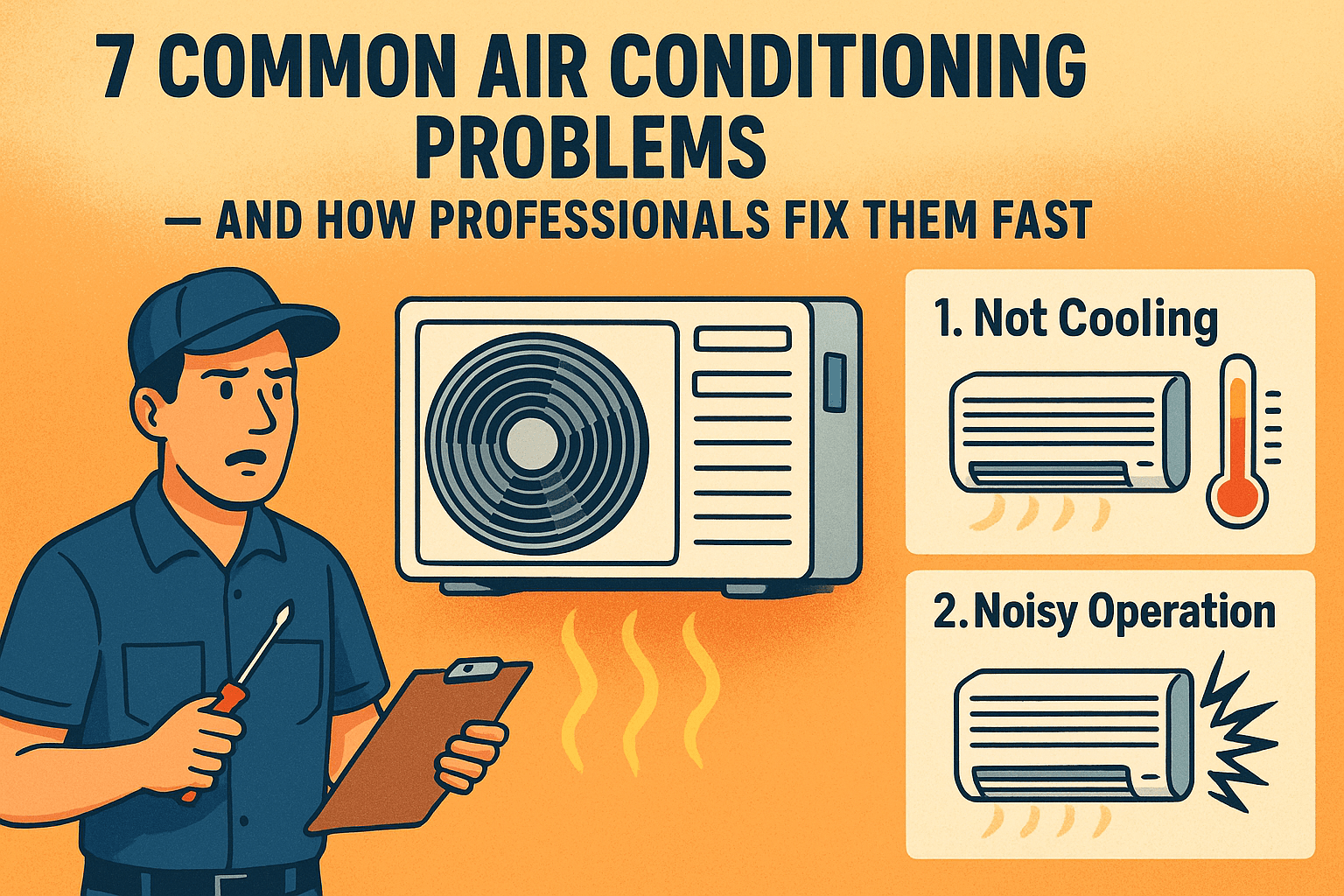
Air conditioning problems can strike at the worst possible moments—during peak summer heat, high-humidity days, or when your home or business relies on stable indoor temperatures the most. Because modern AC systems are essential for comfort, air quality, and energy efficiency, any disruption can quickly affect daily life. From rooms that won’t cool evenly to sudden spikes in energy bills, even minor issues can escalate into costly repairs if not addressed promptly.
Although some homeowners may attempt temporary fixes, the reality is that most air conditioning problems are complex and tied to internal components, electrical systems, refrigerant levels, airflow restrictions, or thermostat failures. These issues often require diagnostic tools, technical knowledge, and safety procedures that only certified HVAC professionals possess. Trained technicians not only identify the root cause with precision—they also implement long-term solutions that restore performance, prevent recurring breakdowns, and protect the system’s lifespan.
In this extended guide, we take a detailed look at the 10 Pro Tips to Make Your Air Conditioner More Energy Efficient This Summer affecting residential and commercial systems today. More importantly, you’ll discover how professional HVAC technicians handle each issue quickly and safely, ensuring energy-efficient operation, consistent cooling, and better indoor air quality. Whether you’re facing warm air blowing from vents, unusual noises, refrigerant leaks, or complete system shutdowns, understanding these problems will help you take the right steps toward a reliable, long-lasting air conditioning system.
1. Weak or Insufficient Airflow
Weak or insufficient airflow is one of the most common and frustrating air conditioning problems, and it often becomes noticeable long before the system completely fails. When airflow drops, your AC can no longer distribute cool air evenly, forcing the system to work harder and consume more energy. This not only reduces comfort but also accelerates wear on major components—leading to higher utility bills and costly repairs.
Symptoms of Weak Airflow
Homeowners often begin to suspect airflow issues when normal cooling performance starts to decline. Typical signs include:
- Uneven cooling throughout the house, where some rooms stay comfortable while others remain warm.
- Weak or inconsistent air coming from vents, even when the thermostat is set to a low temperature.
- Persistent hot and cold spots, especially in larger rooms or upper levels.
- Longer-than-usual cooling cycles, as the AC struggles to push enough conditioned air to maintain the set temperature.
- Increased humidity indoors, since poor airflow prevents the AC from properly removing moisture.
When these symptoms appear, they usually indicate that airflow is being restricted somewhere in the system.
Common Causes of Weak Airflow
Weak airflow can result from several underlying air conditioning problems, many of which develop gradually:
- Clogged or dirty air filters: Dust, debris, and pet hair block airflow, reducing efficiency and straining the fan motor.
- Blocked, kinked, or leaking ductwork: Damaged ducts allow conditioned air to escape before reaching the vents.
- Dirty evaporator coils: Dust and grime on the coils prevent efficient heat exchange, reducing airflow output.
- Failing blower motor or fan assembly: When the blower slows down or fails, air cannot circulate through the system properly.
- Obstructed return vents or registers: Furniture, rugs, and dust buildup choke off the airflow pathway.
Because several of these causes may appear simultaneously, a professional evaluation is often necessary to locate the exact restriction.
How Professionals Fix It Fast
Licensed HVAC technicians use specialized diagnostic tools to quickly identify and resolve airflow-related air conditioning problems. Their repair approach typically includes:
- Replacing or deep-cleaning air filters to restore immediate airflow.
- Inspecting, sealing, and balancing ductwork to stop air leaks and ensure proper pressure throughout the system.
- Cleaning evaporator coils to improve heat absorption and increase cooling performance.
- Repairing or replacing failing blower motors and fan assemblies, which restores the system’s ability to push air forcefully through the ducts.
- Measuring and adjusting static pressure for optimal air delivery, ensuring that every room receives consistent airflow.
By assessing the entire airflow system—not just visible components—technicians can uncover hidden restrictions that homeowners usually miss. This professional intervention ensures long-lasting performance, improved comfort, and lower energy consumption.
For more detailed airflow solutions, visit on improving AC airflow .
2. AC Not Cooling Properly
. AC Running but Not Cooling
One of the most noticeable and frustrating air conditioning problems is when the system is running but fails to cool the home effectively. This issue often becomes apparent during peak summer temperatures, when homeowners rely on their AC for consistent comfort. When the system blows warm or only mildly cool air, energy consumption rises dramatically while indoor comfort declines. This problem can also strain essential components, leading to costly repairs if not diagnosed early.
Symptoms of Cooling Failure
Cooling issues generally present clear signs that the AC is struggling:
- The system runs constantly but the home stays warm, even after hours of operation.
- Indoor temperatures never reach the thermostat setting, no matter how low it is adjusted.
- Warm or slightly cool air blows from vents, instead of cold air.
- High humidity inside the home, since ineffective cooling prevents proper moisture removal.
These symptoms indicate that the AC system is unable to absorb and transfer heat as it should.
Common Causes of Poor Cooling
Cooling-related air conditioning problems usually trace back to one or more root causes, including:
- Low refrigerant levels, often due to leaks in the refrigerant line.
- Dirty or clogged condenser coils, which block heat release and prevent the AC from cooling the refrigerant.
- Failing or weak compressors, which are responsible for circulating refrigerant and enabling heat transfer.
- Undersized AC units, which lack the capacity to cool the entire home during extreme heat.
Because these issues affect core system components, professional diagnosis is essential for accurate repairs.
How Professionals Fix It Fast
Certified HVAC technicians use advanced tools and systematic procedures to restore proper cooling performance. Their approach may include:
- Conducting refrigerant leak tests using gauges and detectors, followed by refilling refrigerant to manufacturer specifications.
- Deep-cleaning condenser coils, removing dirt, debris, and buildup that restrict heat transfer.
- Testing compressor performance, repairing or replacing the unit if it cannot maintain the required pressure.
- Evaluating AC system sizing, ensuring the unit has adequate capacity for the home’s square footage and insulation level.
These precise fixes ensure the AC cools efficiently without stressing internal components, extending the system’s lifespan and reducing energy waste.
3. AC Not Turning On
Among the most stressful air conditioning problems is when the AC unit refuses to turn on at all—especially on extremely hot days. When the system is completely unresponsive, homeowners often fear a major failure. Fortunately, most no-start issues are caused by electrical or control problems that professionals can diagnose quickly and safely.
Symptoms of an Unresponsive AC
This issue is typically easy to identify because the system displays one or more of the following signs:
- No sound, airflow, or response when the system is powered on.
- Thermostat failure, including blank screens or frozen displays.
- Circuit breakers tripping repeatedly, especially when attempting to start the AC.
These symptoms point to electrical interruptions or failing startup components.
Common Causes of Startup Failure
AC startup problems generally stem from:
- Electrical failures, including faulty breakers or power supply interruptions.
- Failed capacitors, which prevent the compressor and fan motor from starting.
- Thermostat malfunctions, preventing commands from reaching the system.
- Damaged or loose wiring, which disrupts electrical flow and may pose safety risks.
Since electrical issues can be hazardous, trained technicians should always handle them.
How Professionals Fix It Fast
HVAC technicians follow strict safety protocols when diagnosing electrical air conditioning problems. Their repair steps may include:
- Testing voltage and continuity across all major components.
- Replacing shorted or swollen capacitors, restoring the system’s ability to start.
- Repairing or replacing damaged wiring to ensure safe electrical flow.
- Reprogramming or installing thermostats, ensuring accurate temperature control.
- Resetting or replacing overloaded circuit breakers, preventing repeated failures.
This professional approach not only restores the system promptly but also protects the home from electrical hazards.
4. Refrigerant Leaks
Refrigerant-related issues are among the most serious air conditioning problems, as refrigerant is essential for absorbing heat and cooling the home. A leak not only reduces cooling efficiency but can also cause long-term damage to critical components such as the compressor. Over time, low refrigerant levels force the AC to work harder, increasing energy bills and accelerating wear.
Symptoms of Refrigerant Leaks
Homeowners can often identify refrigerant leaks through several noticeable signs:
- Warm air coming from vents, even when the AC is running.
- Hissing, bubbling, or gurgling noises, which indicate escaping refrigerant.
- Ice buildup on evaporator coils, caused by low pressure in the system.
- Rising energy bills, as the AC cycles longer to compensate for lost refrigerant.
These symptoms require immediate attention to prevent compressor failure.
Common Causes of Refrigerant Leaks
Refrigerant loss usually occurs due to:
- Corroded copper refrigerant lines, which weaken over time.
- Damaged evaporator or condenser coils, often due to age or environmental factors.
- Loose fittings or connections, allowing refrigerant to escape slowly.
- Manufacturing defects, which can cause early system failure.
Because refrigerant circulates continuously, even a small leak can escalate into a major problem.
How Professionals Fix It Fast
Certified technicians follow EPA-regulated procedures when handling refrigerant-related air conditioning problems. Their process includes:
- Locating leaks using advanced electronic detectors, UV dye, or pressure testing.
- Sealing or replacing damaged tubing, ensuring the system remains airtight.
- Replacing evaporator or condenser coils, when corrosion or cracks cannot be repaired.
- Refilling the system with the correct refrigerant type and charge, following manufacturer specifications.
Proper refrigerant handling is crucial—only certified professionals are legally permitted to perform these repairs due to safety and environmental regulations.rtified professionals can legally work with refrigerants due to environmental regulations.
5. Strange Noises Coming from the AC
Among the most alarming air conditioning problems are unusual or unexpected noises coming from the AC system. While a well-functioning air conditioner should operate quietly, sudden grinding, screeching, or buzzing sounds often indicate hidden mechanical failures. Ignoring these noises can turn minor issues into expensive system breakdowns, making early diagnosis essential.
Symptoms of Noise-Related AC Issues
Strange sounds typically fall into one or more of these categories:
- Grinding noises, often indicating worn bearings inside the motor
- Screeching or squealing, usually linked to belt or motor issues
- Rattling sounds, suggesting loose parts or debris inside the unit
- Buzzing, which may indicate electrical malfunctions or obstructed airflow
- Clicking, often caused by faulty relays or compressor issues
Each noise type is a signal that one or more internal components is struggling or failing.
Common Causes
Noise-related air conditioning problems typically originate from:
- Loose screws, bolts, or mounting brackets inside the unit
- Failing or unbalanced fan motors
- Debris lodged inside the outdoor condenser fan
- Worn-out bearings, pulleys, or belts
- Compressor damage or internal pressure issues
Because these problems often worsen over time, fast professional intervention is crucial.
How Professionals Fix It Fast
Certified HVAC technicians use advanced diagnostic tools to determine the source of noise-related air conditioning problems. Their repairs may include:
- Tightening all internal screws, brackets, and panels to eliminate rattling
- Lubricating motors or replacing them entirely if bearings are worn
- Removing twigs, leaves, or debris from the outdoor unit and realigning fan blades
- Inspecting the compressor, checking for internal damage or failing pressurization
- Replacing worn belts, bearings, or electrical components before larger failures occur
By resolving abnormal sounds quickly, professionals prevent small mechanical issues from evolving into major system damage.
6. Water Leaks Around the Unit
Water leakage is another one of the most common air conditioning problems, often indicating drainage issues or airflow restrictions. While water dripping from an AC might seem minor at first, it can lead to mold growth, stained walls, and structural damage if not addressed promptly. Moisture problems also reduce the system’s efficiency and create unhealthy indoor conditions.
Symptoms of Water Leak Issues
AC water leaks create a number of noticeable warning signs, including:
- Water pooling around the indoor air handler
- Musty or damp odors, especially near vents or walls
- Damp drywall, soaked insulation, or peeling paint
- Visible mold growth near vents or return ducts
These symptoms indicate that the AC system is failing to drain condensation properly.
Common Causes
Moisture-related air conditioning problems usually result from:
- Clogged condensate drain lines, often blocked by dirt, mold, or algae
- Cracked or rusted drain pans, causing water to overflow
- Frozen evaporator coils, which melt and overflow the drainage system
- Improper drainage slope, preventing water from flowing out of the home
Because AC units produce large amounts of condensation, even small blockages can quickly lead to leaks.
How Professionals Fix It Fast
Technicians restore proper drainage by identifying the source of the leak and performing targeted repairs such as:
- Clearing and flushing the condensate drain line, removing all blockages
- Replacing damaged or rusted drain pans to ensure proper water collection
- Correcting airflow issues, such as clogged filters or weak airflow that cause ice buildup
- Adjusting drain line slope to maintain correct gravitational flow
Professionals also check the surrounding area for hidden moisture to prevent long-term mold development or structural damage.
7. Short Cycling (AC Turning On and Off Repeatedly)
Short cycling—when the AC turns on and off frequently—is one of the most damaging air conditioning problems, as it significantly increases energy consumption and places heavy stress on the compressor. Without early repair, short cycling can reduce system lifespan, cause overheating, and lead to expensive component failures.
Symptoms of Short Cycling
This problem is easy to spot because the AC exhibits clear warning signs:
- Rapid on-and-off cycles, sometimes every few minutes
- Uneven cooling throughout the home
- Rising energy bills, even with normal usage
- Overheating or frequent system shutdowns
These symptoms indicate that the AC cannot complete a full cooling cycle.
Common Causes
Short cycling typically results from several possible air conditioning problems, including:
- An oversized AC unit, cooling the home too quickly without proper cycling
- Low refrigerant, which forces the system to shut down for protection
- Clogged air filters, restricting airflow
- Thermostat placed in the wrong location, such as near heat sources
- Electrical control board or relay malfunctions
Because short cycling directly affects the compressor, fast professional repairs are essential.
How Professionals Fix It Fast
HVAC experts repair short-cycling air conditioning problems by identifying the root cause and applying precise corrections, such as:
- Recalibrating or relocating the thermostat to ensure accurate temperature readings
- Repairing electrical control issues, replacing relays or circuit boards
- Refilling refrigerant levels after checking for possible leaks
- Restoring proper airflow, including filter replacement and duct inspection
- Evaluating system sizing, ensuring the AC capacity matches home requirements
Fixing short cycling early protects the compressor, enhances energy efficiency, and restores long-term system stability.
Why Professional Solutions Matter
When it comes to solving persistent air conditioning problems, relying on certified HVAC professionals is one of the smartest decisions homeowners and businesses can make. While many people try quick fixes or DIY solutions, these temporary approaches often overlook deeper mechanical or electrical issues. Over time, unresolved problems can spread throughout the system, increasing repair costs and shortening equipment lifespan.
Professional HVAC technicians are trained to identify the root cause of a malfunction rather than just treating the surface symptoms. Their expertise allows them to perform precise troubleshooting, ensuring that every component—whether electrical, mechanical, or refrigerant-based—works at optimal performance. Instead of guesswork, they use advanced diagnostic tools designed specifically for modern cooling systems, allowing them to pinpoint hidden failures that homeowners often miss.
In addition, professionals apply manufacturer-approved repair methods, helping preserve equipment warranties and preventing voided coverage. This is especially important for newer cooling units, where improper repairs can result in expensive out-of-pocket expenses. Certified technicians also follow all industry safety standards, using proper procedures for handling electrical systems, high-pressure refrigerants, and delicate internal components. Their training ensures safe, accurate repairs without risking personal injury or property damage.
Another key advantage is speed. Because professionals are equipped with specialized tools, OEM parts, and years of hands-on experience, they resolve air conditioning problems far faster than DIY attempts or uncertified technicians. This means reduced downtime, restored comfort, and fewer chances of emergency breakdowns—especially during peak summer heat.
Ultimately, depending on trained HVAC experts ensures long-term performance improvements, better indoor comfort, and reliable system efficiency. Professional service protects your investment, avoids recurring issues, and keeps your cooling system running smoothly throughout the season.
Final Thoughts
Even the most well-maintained HVAC systems can experience air conditioning problems, but understanding how professionals diagnose and repair these issues empowers homeowners to take action quickly. Certified HVAC technicians provide dependable solutions that restore comfort, prevent energy waste, and protect essential components from early failure. Their expertise ensures your cooling system operates efficiently and safely, reducing the likelihood of breakdowns during the times you need cooling the most.
By recognizing the signs of trouble early and relying on trained experts rather than temporary DIY fixes, homeowners can extend the life of their air conditioning systems and maintain reliable indoor comfort year-round. Whether the issue involves airflow restrictions, refrigerant leaks, electrical malfunctions, or short cycling, professional service remains the most effective and long-lasting path to restoring full functionality.
