

Your home’s Climate System operates as the unseen powerhouse behind your daily comfort. It works around the clock to maintain stable temperatures, regulate humidity levels, circulate clean and breathable air, and create a balanced indoor environment no matter what the weather is doing outside. Yet, despite its importance, the Climate System is often overlooked—until something goes wrong.
Like all mechanical systems, a Climate System doesn’t last forever. Over years of constant operation, components begin to wear down, efficiency gradually declines, and performance becomes increasingly unreliable. Small issues that once required simple adjustments eventually turn into chronic problems, and quick fixes stop delivering lasting solutions. If ignored for too long, this slow deterioration can escalate into a total breakdown—one that typically arrives at the worst possible time, bringing unexpected repair costs, significant discomfort, and major disruptions to your daily routine.
The smartest way to avoid these stressful situations is to understand and recognize the early warning signs. A failing Climate System rarely stops functioning suddenly; instead, it sends out subtle signals long before it reaches the point of failure. These signals may start small—a rise in energy bills, uneven temperatures, unusual noises—but they grow more noticeable as the system continues to struggle.
By identifying these signs early and taking action before a full breakdown occurs, you can dramatically improve your home’s comfort, cut energy waste, extend the lifespan of your equipment, and save money on costly emergency repairs. Proactive maintenance and timely upgrades ensure your system works smoothly, efficiently, and reliably throughout the year.
Below are the nine most important signs that your home Climate System is approaching the end of its reliable service life—and why upgrading before it fails is one of the smartest decisions you can make.
Table of Contents
1. Your Energy Bills Have Increased Without Explanation
One of the clearest early warning signs that your Climate System is beginning to fail is an unexpected rise in your monthly energy bills—especially when your daily habits, thermostat settings, and home occupancy haven’t changed. A well-functioning system should maintain consistent efficiency year after year. But as a Climate System ages, it gradually loses its ability to operate at peak performance. The result? It consumes more energy to produce the same level of heating or cooling, costing you more month after month.
When the internal components begin to deteriorate, the system must run longer, harder, and more frequently to keep your home comfortable. This unnecessary strain compromises energy efficiency and puts additional stress on motors, fans, coils, and compressors.
Why this happens:
- Aging motors draw more power: Worn motor bearings and weakened windings cause motors to overheat and consume significantly more electricity.
- Duct leaks force your Climate System to work harder: Even small leaks can cause 20–30% airflow loss, forcing the system to compensate by running longer cycles.
- Low refrigerant levels reduce cooling efficiency: A system low on refrigerant cannot absorb or release heat properly, leading to longer run times and higher energy consumption.
- Outdated or failing thermostats misread temperatures: Incorrect readings cause the system to cycle too often or run longer than necessary, wasting energy without improving comfort.
If you notice that your energy bills have increased for two or three consecutive months—or if your current bill is noticeably higher compared to the same month last year—there’s a strong chance your Climate System is approaching the end of its efficient operating life.
Pro Tip:
Upgrading to a modern, high-efficiency Climate System can drastically reduce your energy usage. Newer units come equipped with:
- Advanced smart sensors
- High-SEER ratings
- Variable-speed compressors
- Multi-stage heating and cooling technology
- Zoning capabilities for room-by-room control
Together, these features can cut your annual energy costs by 30–50%, while also improving overall comfort throughout your home.
2. Uneven Temperatures in Different Rooms
If you walk through your home and notice that some rooms feel warm and stuffy while others feel noticeably cooler, you’re experiencing one of the most common warning signs of a weakening Climate System. Uneven temperatures—often referred to as “hot spots” and “cold spots”—happen when your system can no longer maintain balanced airflow or consistent temperature control throughout the house. Instead of delivering smooth, even heating and cooling, the system struggles to push conditioned air to every area, causing certain rooms to become uncomfortable at different times of the day.
These temperature inconsistencies are not just inconvenient—they often signal deeper mechanical or airflow issues within your Climate System. Left unresolved, they can place extra strain on the equipment, increase energy consumption, and shorten the overall lifespan of the system.
Common causes of uneven temperatures include:
- Failing blower fans:
When the blower fan weakens or begins to fail, it loses the power needed to push air evenly through the ductwork, causing distant rooms to receive less airflow. - Obstructed or leaky ducts:
Air leaks, disconnected sections, or blockages in your ducts can cause a significant loss of heated or cooled air before it even reaches its intended destination. This creates weaker airflow in certain rooms while overworking your Climate System. - Outdated or inaccurate thermostats:
Older thermostats often misread temperatures or fail to communicate effectively with the system, causing it to cycle at the wrong times or supply too much air to one zone and not enough to another. - Aging compressors or heat exchangers:
When key components begin to decline, the system may not be able to produce enough conditioned air to meet the demand of the entire home—leading to imbalances from room to room.
If you constantly find yourself adjusting the thermostat or using portable fans and heaters to make certain rooms more comfortable, this is a strong indication that your Climate System is no longer capable of delivering consistent performance. In many cases, the system is simply too old, too weak, or improperly sized for the current layout of your home.
Remember:
Modern Climate System designs feature advanced zoning technology, smart sensors, and variable-speed fans that work together to distribute air far more efficiently than older units. These systems automatically detect variations in temperature, airflow, and humidity, then adjust in real time to deliver balanced comfort to every corner of your home—something outdated equipment simply cannot achieve.
3. Poor Indoor Air Quality and More Dust Than Usual
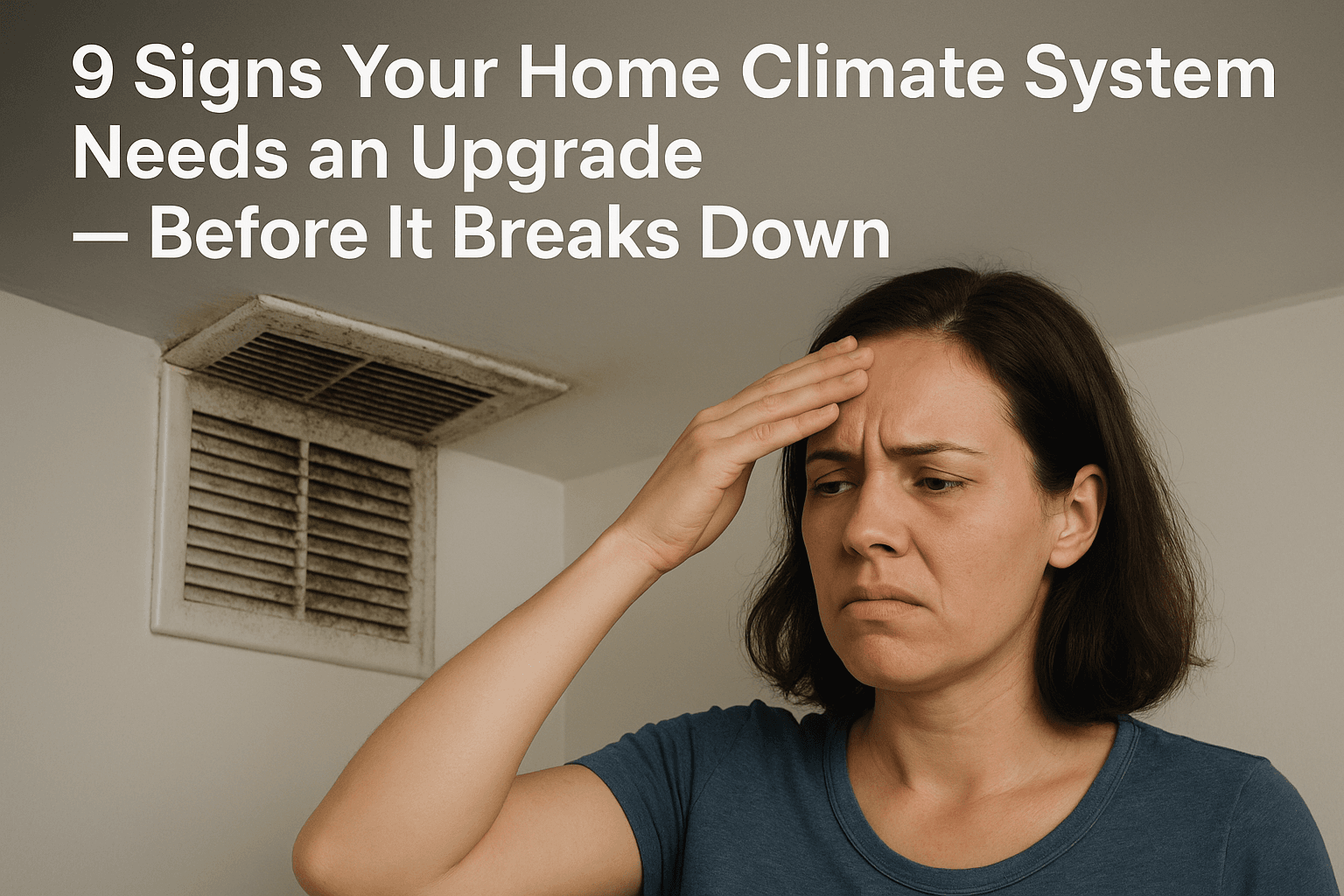
Another major indicator that your Climate System is declining is a noticeable drop in indoor air quality. As systems age, their ability to filter, clean, and circulate air effectively begins to weaken. This can lead to a sudden increase in dust accumulation, worsening allergy symptoms, lingering odors, and an overall feeling of stale or stuffy air inside the home.
A healthy Climate System should consistently remove airborne particles, regulate humidity, and maintain steady airflow. But when internal components wear down—such as filters, coils, motors, or ducts—the system can no longer perform these tasks as efficiently as it once did. The result is an environment where dust settles quickly on furniture, pollutants remain trapped inside, and breathing becomes less comfortable.
Common signs of declining indoor air quality include:
- Dust buildup within days instead of weeks
When your Climate System can’t filter out airborne particles effectively, dust recirculates throughout your home and settles much faster than normal. - More frequent sneezing, coughing, or congestion
Poor filtration allows allergens, pet dander, pollen, and microscopic debris to circulate freely, triggering allergy symptoms even in individuals who normally don’t experience issues. - Stale or stuffy air throughout the home
Insufficient airflow and weak ventilation prevent fresh air from moving through the house, causing rooms to feel heavy, stagnant, and uncomfortable. - Persistent odors that won’t go away
Old systems often struggle to remove airborne contaminants and moisture—leading to lingering smells from cooking, pets, or mold. - Increased humidity or excessive dryness
Older Climate Systems cannot maintain proper moisture balance, resulting in overly humid summers, dry winters, or inconsistent humidity levels that affect comfort and air quality.
The reality is that older Climate Systems simply weren’t designed with today’s advanced indoor air quality standards in mind. They often lack modern filtration technologies, integrated humidity controls, and the energy-efficient ventilation features that newer systems provide. This makes it difficult for aging equipment to deliver the clean, healthy airflow your home requires.
Why upgrading makes a difference:
Modern Climate Systems offer high-efficiency filters, multi-stage air purification, variable-speed fans, and advanced humidity management. These improvements allow your home to maintain better air quality, reduce allergens and airborne contaminants, and create a fresher, more comfortable environment for everyone inside.
Upgrading your system is not just a comfort investment—it directly supports better respiratory health, cleaner living conditions, and improved overall well-being.
Read more : 6 Benefits of Hiring Certified Heating and Cooling Experts for Your Home or Business
4. Strange Sounds — Rattling, Grinding, Clicking, or Buzzing
A well-functioning Climate System should operate quietly, producing only a soft hum as it heats, cools, and circulates air throughout your home. When unusual noises start to appear—whether subtle or loud—they are often early warning signs that internal components are deteriorating or malfunctioning. These sounds are your system’s way of signaling that something is wrong beneath the surface.
As your Climate System ages, parts begin to loosen, motors weaken, belts wear out, and internal components struggle to operate smoothly. These issues rarely resolve on their own and typically worsen over time, especially if the system is forced to run under strain.
Understanding the meaning behind each type of sound can help you identify the severity of the problem and determine when an upgrade is necessary.
Common sounds that signal serious trouble:
- Banging or clunking — Failing compressor or blower
Loud banging usually points to a broken or loose component inside the compressor or blower assembly. This is a major mechanical failure and a strong sign that the system is nearing the end of its life. - Grinding — Worn-out motor bearings
Grinding noises are often caused by failing bearings in the fan or motor. If left untreated, they can lead to motor burnout and complete system shutdown. - Rattling — Loose internal parts or damaged ducts
Rattling typically indicates loose screws, deteriorated fan blades, damaged ducts, or failing internal components. These issues can reduce airflow efficiency and increase energy consumption. - High-pitched squealing — Belt or motor issues
Squealing sounds usually come from worn or slipping belts, or from a motor struggling under excess friction. This often happens in older Climate Systems with outdated belt-driven components. - Buzzing — Electrical faults
A persistent buzzing sound can indicate loose wiring, failing electrical connections, or a malfunctioning capacitor—issues that pose both mechanical and safety risks.
Strange noises should never be ignored. What begins as a minor sound can quickly escalate into a major failure if the underlying issue remains unaddressed. A noisy Climate System is often a sign that the equipment has suffered significant wear and tear, and repairs may only provide a temporary solution.
Upgrading to a new system can restore quiet operation, improve efficiency, and eliminate the risk of sudden breakdowns caused by internal component failure.
5. Your Climate System Is Over 12–15 Years Old
Every home’s Climate System has a natural lifespan, and even the most well-maintained units eventually reach a point where performance begins to decline. On average, most systems last 12 to 15 years, depending on usage, maintenance frequency, and overall system quality. Once a system reaches this age range, it typically begins to lose efficiency, experience repeated breakdowns, and rely on outdated parts that are increasingly difficult—or impossible—to replace. Florida Cooling Group
Aging systems are far more vulnerable to mechanical failure because internal components have undergone years of stress, temperature fluctuations, and heavy workloads. Coils wear out, motors weaken, refrigerant leaks become more common, and energy consumption gradually rises. Over time, the system can no longer keep up with your home’s comfort needs, especially during extreme heat or cold.
Common indicators that your aging system may need replacement:
- Frequent breakdowns
If you find yourself calling a technician multiple times a year, it’s a sign that the system is deteriorating faster than it can be repaired. - Rising energy bills
Older Climate Systems lose their efficiency, leading to higher operating costs—even when they appear to be functioning normally. - Difficulty maintaining consistent temperature
An aging system may struggle to heat or cool the home evenly, causing hot and cold spots, longer run times, and unstable comfort levels. - Obsolete components that are hard to find
As manufacturers phase out older models, replacement parts become scarce, expensive, or unavailable—making repairs both difficult and costly.
When a system passes the 12–15 year mark, continuing to invest in major repairs often becomes less cost-effective than replacing the entire unit. Newer systems not only last longer but also come equipped with advanced technology designed to drastically improve comfort, efficiency, and reliability.
Modern systems offer valuable upgrades such as:
- Smart controls and thermostats
These allow you to automate comfort settings, track energy usage, and optimize performance around your schedule. - Inverter technology
Instead of cycling on and off, inverter-driven compressors adjust their speed to match your home’s exact needs—improving efficiency, reducing noise, and enhancing comfort. - Improved filtration and air purification
New systems offer multi-stage filtration, better dust control, and built-in air quality features that reduce allergens and pollutants. - Higher Seasonal Energy Efficiency Ratings (SEER)
Modern Climate Systems meet or exceed today’s strict efficiency standards, dramatically lowering energy consumption and monthly utility costs.
These advancements work together to provide quieter operation, cleaner air, more consistent temperatures, and significant long-term savings. If your Climate System is approaching or has passed 15 years of service, upgrading is one of the smartest investments you can make for comfort, efficiency, and peace of mind.
6. Frequent Repairs and Rising Maintenance Costs
If you’ve noticed that your Climate System seems to need repairs more often than it used to, this is a strong indication that the equipment is nearing the end of its dependable lifespan. Occasional repairs are normal, especially as systems age, but when those repairs become frequent—or increasingly expensive—it’s a sign that the internal components are wearing down faster than they can be fixed.
Older systems often suffer from multiple small failures that add up quickly: worn-out motors, failing capacitors, refrigerant leaks, cracked coils, and malfunctioning electrical components. While each individual repair might seem manageable, the cumulative cost can quickly exceed the price of upgrading to a new, more efficient Climate System.
Signs that repair costs are becoming unsustainable:
- Your system breaks down multiple times per year
If you’re calling a technician season after season, that’s a clear sign your system is no longer reliable. - Repairs are becoming more expensive
As older models age, replacement parts become harder to find and labor costs increase due to the complexity of servicing outdated equipment. - Repair fixes don’t last long
When the same issue returns—or new issues appear shortly after a repair—it signals widespread wear throughout the system. - You are spending 30% or more of the cost of a new system on yearly repairs
At this point, upgrading is almost always more cost-effective than continuing to patch an aging unit.
Frequent repairs not only drain your budget—they also increase the likelihood of a sudden system failure, especially during peak weather. An unexpected breakdown in the middle of summer or winter can leave your home uncomfortable, disrupt your daily routine, and force you into an emergency replacement at the worst possible time.
Why upgrading makes more sense than repairing:
A new Climate System isn’t just more reliable—it’s engineered with modern components designed to last longer, run more efficiently, and require fewer repairs. Advanced diagnostics, smart controls, improved refrigerants, and durable materials significantly reduce long-term maintenance needs.
Most homeowners discover that the money they spend on recurring repairs can easily be redirected into a new system that delivers:
- Lower operating costs
- Better comfort
- Improved indoor air quality
- Higher energy efficiency
- A reliable warranty to protect against future expenses
When repairs become a regular part of your home maintenance routine, it’s time to consider an upgrade. Investing in a new system now can save you from the cycle of expensive fixes and guarantee a more dependable and efficient Climate System for years to come.
7. Your System Short-Cycles (Turns On and Off Frequently)
If you notice that your Climate System frequently turns on and off in short bursts rather than completing full heating or cooling cycles, it’s a clear warning sign that something is wrong. This phenomenon, known as short-cycling, not only reduces comfort but also puts unnecessary strain on the system, increases energy consumption, and can lead to premature equipment failure.
A properly functioning system should run through complete cycles to gradually and efficiently bring your home to the desired temperature. When short-cycling occurs, the system is constantly starting and stopping without reaching optimal performance, making it harder to maintain a consistent indoor climate.
Common causes of short-cycling include:
- Oversized or undersized Climate System:
If your system is too large for your home, it can heat or cool the space too quickly and then shut off, only to restart moments later. Conversely, an undersized system may struggle to maintain temperature, forcing repeated cycling to meet demand. - Faulty thermostat:
A thermostat that misreads temperatures or responds too aggressively can trigger rapid on/off cycles, disrupting comfort and efficiency. - Electrical issues:
Loose wiring, failing capacitors, or other electrical problems can cause inconsistent operation and short-cycling. - Low refrigerant levels or compressor issues:
If the system cannot generate sufficient cooling or heating, it may cycle rapidly in an attempt to compensate for performance loss. - Blocked airflow or dirty components:
Restricted airflow through ducts, clogged filters, or dirty coils can prevent the system from running properly, leading to frequent starts and stops.
Why this is a serious problem:
Short-cycling dramatically increases wear and tear on your Climate System, reducing the lifespan of motors, compressors, and other critical components. It also causes higher energy bills because each start-up consumes more electricity than continuous operation. Beyond that, your home will experience uneven temperatures, fluctuating humidity, and inconsistent comfort—defeating the purpose of the system entirely.
Solution:
While minor short-cycling can sometimes be addressed with maintenance or thermostat adjustments, persistent issues often indicate that your system is outdated or improperly sized. Upgrading to a modern Climate System with advanced controls, variable-speed compressors, and precise airflow management ensures smooth, efficient operation. New systems can maintain your desired temperature consistently without the frequent on/off cycles that wear out older equipment.
Read more :7 Common Air Conditioning Problems — And How Professionals Fix Them Fast
8. Unpleasant Smells Coming From Vents or System Components
A healthy Climate System should deliver clean, fresh air throughout your home. If you start noticing unusual or unpleasant odors whenever the system is running, it is a serious warning that something is wrong internally. Unexplained smells are rarely just an annoyance—they often indicate mechanical or environmental issues that, if ignored, can escalate into costly damage or even health hazards.
Common odor types and their likely causes:
- Burning smell: This often points to an electrical malfunction such as failing wiring, a short circuit, or a motor overheating. Ignoring burning odors can create safety risks, including fire hazards.
- Musty smell: A persistent musty odor usually indicates mold or mildew growth within the system—commonly on evaporator coils, in ductwork, or around moisture-prone components. Mold spores circulating in your home can aggravate allergies, asthma, and other respiratory conditions.
- Chemical or sweet smell: This is often associated with a refrigerant leak. Refrigerant is essential for cooling, and a leak reduces system efficiency while posing potential environmental and health concerns.
- Rotten or foul smell: This may point to dead pests or other organic debris trapped within the ductwork, or to microbial buildup in areas where moisture accumulates.
While cleaning the system or replacing filters may temporarily improve air quality, persistent or recurring odors usually signal deeper problems that simple maintenance cannot resolve. In many cases, these issues indicate that the system is deteriorating internally—meaning an upgrade is the most reliable, long-term solution. A modern Climate System is designed to prevent microbial growth, manage humidity, and maintain superior airflow, keeping your home smelling clean and fresh all year round.
9. Your Home Always Feels Humid, Dry, or Uncomfortable
A Climate System does much more than just heat or cool your home—it plays a critical role in regulating humidity and ensuring balanced airflow. If your indoor environment consistently feels overly humid in the summer, excessively dry in the winter, or generally uncomfortable throughout the year, it’s a strong sign that your system can no longer maintain proper climate control.
Common causes of poor comfort control:
- Old or failing evaporator coils: These reduce the system’s ability to cool air effectively or remove excess moisture, leading to humidity problems.
- Weak blower motors: Reduced airflow prevents the system from distributing conditioned air evenly, causing hot or cold spots and inconsistent comfort.
- Inaccurate thermostats: An outdated thermostat may fail to correctly monitor temperature or humidity, causing the system to run inefficiently.
- Outdated system design: Older systems may not be capable of handling modern homes’ insulation, square footage, or layout, resulting in poor comfort levels.
- Failing heat exchangers or compressors: Essential for heating and cooling, these components lose efficiency over time, preventing the system from delivering optimal performance.
Modern Climate Systems solve these problems with intelligent controls that automatically adjust temperature and humidity, variable-speed motors for balanced airflow, and zoning features to maintain consistent comfort throughout the home.
Why Upgrading Your Climate System Is the Smart Move
Upgrading your Climate System is more than just a preventive measure—it’s an investment in long-term comfort, energy efficiency, and peace of mind. A modern system offers multiple benefits that go far beyond simply replacing an old unit:
- Lower utility bills: High-efficiency equipment uses less energy to deliver the same level of heating or cooling.
- Better indoor air quality: Advanced filtration, dehumidification, and airflow management create a healthier home environment.
- Higher efficiency ratings: Newer systems meet or exceed today’s energy standards, reducing waste and environmental impact.
- Noise-free operation: Variable-speed compressors and quiet fans provide near-silent operation, unlike aging systems.
- Smart controls and automation: Modern thermostats and system automation allow precise control, remote monitoring, and energy optimization.
- Cleaner, healthier airflow: Advanced air purification features reduce allergens, dust, and microbial buildup.
Most importantly, a system upgrade eliminates the worry of sudden breakdowns during extreme weather, ensuring consistent comfort throughout the year.
Final Thoughts
Your home’s Climate System is at the heart of your comfort, health, and energy efficiency. Ignoring early warning signs can lead to inconvenient breakdowns, rising energy bills, and long-term discomfort. By recognizing the nine key indicators—rising energy costs, uneven temperatures, poor indoor air quality, strange noises, age, frequent repairs, short-cycling, unpleasant odors, and inconsistent humidity—you can take proactive steps to replace or upgrade your system before a full failure occurs.
Investing in a modern Climate System not only restores comfort and efficiency but also provides peace of mind, cleaner air, and lower energy costs for years to come. By acting early, you ensure your home remains safe, comfortable, and enjoyable no matter the season.
