
Table of Contents
The AC system plays a central role in maintaining a comfortable and healthy home environment. Whether you live in a hot climate year-round or only experience high temperatures during certain seasons, an efficient air conditioning system is essential for keeping indoor spaces cool, breathable, and enjoyable. For many homeowners, the air conditioning system isn’t just a convenience — it’s a vital part of daily life that affects everything from sleep quality to energy costs.
Because the AC runs for long hours, especially during warm months, it is normal for it to experience occasional problems. When the AC begins to lose performance, airflow becomes weaker, or cooling becomes uneven, the comfort of your home can drop very quickly. Even small issues can grow into bigger ones if not addressed on time, leading to unnecessary stress, higher energy bills, and sometimes more expensive repairs later.
Understanding the most common air conditioning system problems is one of the smartest ways to stay prepared. Many homeowners don’t realize that early signs — such as unusual sounds, rising energy consumption, or inconsistent cooling — can be helpful warnings. These signs allow you to take action early, avoid major breakdowns, and keep your air conditioning system running smoothly throughout the entire season. You don’t need to be a technical expert to notice these symptoms; you simply need to know what to look for and when to call a professional.
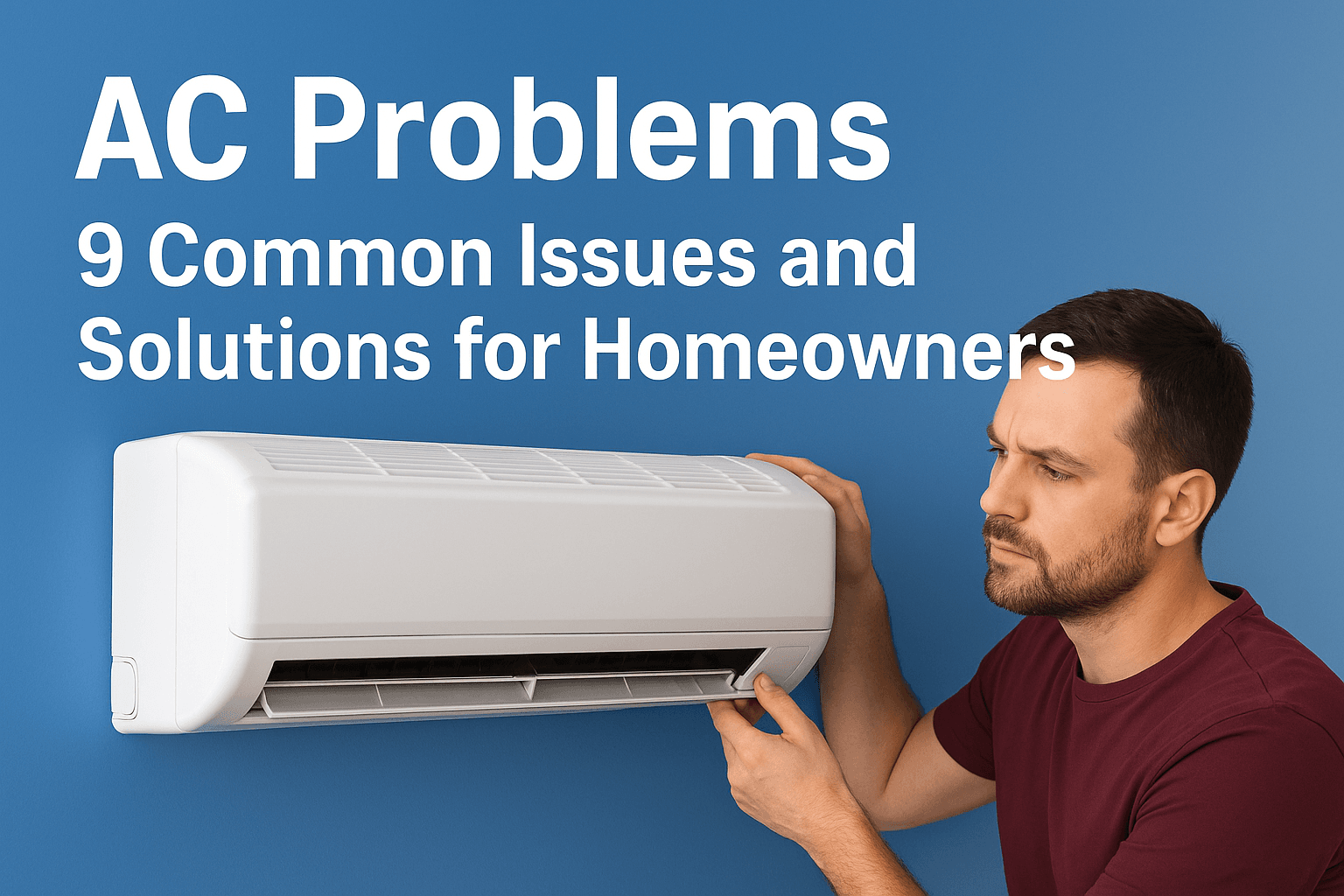
In this guide, we break down 9 of the most common AC problems homeowners face, explain why they happen, and provide safe and simple solutions. These solutions don’t require opening the air conditioning system or handling anything dangerous. Instead, they focus on what homeowners can safely observe and when it’s best to contact a certified technician. With the right knowledge, you can extend the lifespan of your air conditioning system, maintain consistent cooling, and ensure your home remains a comfortable retreat no matter how high the temperature rises outside.
This detailed breakdown will help you understand the warning signs, avoid unnecessary discomfort, and protect your home’s cooling system from long-term damage. Let’s explore the most frequent air conditioning system issues and the safest ways to manage them before they turn into bigger challenges.
1. Weak or Low Airflow
Weak or low airflow is one of the most noticeable air conditioning system problems homeowners experience, and it often shows up gradually. At first, you may feel that the cool air coming from the vents is not as strong as it used to be. Over time, the airflow may become so weak that certain rooms feel warm while others stay slightly cooler. This uneven cooling can make your home uncomfortable and force the air conditioning system to work harder, which increases energy consumption.Visualmodo
There are several reasons why anair conditioning systemsystem may struggle to push air effectively. One of the most common causes is a clogged air filter. When dust, dirt, and debris build up inside the filter, they block the path of the air, reducing how much the air conditioning system can deliver into your home. Another frequent cause is a blocked or partially obstructed air duct. If a duct is kinked, closed, or filled with dust, the airflow becomes restricted before it even reaches your rooms.
In some cases, the issue comes from the blower motor, the part responsible for moving air through the system. A blower that is wearing out or running slower than normal can reduce airflow significantly. Although this is a more technical issue, the early signs—like weak airflow or unusual sounds—are often easy for homeowners to notice.
Safe Solution:
Start by checking your air filter and replacing it if it looks dusty or clogged. This simple step can instantly improve airflow and help your air conditioning system run more efficiently. If the airflow remains weak after swapping the filter, avoid trying to open ducts or parts of the air conditioning system yourself. Instead, contact a certified technician who can safely examine the blower, ducts, and internal airflow components. A professional inspection ensures the issue is fixed properly and prevents any damage to your air conditioning system system.
Resolving weak airflow early can improve cooling, reduce strain on the air conditioning system, and help maintain consistent comfort throughout your home.
Read more : Top 7 Signs Your AC System Needs Professional Attention — Before It Breaks Down
2. AC Blowing Warm Air
Few things are more frustrating for a homeowner than turning on the AC and feeling warm air coming from the vents. When the AC fails to produce cool air, it quickly affects the comfort of the entire home, especially during hot seasons. This issue can appear suddenly or develop slowly, starting with slightly warmer airflow and eventually turning into air that feels completely uncooled.
There are several reasons why an air conditioning system may begin blowing warm air, and understanding the most common causes can help you react early and prevent bigger complications. One of the simplest reasons is a thermostat setting error. If the thermostat is accidentally switched to “heat,” placed on the wrong mode, or set to a higher temperature than expected, the air conditioning system will not cool properly. It’s an easy mistake, but surprisingly common.
Another frequent cause is restricted airflow around the outdoor unit. The outside part of the air conditioning system, known as the condenser, releases heat from your home. When this unit becomes blocked by dirt, leaves, or debris, it struggles to release the heat, causing the system to blow warmer air inside. Regular outdoor cleaning—without opening the unit—is often enough to reduce this risk.
A more technical reason for warm air is low refrigerant levels. Refrigerant is the substance responsible for absorbing heat and cooling the air. When levels drop due to a leak or aging components, the air conditioning system cannot cool effectively. Refrigerant issues require a licensed professional because handling refrigerant involves strict safety rules and proper certification.medium
Internal mechanical problems, such as a failing compressor or electrical malfunction, can also lead to warm air. These issues usually come with additional signs, such as unusual noises, short cycling, or inconsistent cooling throughout the home. While homeowners can observe these symptoms, the inspection itself should always be done by a trained technician.
Safe Solution:
Begin by checking your thermostat to ensure it’s on the right mode (“cool”) and set to an appropriate temperature. Also inspect the area around the outdoor unit and clear away any debris, plants, or objects blocking airflow. If the air conditioning system continues blowing warm air after these simple steps, the safest option is to call a certified technician. They can check refrigerant levels, inspect the condenser coil, and diagnose internal parts without putting you or your AC system at risk.
Fixing warm-air issues early can restore your home’s comfort quickly, prevent energy waste, and extend the lifespan of your air conditioning system.
3. Increased Energy Bills
A sudden rise in your monthly energy bill is one of the most common signs that something may be wrong with your AC system. Even if your AC still seems to cool the home, a spike in energy consumption often means the system is working much harder than it should. Many homeowners notice this problem during warm seasons, when the AC runs for longer hours, but a sharp or unusual increase is usually a signal that the system needs attention.
There are several reasons why an air conditioning system might start using more energy than normal. One of the most frequent causes is dirty or clogged components. When dust and debris build up inside the system—on the filter, coils, or blower—the air conditioning system becomes less efficient. It has to work twice as hard to push air through the home, which directly increases power usage. Even something as simple as a dirty air filter can cause noticeable energy waste.
Another common cause is aging or worn-out parts. Over time, mechanical components in theair conditioning system experience natural wear. A weakened blower motor, a struggling compressor, or loose electrical connections can all make the system consume more electricity to perform basic cooling. These issues may not always show obvious symptoms at first, but the effect becomes clear when the utility bill rises.
Poor airflow can also contribute to higher costs. If vents are blocked, ducts are partially obstructed, or the outdoor unit is surrounded by debris, the air conditioning system loses efficiency. With restricted airflow, the system runs longer cycles trying to reach the desired temperature, which leads to higher energy usage.
In some cases, the issue is related to lack of maintenance. An AC that doesn’t receive regular checkups becomes less efficient over time. Dust accumulates, parts loosen, and cooling capacity declines, forcing the system to consume more energy just to stay functional. Annual tune-ups help prevent this gradual decline.
Safe Solution:
Start by checking and replacing your air filter if it appears dusty or clogged. This simple step can immediately improve airflow and reduce unnecessary energy use. Also make sure furniture or objects aren’t blocking air vents inside your home. For the outdoor unit, safely clear away leaves, dirt, or anything restricting airflow around it.
If your energy bills remain high despite these easy steps, it’s best to schedule a professional maintenance visit. A certified technician can clean internal components, check electrical connections, evaluate the blower and compressor, and restore your air conditioning system to proper efficiency. Routine maintenance doesn’t just reduce energy bills—it also extends the lifespan of your air conditioning system and helps keep your home consistently comfortable.
4. AC Not Turning On
Few situations worry homeowners more than an AC that won’t turn on at all. When you press the power button or adjust the thermostat and nothing happens—no sound, no airflow, no cooling—it can feel like the entire system has failed. While this issue can be stressful, it often has simple causes that can be checked safely before assuming the worst.
One of the most common reasons an air conditioning system fails to turn on is a power supply problem. Even a small electrical interruption, like a tripped breaker or a loose plug, can prevent the system from starting. Breakers can trip for many reasons, including temporary overload or a recent power fluctuation in the home. Because the air conditioning system relies on stable electricity, any interruption can stop the system instantly.
Another possible cause is a thermostat issue. If the thermostat battery is low, the wiring is loose, or the settings have been changed accidentally, the air conditioning system won’t receive the signal to start. Thermostats may seem simple, but even minor errors—like setting the system to “fan” instead of “cool”—can prevent the air conditioning system from turning on.
In some cases, the issue may involve internal electrical components, such as a control board, capacitor, or relay. These parts help the air conditioning system start, regulate airflow, and respond to temperature changes. When one of them malfunctions, the system may stay completely unresponsive. These internal electrical issues are not safe for homeowners to inspect themselves, as they require electrical knowledge and tools used by certified technicians.
Environmental factors can also play a role. For example, if the outdoor unit overheats due to debris, poor airflow, or extremely high temperatures, it may shut off as a safety measure. Likewise, if the system’s safety switches detect a problem—like moisture buildup—they may prevent the air conditioning system from turning on until inspected by a professional.
Safe Solution:
Before calling a technician, you can perform a few safe checks. Start by confirming that the air conditioning system is plugged in and that the breaker connected to the system has not tripped. Also inspect your thermostat to make sure it is set to “cool” and at a temperature lower than the room temperature. If your thermostat uses batteries, replacing them may help restore communication with the air conditioning system.
If the system still does not start after these simple steps, avoid attempting to open the AC or handle electrical parts. The safest next step is to contact a certified HVAC technician. They can diagnose issues like wiring problems, capacitor failures, or control board malfunctions safely and accurately.
Having a professional inspect the system ensures that your air conditioning systems restored without risk and prevents hidden issues from causing future breakdowns.
5. Strange Sounds From the AC Unit
Unusual or unexpected sounds coming from your AC can be alarming, especially when you’re used to the system running quietly in the background. While a soft hum is normal, any sudden change in sound—like rattling, buzzing, grinding, or clicking—usually indicates that something inside the AC needs attention. These noises often act as early warning signs, giving homeowners the chance to address issues before they turn into more serious problems.
One of the most common causes of noise is loose or misaligned parts. Over time, screws, panels, and small components can loosen due to normal vibration. When this happens, the air conditioning system may produce rattling or tapping sounds as these parts shift during operation. This type of noise usually begins subtly, then becomes more noticeable as the problem worsens.
Another source of unusual noise is the blower motor. If the blower begins to struggle due to wear, dirt buildup, or internal friction, it may produce grinding or squealing sounds. These sounds often signal that the motor needs professional maintenance. Although the air conditioning system might still run, continuing to operate it in this condition can cause additional stress on the system.
Buzzing sounds may come from electrical components, such as malfunctioning relays, loose wires, or a failing capacitor. Electrical noises are not something homeowners should inspect on their own, as they can indicate issues that require trained, certified technicians. Electrical problems can affect the system’s ability to start, run smoothly, or cool effectively.
The outdoor unit can also contribute to strange noises. When debris such as leaves, sticks, or small objects get too close to the fan blades, the air conditioning system may produce scraping or ticking sounds. While clearing debris around the outdoor unit is safe for homeowners, anything inside the casing should only be handled by a technician.
In some cases, unusual sounds may point to airflow restrictions. When air struggles to pass through clogged filters, blocked vents, or restricted ducts, the system may produce whistling or whooshing noises. These issues often start with minor airflow changes that become louder over time.
Safe Solution:
Start by checking your air filter to ensure it is clean and not restricting airflow. Also take a moment to inspect the outdoor unit and remove any visible debris that may be touching the fan area from the outside. Make sure vents inside the home are open and not blocked by furniture.
If the strange sounds continue, it’s safest to turn off the air conditioning system and schedule a professional inspection. A certified technician can safely identify whether the noise is coming from loose parts, the blower motor, the fan, or electrical components. Addressing the issue early helps prevent more costly repairs and ensures your AC continues to run smoothly and quietly.
6. Unpleasant Odors
Unpleasant or unusual odors coming from your air conditioning system can make your home uncomfortable very quickly. Since the AC circulates air throughout the rooms, any smell that enters the system can spread fast, affecting the overall indoor atmosphere. Homeowners often describe these odors as musty, damp, burnt, or simply “strange,” and each type of smell can point to a different issue within the air conditioning system system. Understanding why these odors happen helps you take action early and keep your home’s air fresh and healthy.
One of the most common causes of unpleasant odors is moisture buildup. When humidity collects inside the air conditioning system—especially in the evaporator coil or drain line—it can create a damp environment. This trapped moisture may lead to musty smells that become noticeable when the system turns on. Although moisture buildup is a normal possibility in any cooling system, ignoring it can make the odor stronger over time.
Dust accumulation inside the AC can also create unusual smells. When the system turns on after a long period of inactivity, dust on the coils or internal components may burn off slightly, producing a temporary odor. This smell usually fades quickly, but if it persists, it may be a sign that the air conditioning system needs professional cleaning.
Another potential cause is restricted airflow caused by dirty filters. When air filters are clogged with dust and particles, airflow becomes uneven. This can lead to stale or unpleasant smells circulating through the home. Filters are one of the simplest parts to maintain, but they are also one of the most common sources of odor problems.
In some cases, unpleasant odors may be linked to issues in the drainage system. The drain line removes condensation produced by the cooling process. If this line becomes blocked, water may accumulate inside the air conditioning system, creating dampness that leads to bad smells. A blocked drain line requires a technician to clear it safely, as attempting to open internal parts at home is not recommended.
Occasionally, electrical components inside the air conditioning system can be responsible for unusual odors. If a mechanical part overheats or a wire becomes faulty, the system may produce a faint burnt smell. Electrical issues should never be inspected by homeowners, as they require trained professionals to diagnose and repair safely.
Safe Solution:
Start by checking your air filter and replacing it if it looks dirty or clogged. This simple step often reduces stale or dusty odors. Also ensure that your indoor spaces have good ventilation, which helps freshen the air naturally. For the outdoor unit, keep the surrounding area clean so no debris enters the system.
If the odor persists or becomes stronger—even after replacing the filter—contact a certified technician. They can safely examine the drain line, evaporator coil, and internal components to determine the source of the smell. Professional cleaning not only removes odors but also improves air quality and helps your AC maintain efficient performance.
7. Water Leaks Around the air conditioning system
Finding water around your AC can be worrying, especially if it spreads near furniture or flooring. Although an air conditioning system naturally produces condensation during the cooling process, that water is designed to flow safely out of the system through a drain line. When something interrupts this process, water may start leaking indoors or around the unit, signaling that your AC needs attention.
One of the most common causes of air conditioning systemwater leaks is a clogged drain line. Over time, dust, dirt, or tiny particles can collect inside the drainage tube, blocking the normal flow of condensation. When the water can’t pass through the tube, it backs up and eventually leaks out of the unit. Since this part of the system is closed and requires special tools to clean properly, homeowners should avoid trying to open it themselves.
Another frequent cause is a dirty evaporator coil. When the coil becomes covered in dust, airflow decreases and the coil can become too cold. This may cause excess ice to form, and when the ice melts, more water is produced than the system can handle. This extra moisture may drip around the unit. While homeowners can safely replace filters that contribute to coil issues, any cleaning of internal coils should be done by a certified technician.
Leaks may also appear if theair conditioning system is experiencing poor airflow. When airflow is restricted—usually due to dirty filters, blocked vents, or a struggling blower motor—the system may not evaporate condensation efficiently. This can lead to water collecting inside the unit. Ensuring proper airflow is one of the simplest ways to avoid early leak problems.
Sometimes leaks occur because of improper installation or a tilted unit. If the indoor unit isn’t level, condensation may not drain correctly. This is more common after recent installations or after the unit has been accidentally moved. Only a trained professional should adjust or re-level an indoor air conditioning system, as this requires precise handling.
A damaged or worn-out drain pan can also cause water leaks. The drain pan sits beneath the evaporator coil and catches condensation. If it cracks or rusts over time, water can escape around the unit. This issue is more common in older systems and requires professional replacement.
Safe Solution:
Start by checking your AC air filter. A clean filter helps restore airflow and may reduce moisture buildup. Also make sure nothing is blocking vents inside the home. For the outdoor unit, keep the surrounding area clean so air can flow properly.
If you notice constant leaking, puddles forming, or water dripping directly from the unit, avoid opening the AC. The safest choice is to call a certified technician. They can clear clogged drain lines, inspect the evaporator coil, repair the drain pan, and ensure the entire cooling system drains condensation safely and correctly.
Addressing leaks early helps protect your home from water damage and keeps your air conditioning system working efficiently.
8. Frequent Short Cycling
Short cycling occurs when your AC turns on and off repeatedly within short intervals, often before reaching the desired temperature. This problem not only reduces comfort but also places extra stress on the system, increasing energy consumption and wear on mechanical components. Homeowners may notice the AC running for just a few minutes at a time, shutting off, and then restarting repeatedly.
Several factors can cause short cycling. One common reason is a misplaced thermostat. If the thermostat is located near a heat source, in direct sunlight, or close to vents, it may detect the wrong temperature and cause the AC to cycle too often. Another cause is low refrigerant levels, which prevent the system from reaching the desired cooling capacity. When this happens, the AC may turn off automatically to avoid freezing internal components.
Electrical or mechanical issues, such as a failing compressor, clogged filter, or blocked airflow, can also trigger short cycling. The system may turn off prematurely as a safety measure to prevent overheating or other damage. Even minor airflow restrictions—like closed vents or dirty filters—can make the AC struggle and cycle more frequently.
Safe Solution:
Start by checking that air vents are open and that furniture or objects are not blocking airflow. Replace any dirty air filters. Ensure the thermostat is properly positioned away from direct sunlight or heat sources.
If short cycling continues, it’s best to contact a certified technician. They can inspect refrigerant levels, evaluate the compressor, and check internal components safely. Addressing short cycling promptly prevents unnecessary energy waste and helps your cooling system operate efficiently for years to come.
9. AC Not Cooling Enough
Sometimes an AC system runs without problems but fails to cool your home effectively. This issue can be subtle at first, with rooms taking longer to reach the desired temperature, or it can be more obvious, leaving the house uncomfortably warm even while the cooling system runs continuously.
Several factors may cause an AC to underperform. One common reason is a dirty or clogged air filter, which restricts airflow and reduces cooling efficiency. Another factor is a dirty condenser or evaporator coil. Dust and debris on these components reduce heat transfer, making it harder for the AC to cool the air properly. Restricted airflow in ducts or closed vents can also contribute to uneven or insufficient cooling.
An undersized AC unit can also cause problems. If the system is too small for the square footage of your home, it may struggle to maintain the desired temperature, especially during peak heat. While this is not something homeowners can fix themselves, identifying the problem early helps in planning an upgrade or replacement before the air conditioning system becomes overworked.
Low refrigerant levels, worn-out components, or aging systems can further reduce cooling capacity. These issues require professional inspection and repair, as handling refrigerant or internal mechanical parts is not safe for homeowners.
Safe Solution:
Start by replacing dirty air filters and ensuring that vents are open and unobstructed. Clear any debris around the outdoor unit to maintain airflow. If cooling remains insufficient, contact a certified technician to inspect the system. A professional can clean coils, check refrigerant levels, and evaluate whether the system is sized correctly for your home.
By addressing these issues promptly, you can restore proper cooling, reduce energy waste, and prolong the life of your air conditioning system system.
Read more : 8 Energy-Efficient Cooling Systems That Can Transform Your Home Comfort
Conclusion
Maintaining a comfortable home environment relies heavily on a properly functioning AC system. As we’ve explored, homeowners can face a wide range of common AC problems—from weak airflow and warm air to water leaks, strange noises, and frequent short cycling. Each of these issues affects not only comfort but also energy efficiency and the long-term health of your AC.
The key to avoiding costly repairs and ensuring consistent cooling is early detection and proactive maintenance. Simple steps, such as regularly replacing air filters, keeping vents and outdoor units clear, and scheduling professional inspections, can prevent many of these common problems. Recognizing the warning signs—like unusual odors, rising energy bills, or reduced cooling performance—allows homeowners to act quickly and safely before small issues turn into major malfunctions.
Ultimately, understanding how your AC system works and what typical problems look like empowers you to protect your investment, enhance indoor comfort, and extend the lifespan of your cooling system. While some issues can be addressed with safe, basic checks, others require the expertise of a certified technician. Combining regular care with professional support ensures your AC operates efficiently, quietly, and reliably throughout every season.
By staying informed and proactive, you can enjoy a cool, comfortable home environment and prevent common AC problems from disrupting your daily life. Regular maintenance and attention to your AC today can save you time, money, and stress in the long run.
