

Table of Contents
Your HVAC system is more than just a piece of equipment—it’s a crucial investment that plays a central role in maintaining comfort, health, and energy efficiency in your home throughout the year. From sweltering summer heat to the biting cold of winter, your HVAC system works tirelessly to regulate indoor temperature, control humidity levels, and improve air quality, creating a safe and comfortable environment for you and your family.
However, like any mechanical system, your HVAC system is subject to wear and tear over time. Without proper care, even the most advanced systems can experience reduced efficiency, higher energy bills, and unexpected breakdowns. That’s why proactive maintenance and mindful usage are essential to extend the life of your system and protect your investment.
Fortunately, there are proven strategies that homeowners can implement to keep their HVAC system operating at peak performance for years. From routine inspections and filter replacements to smart energy-saving practices, small but consistent efforts can prevent costly repairs, enhance energy efficiency, and ensure your system continues to deliver reliable comfort.
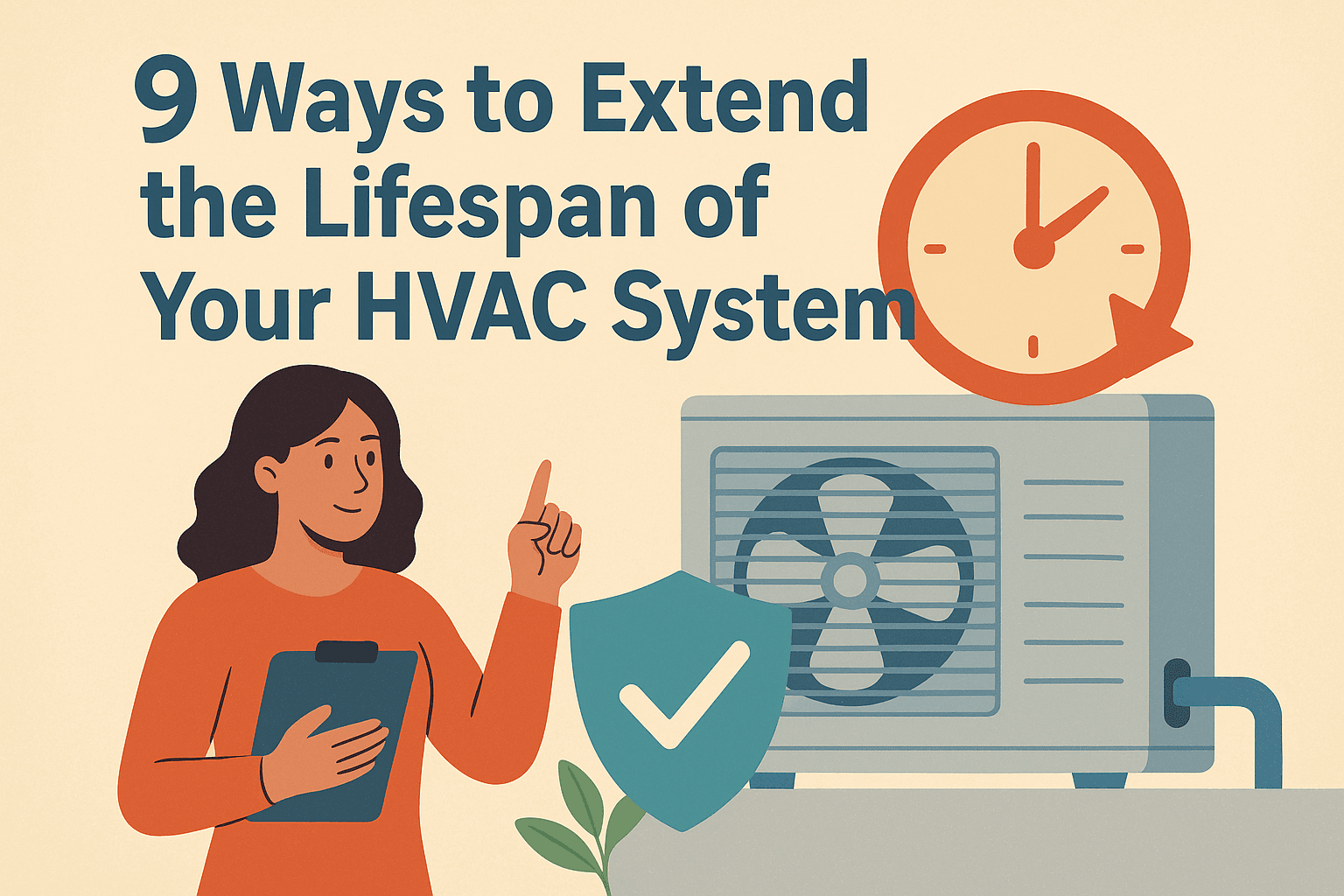
In this article, we’ll explore nine practical ways to extend the lifespan of your HVAC system, offering detailed guidance on maintenance, efficiency improvements, and smart usage. Whether you’re a new homeowner or looking to get more out of your existing system, these tips will help you maximize performance, save money, and enjoy a comfortable indoor environment all year round.
1. Schedule Regular Professional Inspections
One of the most effective ways to extend the lifespan of your HVAC system is to schedule regular professional inspections. While many homeowners focus on simple maintenance tasks like changing filters or cleaning vents, a professional technician can identify underlying issues that are not visible to the untrained eye. These inspections go far beyond basic upkeep—they involve a thorough assessment of your system’s components, including the compressor, condenser, evaporator coils, fans, and electrical connections.
During a professional inspection, a certified technician will look for early signs of wear and tear, corrosion, or mechanical malfunctions that could escalate into major problems if left unaddressed. For example, minor refrigerant leaks or loose electrical connections may seem insignificant, but over time they can reduce the efficiency of your HVAC system, increase energy consumption, and even lead to costly breakdowns. Detecting these issues early ensures that repairs are performed promptly, preventing unnecessary strain on the system.
In addition, inspections often include system cleaning and performance testing. Removing accumulated dirt and debris from critical components improves airflow, enhances heating and cooling efficiency, and reduces the likelihood of overheating or freezing. Technicians can also calibrate thermostats, lubricate moving parts, and verify that your HVAC system is operating at its optimal capacity.
Experts generally recommend scheduling professional inspections at least twice a year—once in the spring for your cooling system and once in the fall for your heating system. This routine ensures that your HVAC system is ready for seasonal changes and can handle the demands of extreme temperatures without unnecessary stress. Over time, these inspections not only extend the lifespan of your equipment but also help maintain energy efficiency, lower utility bills, and provide peace of mind knowing your home’s comfort system is in top shape.
Read more :The Benefits of Installing a Smart Thermostat for Your HVAC System
2. Change Air Filters Frequently
One of the simplest yet most impactful ways to protect and extend the lifespan of your HVAC system is by regularly changing or cleaning the air filters. Air filters play a critical role in trapping dust, pollen, pet dander, and other airborne particles, preventing them from circulating through your home. Over time, these filters become clogged, reducing airflow and forcing your HVAC system to work harder to maintain the desired temperature. This added strain can lead to increased energy consumption, overheating, or even premature system failure.
Depending on the type of filter and the environment in your home, filters should generally be checked every month and replaced or cleaned every 1–3 months. Homes with pets, smokers, or high levels of dust may require more frequent attention. Skipping this simple task can allow debris to accumulate on vital components such as the blower motor and evaporator coils, which can impair performance, lower efficiency, and shorten the overall lifespan of your HVAC system.
Regular filter maintenance also directly improves indoor air quality, which is essential for the health and comfort of your family. Clean filters reduce allergens and irritants, making the home safer for children, elderly family members, or anyone with respiratory conditions. Additionally, maintaining proper airflow helps your HVAC system achieve a more consistent temperature throughout your home, reducing hot and cold spots and ensuring energy-efficient operation.
For convenience, consider marking filter replacement dates on a calendar or setting a reminder. Many homeowners also opt for higher-quality HEPA or pleated filters, which capture more particles and improve air quality without significantly restricting airflow. By staying on top of filter maintenance, you not only protect your HVAC system from unnecessary wear but also enjoy a healthier, more comfortable living environment year-round.
Read more : The Importance of Regular HVAC Maintenance for Energy Efficiency
3. Keep the Area Around the Unit Clean
The location and surroundings of your HVAC system, especially the outdoor condenser unit, play a crucial role in its efficiency and longevity. Outdoor units are exposed to environmental elements such as dust, leaves, grass clippings, and other debris, which can accumulate over time and restrict airflow. When airflow is blocked, your HVAC system has to work harder to maintain the desired indoor temperature, leading to increased energy consumption, unnecessary wear, and a higher risk of mechanical failure. trane
To prevent these issues, it’s essential to keep the area around your outdoor unit clean and clear. Experts recommend maintaining at least two feet of clearance on all sides of the unit to ensure proper airflow. Regularly inspect the unit and remove any leaves, twigs, dirt, or other obstructions that could interfere with operation. During the fall, when leaves are more likely to fall, and in spring, when pollen and debris accumulate, extra attention is particularly important.
In addition to removing visible debris, consider trimming nearby bushes, shrubs, or overhanging branches that could shed leaves or block airflow. Proper clearance not only protects your HVAC system but also allows technicians easier access during inspections or repairs.
Another tip is to periodically clean the condenser coils. These coils are responsible for releasing heat from the refrigerant, and when clogged with dirt or debris, they reduce cooling efficiency and force your HVAC system to work overtime. A gentle rinse with a garden hose (avoiding high-pressure sprays) can help keep the coils free of buildup.
By keeping the surrounding area clean and maintaining proper airflow, you significantly reduce strain on your HVAC system, improve energy efficiency, and prevent premature wear. This simple yet effective habit is an essential part of proactive maintenance, ensuring that your system continues to perform optimally for years to come.
4. Seal Ductwork Leaks
One of the most overlooked factors that can significantly affect the efficiency and lifespan of your HVAC system is ductwork integrity. Over time, ducts can develop leaks, cracks, or disconnected joints, allowing conditioned air to escape before it reaches your living spaces. This not only wastes energy but also forces your HVAC system to work harder to compensate for lost airflow, increasing wear and tear and potentially shortening the system’s lifespan.
Sealing ductwork leaks improves both efficiency and comfort. When air escapes through leaks, some rooms may not reach the desired temperature, creating uneven heating or cooling. This uneven airflow can make your HVAC system cycle more frequently, putting unnecessary strain on key components like the blower motor and compressor. By sealing leaks, you ensure that more of the heated or cooled air actually reaches your living spaces, reducing energy costs and reducing the stress on your HVAC system.
Professional technicians use a variety of methods to identify and seal leaks. Common techniques include using mastic sealant or metal tape to secure joints and cracks, as well as inspecting for loose connections that may have occurred over time. In some cases, duct testing with a blower door or pressure test may be recommended to locate hidden leaks and ensure the system is fully sealed.
Additionally, well-sealed ducts improve indoor air quality. Leaks can allow dust, allergens, and outdoor pollutants to enter your duct system, which then circulate throughout your home. By sealing your ductwork, you not only protect your HVAC system but also create a cleaner, healthier indoor environment. gagneac
Regular inspection and maintenance of ductwork should be part of your HVAC system care routine. Addressing leaks promptly prevents inefficiencies, reduces energy consumption, and minimizes the likelihood of costly repairs—ultimately extending the life of your system and keeping your home comfortable year-round.
5. Upgrade to a Programmable Thermostat
One of the most effective ways to reduce unnecessary strain on your HVAC system and extend its lifespan is by upgrading to a programmable thermostat. Unlike traditional manual thermostats, programmable models allow you to set temperature schedules based on your daily routines, ensuring your HVAC system operates efficiently without running when it isn’t needed.
For example, during the workday or at night when the house is empty or everyone is asleep, your programmable thermostat can automatically adjust temperatures to save energy while reducing the workload on your HVAC system. By avoiding constant heating or cooling during off-peak periods, you prevent the system from cycling excessively, which can wear down essential components like the compressor, blower motor, and fans.
Modern programmable thermostats also offer advanced features such as learning your schedule, remote control via smartphone apps, and integration with smart home systems. These features give you greater control over your HVAC system, allowing for precise adjustments and real-time monitoring of energy usage. Some models even provide energy usage reports and maintenance reminders, helping you catch issues early before they escalate into major problems.
In addition to energy savings, a programmable thermostat enhances indoor comfort. It ensures that your home reaches the desired temperature by the time you wake up or return home, without running the system unnecessarily throughout the day. This not only protects your HVAC system from overworking but also reduces energy bills, making it a cost-effective upgrade with both short-term and long-term benefits.
Installing or upgrading to a programmable thermostat is relatively simple and can be done by a professional in a short amount of time. Once installed, it becomes an essential tool in your HVAC system maintenance plan, helping you maintain optimal efficiency, improve comfort, and extend the life of your investment.
6. Monitor Refrigerant Levels
Proper refrigerant levels are essential for the efficient operation and longevity of your HVAC system. Refrigerant is the fluid responsible for absorbing heat from your home and releasing it outside, enabling your system to cool indoor spaces effectively. If refrigerant levels are too low or if there is a leak, your HVAC system has to work harder to maintain the desired temperature, which can cause excessive wear on key components and significantly reduce the system’s lifespan.
Low refrigerant levels often result in poor cooling performance, increased energy consumption, and even ice formation on coils. Over time, this added strain can damage the compressor—a critical and expensive part of your HVAC system. Therefore, it is vital to have refrigerant levels checked regularly by a certified technician. During routine inspections, the technician will measure the refrigerant, identify leaks, and recharge the system if necessary.
Leaks in the refrigerant lines not only harm your system but can also have environmental consequences. Modern refrigerants are designed to be eco-friendly, but escaping refrigerant can contribute to greenhouse gas emissions if not handled properly. Promptly addressing leaks ensures that your HVAC system remains efficient and environmentally responsible.
Homeowners should also be aware of early signs that indicate refrigerant issues, such as uneven cooling, longer run times, or unusual hissing sounds near the outdoor unit. Addressing these warning signs promptly can prevent minor problems from turning into costly repairs or complete system failures.
By regularly monitoring refrigerant levels and addressing leaks immediately, you reduce unnecessary strain on your HVAC system, maintain energy efficiency, and extend the overall life of the unit. It’s a small step that can prevent major headaches and protect your investment for years to come.
7. Insulate Your Home Properly
Proper insulation is a crucial yet often overlooked factor in extending the lifespan of your HVAC system. Insulation helps regulate indoor temperatures by reducing heat transfer between the interior of your home and the outside environment. When your home is well-insulated, your HVAC system doesn’t have to work as hard to maintain a consistent and comfortable temperature, which reduces wear and tear and extends its operational life.
Inefficient or insufficient insulation allows heat to escape during winter and enter during summer, forcing your HVAC system to run longer and more frequently to compensate. This constant cycling not only increases energy bills but also places significant stress on key components like compressors, fans, and blowers. Over time, the added strain can lead to mechanical failures and costly repairs.
Key areas to focus on for insulation include attics, walls, floors, basements, and crawl spaces, as well as sealing gaps around windows and doors. Even small leaks or poorly insulated areas can significantly impact your HVAC system’s efficiency. Adding insulation in these critical areas can dramatically reduce energy loss, create a more comfortable living environment, and allow your system to operate at peak performance with less effort.
Additionally, proper insulation works hand-in-hand with other energy-saving strategies such as programmable thermostats and regular maintenance. When your home retains heat in the winter and stays cool in the summer, your HVAC system experiences fewer extreme demands, helping to prevent premature wear and costly breakdowns.
In short, investing in proper insulation is not only a smart energy-saving measure but also a long-term strategy to protect your HVAC system. By minimizing the workload on your system, you ensure it remains efficient, reliable, and durable for years to come.
8. Keep Vents and Registers Open
Maintaining proper airflow is essential for the efficient operation and longevity of your HVAC system, and one of the simplest ways to achieve this is by keeping all vents and registers open and unobstructed. When vents are blocked by furniture, rugs, or other objects, or when registers are closed to redirect airflow, your HVAC system is forced to work harder to circulate air throughout your home. This added strain can lead to uneven heating or cooling, increased energy consumption, and premature wear on the system’s components.
Closed or blocked vents reduce the efficiency of your HVAC system by restricting airflow to certain areas, causing the system to overcompensate in other parts of the home. This overcompensation can make your blower motor and compressor work harder than necessary, shortening their lifespan and potentially leading to costly repairs. Over time, consistently blocked airflow can even cause overheating or freezing of components, further compromising system performance.
To maintain optimal performance, ensure that all vents and registers are open and free from obstructions at all times. Regularly inspect these areas for dust accumulation, which can also impede airflow. Cleaning vents periodically and removing any furniture or items blocking airflow ensures your HVAC system operates efficiently and maintains consistent temperatures throughout your home.
In addition to improving system performance, keeping vents and registers open contributes to better indoor air quality. Proper airflow ensures that filtered, conditioned air circulates evenly, reducing stagnant areas where dust, allergens, or humidity can accumulate. This creates a healthier and more comfortable living environment while simultaneously reducing strain on your HVAC system.
By following this simple but crucial practice, you help your HVAC system run more efficiently, reduce energy costs, and extend its overall lifespan, ensuring reliable comfort for your home year-round.
9. Address Issues Promptly
Proactive attention to your HVAC system can make a significant difference in its longevity and efficiency. Ignoring unusual sounds, inconsistent temperatures, or rising energy bills can lead to minor problems escalating into major system failures. Promptly addressing these issues ensures your HVAC system continues to operate reliably while preventing costly repairs or premature replacement.
Common signs that your HVAC system may need attention include strange noises such as rattling, buzzing, or hissing, uneven heating or cooling throughout the home, increased humidity, or higher-than-normal energy bills. These indicators often point to underlying issues, such as failing components, blocked airflow, refrigerant leaks, or electrical problems. By contacting a professional technician as soon as these symptoms appear, you can diagnose and resolve problems before they compromise the entire system.
Timely intervention not only prevents small issues from turning into expensive repairs but also protects key components of your HVAC system. For instance, ignoring a malfunctioning blower motor can cause the compressor to overwork, while neglecting refrigerant leaks can damage both cooling efficiency and the environment. Addressing problems early maintains optimal performance, reduces energy consumption, and ensures that your system functions safely.
In addition, regular attention builds a preventative maintenance mindset. When you stay alert to the signs of potential issues, you create a routine of monitoring and caring for your HVAC system, allowing it to operate at peak efficiency for years. Prompt action, combined with regular inspections and routine maintenance, ensures your system remains reliable, energy-efficient, and long-lasting.
Ultimately, addressing issues as soon as they arise is one of the most effective strategies for extending the life of your HVAC system, protecting your investment, and maintaining consistent comfort throughout your home.
Conclusion
Maintaining and extending the lifespan of your HVAC system requires consistent care, attention, and proactive strategies. From scheduling regular professional inspections and changing air filters to sealing ductwork, upgrading thermostats, and properly insulating your home, each step plays a vital role in ensuring your system operates efficiently and reliably for years to come.
Neglecting maintenance or delaying repairs can lead to decreased efficiency, higher energy bills, and costly breakdowns. On the other hand, following the nine strategies outlined in this article allows you to protect your investment, improve indoor comfort, and enhance energy efficiency. By keeping vents clear, monitoring refrigerant levels, maintaining clean surroundings for the unit, and addressing issues promptly, you minimize unnecessary strain on your HVAC system, helping it perform at its best throughout its lifespan.
In short, caring for your HVAC system isn’t just about avoiding problems—it’s about maximizing performance, saving money, and creating a safe, comfortable, and energy-efficient home environment. Implementing these practices consistently ensures that your system remains a dependable part of your home for many years, giving you peace of mind and long-term value.
