

Table of Contents
HVAC Systems are essential to the comfort, health, and efficiency of modern homes and commercial buildings. They do far more than simply heat or cool indoor spaces. Well-designed HVAC Systems regulate temperature, manage humidity levels, improve indoor air quality, and help maintain a healthy living or working environment throughout the year. Because these systems operate largely in the background, their importance is often overlooked—until something goes wrong.
Despite how critical the system are, many homeowners and property managers continue to rely on outdated beliefs and widespread misconceptions. These myths are often passed down through word of mouth or based on older technologies that no longer reflect how today’s the system function. As a result, people may unknowingly misuse their systems, delay necessary maintenance, or make poor upgrade decisions. Over time, these mistakes can lead to rising energy bills, uneven indoor temperatures, premature equipment failure, and costly repairs that could have been avoided. Energy.gov
Having a clear understanding of how the system actually work empowers you to make smarter, more informed choices. When you know what your system needs—and what it doesn’t—you can protect your investment, extend the lifespan of your equipment, and ensure consistent comfort in every season. Proper knowledge also allows you to optimize performance, reduce energy waste, and create a healthier indoor environment for occupants.
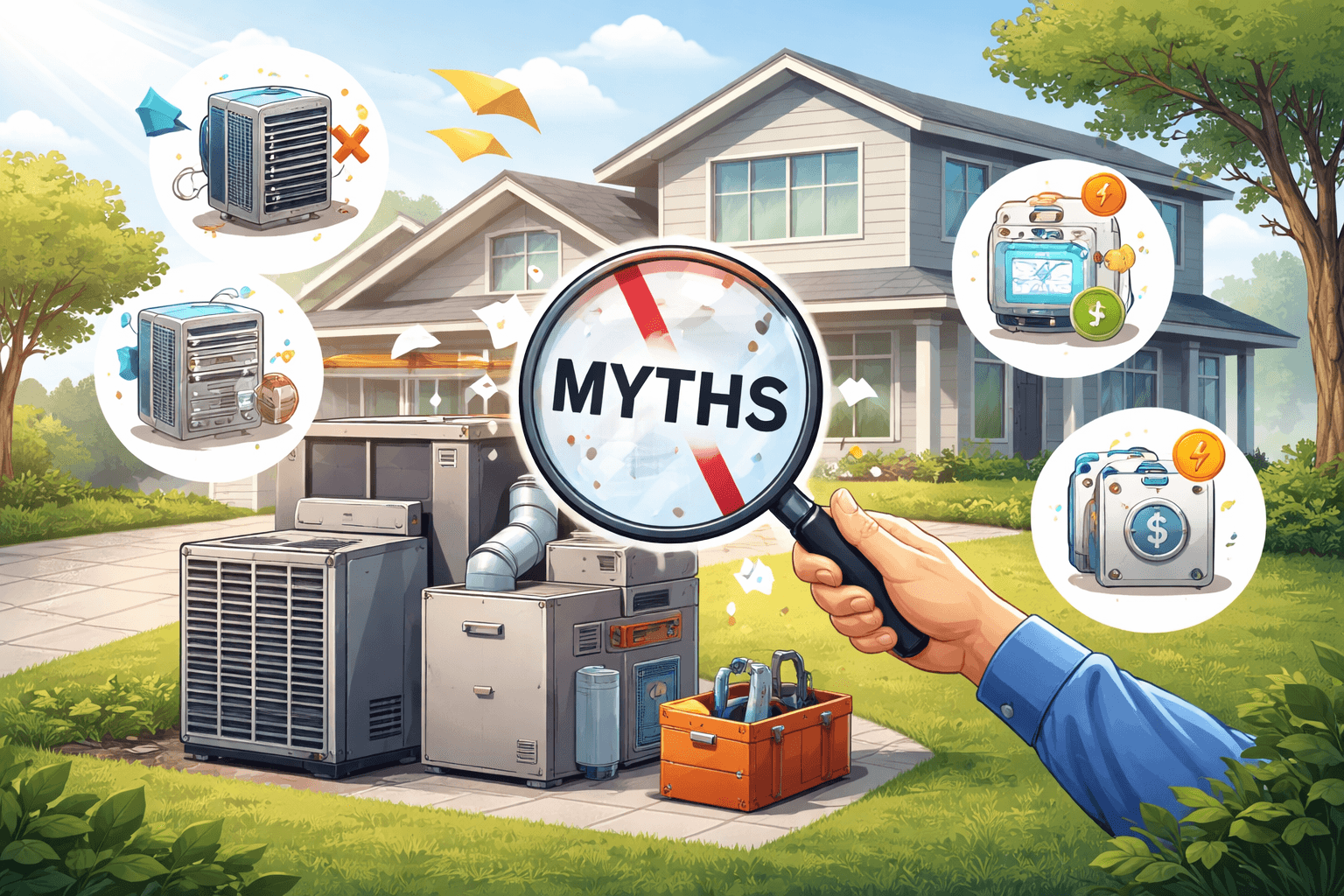
In this article, we will break down and debunk seven of the most common myths about HVAC Systems that continue to mislead homeowners. By separating fact from fiction, you’ll gain practical insights into how HVAC Systems really operate and learn how to avoid the mistakes that hold many systems back from performing at their best.
Myth 1: Bigger HVAC Systems Always Perform Better
One of the most common and misleading beliefs about HVAC Systems is that bigger automatically means better. Many homeowners assume that installing a larger HVAC System will cool or heat their space faster, provide stronger performance, and eliminate comfort issues. While this idea may sound logical at first, it is one of the most damaging myths surrounding HVAC Systems.
In reality, oversized HVAC Systems often create more problems than they solve. When an HVAC System is too large for a home or building, it reaches the desired temperature very quickly and shuts off just as fast. This frequent starting and stopping—known as short cycling—prevents the system from running long enough to properly regulate indoor conditions. As a result, rooms may feel unevenly heated or cooled, and humidity levels may remain unbalanced.
Properly sized HVAC Systems are designed to run longer, steady cycles that maintain consistent temperatures and remove excess moisture from the air. Oversized HVAC Systems, on the other hand, struggle to control humidity, especially in warmer climates. This can lead to a damp or uncomfortable indoor environment and may even contribute to mold growth over time.
Another major downside of oversized HVAC Systems is increased wear and tear. Short cycling places extra strain on key components such as compressors, motors, and electrical parts. Over time, this stress shortens the lifespan of HVAC Systems and increases the likelihood of breakdowns and costly repairs. Ironically, systems that are too large often fail sooner than properly sized HVAC Systems.
Energy efficiency is also negatively affected when HVAC Systems are oversized. Although larger systems may seem powerful, they often consume more energy than necessary due to frequent cycling and inefficient operation. This leads to higher utility bills without delivering better comfort.
The truth is that effective HVAC Systems are not about size—they are about balance. Professional load calculations take into account factors such as square footage, insulation quality, window placement, and climate conditions to determine the correct system size. When HVAC Systems are properly sized, they deliver optimal comfort, improved efficiency, and long-term reliability.
Myth 2: HVAC Systems Only Need Maintenance When Something Breaks
A common misconception among homeowners is that HVAC Systems only require attention when they stop working or show obvious signs of failure. Because HVAC Systems often run quietly in the background, it’s easy to assume that everything is fine as long as warm or cool air is still coming out of the vents. Unfortunately, this belief leads many people to ignore routine care until a serious problem occurs. EPA
In reality, HVAC Systems rely on many interconnected components that must work together efficiently. Filters, coils, fans, electrical connections, and refrigerant levels all play a role in system performance. When one part begins to wear down or become dirty, it can affect the entire HVAC System. Without regular maintenance, small issues often go unnoticed and gradually turn into major repairs.
Routine maintenance helps keep HVAC Systems operating at peak efficiency. Simple tasks such as changing air filters, cleaning coils, and checking airflow can significantly improve performance. Professional inspections also allow technicians to identify early warning signs, such as loose wiring, worn belts, or declining system efficiency, before they cause a complete breakdown.
Neglecting maintenance places unnecessary stress on HVAC Systems. Dust buildup, restricted airflow, and poorly lubricated components force the system to work harder to achieve the desired temperature. This added strain increases energy consumption, shortens equipment lifespan, and raises the risk of sudden failure during extreme weather when HVAC Systems are needed the most.
Regular servicing also plays a key role in preserving indoor air quality. Well-maintained HVAC Systems effectively filter dust, allergens, and airborne particles. When maintenance is ignored, HVAC Systems may circulate contaminants throughout the home, reducing comfort and potentially affecting occupant health.
The truth is that preventive maintenance is essential for keeping HVAC Systems reliable, efficient, and long-lasting. Addressing small issues early not only reduces repair costs but also ensures consistent comfort and better energy performance throughout the year.
Read more : 12 HVAC Maintenance Tasks You Should Never Skip
Myth 3: Turning HVAC Systems Off Completely Saves More Energy
Many homeowners believe that turning HVAC Systems off entirely when leaving the house is the best way to save energy. The logic seems simple: if HVAC Systems are not running, they must be using less power. While this assumption sounds reasonable, it overlooks how HVAC Systems actually operate and how much energy they require to restore indoor comfort.
When HVAC Systems are shut down for long periods, indoor temperatures can rise or fall dramatically, depending on the season. Upon returning, HVAC Systems must work much harder and for longer periods to bring the space back to a comfortable level. This sudden demand places significant strain on system components and often consumes more energy than maintaining a stable temperature throughout the day.
Modern the system are designed to operate efficiently when temperatures are adjusted gradually rather than reset from extremes. Programmable and smart thermostats allow HVAC Systems to reduce output when a home is unoccupied and then slowly restore comfort before occupants return. This controlled approach minimizes energy waste while preventing unnecessary stress on the system.
Turning the system off completely can also impact indoor humidity levels. In warm or humid conditions, the system play an important role in moisture control. When the system is off for extended periods, humidity can build up, leading to discomfort and potential damage to furniture, flooring, or building materials.
Another overlooked factor is system wear. Repeatedly shutting the system down and forcing them to restart under extreme conditions increases wear on compressors, motors, and electrical components. Over time, this practice can shorten the lifespan of the system and increase the likelihood of breakdowns.
The truth is that HVAC Systems operate most efficiently when they maintain consistency. Strategic temperature setbacks—not complete shutdowns—help reduce energy use while preserving comfort, efficiency, and long-term system reliability.
Read more : 10 Reasons Your Energy Bills Are Rising — HVAC Edition
Myth 4: HVAC Systems Only Control Temperature
One of the most misunderstood aspects of the system is the belief that their only purpose is to heat or cool indoor spaces. While temperature control is a major function, modern the system are designed to manage much more than just hot and cold air. This myth often leads homeowners to underestimate the full value of their system and neglect important aspects of indoor comfort. ASHRAE
In reality, the system play a vital role in maintaining indoor air quality. As air circulates through HVAC Systems, it passes through filters that capture dust, pollen, pet dander, and other airborne particles. When HVAC Systems are properly maintained, they help reduce allergens and improve the overall cleanliness of indoor air. However, neglected systems can circulate contaminants instead of removing them.
the system also regulate indoor humidity levels, which directly affect comfort and health. Excess humidity can make indoor spaces feel warmer than they actually are, while low humidity can cause dry skin, irritation, and respiratory discomfort. Well-functioning the system help maintain balanced moisture levels, creating a more comfortable and healthier indoor environment year-round.
Poor indoor air quality is often linked to improperly maintained the system . Dirty filters, clogged ducts, or malfunctioning components reduce airflow and allow pollutants to build up inside the system. Over time, this can lead to stale air, unpleasant odors, and increased discomfort for occupants.
Another overlooked benefit of the system is their impact on building protection. By controlling humidity and airflow, the system help prevent moisture-related issues such as mold growth, condensation damage, and deterioration of building materials. This protective role is especially important in homes and commercial buildings with limited ventilation.
The truth is that the system are comprehensive comfort solutions—not just temperature machines. When properly maintained and correctly operated, the system support healthier air, balanced humidity, and a more comfortable living or working environment.
Myth 5: Closing Vents in Unused Rooms Improves Efficiency
Many homeowners assume that closing vents in unused rooms is a simple and effective way to reduce energy consumption. The reasoning seems logical—if a room is not being used, why allow HVAC Systems to send heated or cooled air into that space? While this approach may appear cost-saving on the surface, it is actually one of the most common mistakes made when trying to improve HVAC efficiency.
the system are carefully engineered to operate with a specific airflow balance. During installation, ductwork and vents are designed to distribute air evenly throughout the home. When vents are closed, this balance is disrupted. Air pressure builds up inside the ducts, forcing HVAC Systems to push air against resistance. As a result, blowers and fans must work harder than intended, placing unnecessary strain on internal components.
Over time, this increased pressure can reduce the efficiency of HVAC Systems and accelerate wear on motors, fans, and other mechanical parts. In some cases, restricted airflow can even cause serious operational issues. For example, during cooling seasons, reduced airflow may lead to frozen evaporator coils. During heating seasons, it can cause overheating, which may trigger safety shutoffs or damage critical components.
Closing vents also leads to uneven temperature distribution throughout the home. Some rooms may become too warm or too cold, while others receive excess airflow. This imbalance can make the living space less comfortable overall and create the false impression that the system are not performing properly.
Energy efficiency is another area where this myth falls apart. When airflow is restricted, HVAC Systems often run longer cycles in an attempt to reach the thermostat’s target temperature. Instead of saving energy, this extended runtime increases electricity or fuel consumption, leading to higher utility bills rather than lower ones.
The truth is that the system are most efficient when airflow remains consistent and unobstructed. Rather than closing vents, homeowners who want better control should consider alternatives such as zoning systems, adjustable dampers installed by professionals, or smart thermostats that optimize comfort without compromising system performance. Maintaining proper airflow allows the system to operate as designed, delivering reliable comfort, improved efficiency, and longer system life.
Myth 6: All HVAC Systems Have the Same Energy Efficiency
A common misunderstanding among homeowners is the belief that all HVAC Systems perform at roughly the same level of energy efficiency. This myth often leads people to focus only on upfront costs when choosing a system, rather than considering long-term performance and operating expenses. In reality, HVAC Systems vary significantly in efficiency, and these differences can have a major impact on comfort and energy bills over time.
Energy efficiency in the system depends on several factors, including system design, technology, age, and installation quality. Older HVAC Systems typically lack the advanced features found in modern units and often consume more energy to deliver the same level of comfort. As systems age, components wear down, reducing overall efficiency and increasing energy consumption.
Modern the system are designed with energy-saving technologies such as variable-speed motors, improved compressors, and intelligent controls. These features allow HVAC Systems to adjust output based on real-time demand rather than operating at full capacity all the time. This flexibility helps reduce energy waste, maintain consistent indoor temperatures, and improve overall system performance.
Efficiency ratings also play a crucial role. the system with higher efficiency ratings are engineered to use less energy while maintaining comfort. However, even the most efficient the system can fail to perform as expected if they are improperly installed. Incorrect sizing, poor duct design, or inadequate airflow can significantly reduce efficiency and negate the benefits of advanced technology.
Environmental conditions and building characteristics also influence how efficiently HVAC Systems operate. Factors such as insulation quality, climate, window placement, and daily usage patterns all affect energy performance. HVAC Systems must be properly matched to the specific needs of the space to achieve optimal efficiency.
The truth is that energy efficiency varies widely among HVAC Systems, and selecting the right system requires careful consideration beyond initial cost. Investing in high-efficiency HVAC Systems and ensuring proper installation and maintenance can lead to lower energy bills, improved comfort, and long-term savings.
Myth 7: HVAC Systems Last Forever With Minimal Care
Many homeowners believe that HVAC Systems are built to run indefinitely as long as they continue to operate. As long as warm or cool air flows from the vents, it’s easy to assume the system is in good condition. However, this misconception often leads to neglected maintenance, declining performance, and unexpected system failures.
In reality, HVAC Systems are complex mechanical systems with many moving parts that experience wear over time. Components such as compressors, motors, fans, belts, and electrical connections gradually degrade with regular use. Without proper care, this normal wear accelerates, causing HVAC Systems to lose efficiency and reliability long before they reach their expected lifespan.
Lack of maintenance also affects system performance. Aging HVAC Systems that are not regularly serviced often struggle to maintain consistent temperatures and may run longer cycles to achieve comfort. This increased workload leads to higher energy consumption and rising utility bills. In many cases, homeowners mistake this decline for normal operation, unaware that proper maintenance could restore much of the system’s efficiency.
Another important factor is repair frequency. HVAC Systems that receive minimal care tend to experience more frequent breakdowns, especially during periods of extreme weather when demand is highest. Emergency repairs are often more expensive and disruptive than routine servicing, yet they are a common consequence of neglect.
While HVAC Systems do have a typical lifespan, their longevity depends heavily on how they are maintained. Systems that receive regular inspections, cleaning, and timely repairs generally last longer and perform more efficiently than those that are ignored. Eventually, even well-maintained HVAC Systems will need replacement, but consistent care can delay that point and maximize return on investment.
The truth is that HVAC Systems are not “set-and-forget” equipment. Ongoing maintenance is essential for preserving efficiency, reliability, and comfort. Treating HVAC Systems as long-term investments—rather than appliances that run forever without attention—helps ensure dependable performance for years to come.
Conclusion
Misconceptions about the system are more common than many homeowners realize, and believing these myths often leads to inefficient operation, unnecessary expenses, and shortened system lifespan. From oversizing equipment and skipping maintenance to misunderstanding energy efficiency and airflow balance, small misconceptions can create long-term problems that affect both comfort and costs.
Understanding how the system truly work allows homeowners and property managers to make informed decisions that protect their investment. Proper system sizing, routine maintenance, balanced airflow, and smart temperature control all play essential roles in keeping HVAC Systems operating efficiently. When these principles are ignored, even the most advanced HVAC Systems can struggle to deliver reliable performance.
Modern HVAC Systems are designed to provide more than heating and cooling—they improve indoor air quality, regulate humidity, and contribute to a healthier indoor environment. Taking the time to maintain and operate the system correctly not only enhances comfort but also reduces energy waste and prevents premature system failure.
By letting go of outdated myths and relying on accurate information, you can ensure your the system perform as intended for years to come. Knowledge, preventive care, and smart system management are the keys to maximizing efficiency, extending equipment life, and enjoying consistent comfort in every season.
