

Table of Contents
These Air Quality Problems can develop slowly and silently. Poor ventilation allows pollutants to build up, excess humidity encourages mold growth, and airborne particles such as dust, pollen, and bacteria circulate throughout indoor spaces. Over time, these conditions may trigger allergies, worsen asthma symptoms, cause respiratory irritation, and contribute to chronic fatigue or headaches. Beyond health concerns, unresolved Air Quality Problems can also reduce HVAC efficiency, increase energy consumption, and shorten the lifespan of heating and cooling equipment.
Modern HVAC systems play a critical role in addressing and preventing these challenges. Today’s advanced solutions are no longer limited to heating and cooling alone—they are designed to actively monitor, manage, and improve indoor air conditions. Through proper ventilation, high-efficiency filtration, humidity control, and air purification technologies, HVAC systems can effectively identify, control, and eliminate the most common Air Quality Problems, creating healthier and more comfortable indoor environments.
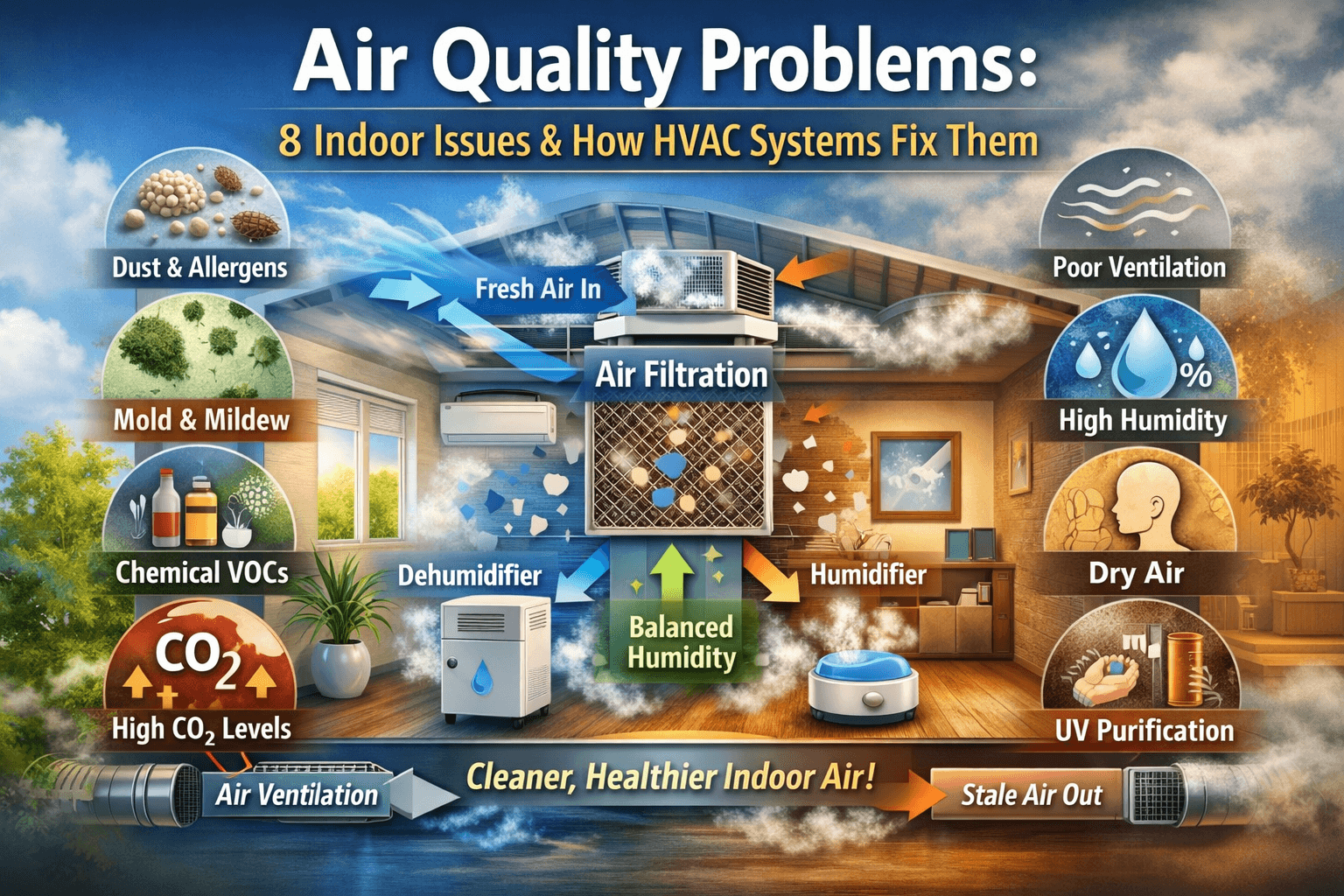
Below, we explore eight major indoor Air Quality Problems and explain how modern HVAC solutions are engineered to fix them, ensuring cleaner air, improved comfort, and long-term indoor health.
1. Poor Ventilation
Poor ventilation is one of the most common and damaging Air Quality Problems found in both residential and commercial buildings. When fresh outdoor air is not properly introduced into indoor spaces, stale air becomes trapped, allowing pollutants, allergens, moisture, and odors to accumulate over time. This lack of air exchange significantly degrades indoor air quality and creates an unhealthy living or working environment.
In poorly ventilated spaces, everyday activities such as cooking, cleaning, and even breathing release contaminants into the air. Without adequate ventilation, carbon dioxide levels rise, oxygen levels decrease, and airborne pollutants circulate repeatedly throughout the building. These conditions often lead to symptoms such as headaches, fatigue, difficulty concentrating, and respiratory discomfort—clear warning signs of underlying Air Quality Problems.
Modern HVAC systems are specifically designed to resolve ventilation-related Air Quality Problems by ensuring a consistent flow of fresh, clean air. Advanced ventilation technologies, including energy recovery ventilators (ERVs) and heat recovery ventilators (HRVs), introduce outdoor air while maintaining indoor temperature efficiency. These systems remove stale air and replace it with filtered fresh air, reducing pollutant buildup without increasing energy costs.
By maintaining proper airflow and balanced air exchange, HVAC systems not only improve comfort but also protect occupant health. Addressing poor ventilation early helps prevent long-term Air Quality Problems, enhances indoor freshness, and supports a healthier, more productive indoor environment.
2. Excess Humidity
Excess humidity is a widespread yet often underestimated cause of indoor Air Quality Problems. When moisture levels inside a building rise above recommended limits, the indoor environment becomes uncomfortable and increasingly unhealthy. High humidity creates a heavy, sticky atmosphere that makes spaces feel warmer than they are and places additional strain on HVAC systems trying to maintain comfort. issa
More importantly, excess moisture provides the perfect breeding ground for mold, mildew, dust mites, and bacteria—major contributors to serious Air Quality Problems. These biological pollutants release spores and allergens into the air, which can trigger allergic reactions, worsen asthma symptoms, and cause respiratory irritation. Over time, unchecked humidity can also damage walls, ceilings, insulation, and furnishings, leading to costly repairs and long-term indoor air concerns.
Modern HVAC systems are engineered to control and prevent humidity-related Air Quality Problems through precise moisture regulation. Integrated dehumidification systems remove excess moisture from the air while maintaining optimal temperature levels. Advanced HVAC technology monitors indoor humidity and adjusts airflow and cooling cycles to keep moisture within a healthy range, typically between 30% and 50%.
By maintaining balanced humidity levels, HVAC systems help prevent mold growth, improve indoor comfort, and protect building structures. Addressing excess humidity not only resolves a major source of Air Quality Problems but also enhances energy efficiency and ensures a cleaner, healthier indoor environment year-round.
3. Low Humidity
Low humidity is a frequently overlooked contributor to indoor Air Quality Problems, particularly during colder months or in regions with dry climates. When indoor air lacks sufficient moisture, it can create an uncomfortable and unhealthy environment that affects both occupants and building materials. Dry air often feels cooler than it actually is, leading occupants to increase heating usage and energy consumption unnecessarily.
From a health perspective, low humidity intensifies many Air Quality Problems by drying out the mucous membranes in the nose, throat, and eyes. This dryness weakens the body’s natural defense against airborne pathogens, increasing susceptibility to colds, respiratory infections, and irritation. Common symptoms include dry skin, itchy eyes, sore throats, and aggravated asthma or allergy conditions.
Modern HVAC systems address low-humidity-related Air Quality Problems through integrated humidification solutions. Whole-home or building-wide humidifiers work alongside HVAC equipment to add controlled amounts of moisture to indoor air. These systems monitor humidity levels in real time and adjust output to maintain an optimal balance, typically between 30% and 50%.
By restoring proper humidity levels, HVAC systems significantly improve comfort, protect respiratory health, and reduce static electricity and material damage. Correcting low humidity not only resolves a major source of indoor Air Quality Problems but also contributes to a healthier, more balanced indoor environment throughout the year.
4. Dust and Particulate Buildup
Dust and airborne particulate buildup are among the most visible and persistent indoor Air Quality Problems affecting homes and commercial buildings. These particles include dust, pollen, pet dander, fibers, and fine debris that enter indoor spaces through open doors, windows, ventilation systems, and everyday activities. Once inside, they circulate continuously through the air and HVAC ductwork, settling on surfaces and being re-inhaled by occupants.
This type of Air Quality Problem is particularly harmful to individuals with allergies, asthma, or respiratory sensitivities. Fine particulate matter can irritate the lungs, trigger sneezing and coughing, and worsen chronic breathing conditions. Over time, excessive dust buildup can also clog HVAC components, restrict airflow, reduce system efficiency, and increase energy consumption—compounding both health and operational concerns.
Modern HVAC systems are designed to combat dust-related Air Quality Problems through advanced air filtration technologies. High-efficiency filters, including MERV-rated and HEPA filters, are capable of capturing microscopic particles before they circulate throughout the indoor environment. In addition, properly sealed ductwork and regular maintenance prevent dust from entering and accumulating within the system.
By effectively removing airborne particles, HVAC systems improve indoor cleanliness, enhance respiratory comfort, and protect HVAC equipment from unnecessary wear. Addressing dust and particulate buildup is a critical step in reducing indoor Air Quality Problems and ensuring healthier, more efficient indoor spaces.
Read more : Why Regular HVAC Maintenance Is the Smartest Investment You Can Make
5. Mold and Mildew
Mold and mildew growth represent some of the most serious and damaging indoor Air Quality Problems. These microorganisms thrive in environments with excess moisture, poor ventilation, and limited sunlight, making HVAC systems, bathrooms, basements, and ductwork common problem areas. Once mold begins to grow, it releases spores into the air that can spread rapidly throughout a building.
Exposure to mold spores significantly worsens indoor Air Quality Problems, particularly for individuals with allergies, asthma, or weakened immune systems. Symptoms may include persistent coughing, nasal congestion, eye irritation, skin rashes, and breathing difficulties. In severe cases, long-term exposure can lead to chronic respiratory conditions and increased sensitivity to airborne pollutants.
Modern HVAC systems play a crucial role in preventing and resolving mold-related Air Quality Problems. By maintaining proper humidity levels, improving airflow, and ensuring consistent ventilation, HVAC systems reduce the conditions that allow mold and mildew to thrive. Advanced solutions such as ultraviolet (UV) light purification installed within HVAC systems further inhibit mold growth by neutralizing microorganisms on coils and within ductwork.
By effectively controlling indoor moisture levels and optimizing air circulation, modern HVAC systems play a vital role in protecting both the health of occupants and the structural integrity of buildings. Excess humidity and stagnant air create ideal conditions for mold and mildew growth, which are among the most persistent and damaging Air Quality Problems. Mold spores can spread throughout ductwork and indoor spaces, triggering allergies, asthma, and other respiratory issues while also damaging walls, ceilings, insulation, and furniture.
Addressing mold and mildew early is essential for preventing these negative outcomes. HVAC systems help maintain balanced humidity and consistent airflow, creating an environment that inhibits microbial growth. Advanced solutions, including integrated dehumidifiers, high-efficiency filtration, and UV light purification, further reduce the risk of mold proliferation by removing airborne spores and contaminants before they can settle.
By proactively managing moisture and air movement, HVAC systems not only resolve existing Air Quality Problems but also prevent new ones from developing. This comprehensive approach ensures that indoor spaces remain safe, clean, and comfortable, protecting both the people who occupy them and the buildings themselves over the long term.
6. Odors and Chemical Pollutants
Persistent odors and chemical pollutants are common yet often underestimated indoor Air Quality Problems in both residential and commercial environments. Everyday products such as cleaning agents, paints, adhesives, air fresheners, furniture, and building materials release volatile organic compounds (VOCs) into the air. Over time, these chemicals accumulate indoors, creating unpleasant smells and degrading overall air quality.
These chemical-related Air Quality Problems can cause a wide range of health symptoms, including headaches, dizziness, nausea, eye irritation, and respiratory discomfort. In poorly ventilated spaces, VOCs and odors become trapped, continuously recirculating through indoor air and HVAC systems. Prolonged exposure may increase the risk of long-term health effects and reduce comfort and productivity.
Modern HVAC systems are specifically designed to combat odor- and chemical-based Air Quality Problems through enhanced ventilation and advanced air purification technologies. Activated carbon filters effectively absorb odors and chemical gases, while increased fresh air intake helps dilute indoor pollutants. Some HVAC systems also integrate air purification solutions that break down VOCs at a molecular level, preventing them from re-entering indoor air circulation.
By removing odors and chemical contaminants, HVAC systems restore indoor air freshness and create healthier environments. Addressing these Air Quality Problems not only improves comfort but also ensures safer indoor spaces for occupants, particularly in areas with high chemical usage or limited natural ventilation.
7. Inadequate Air Filtration
Inadequate air filtration is a leading contributor to persistent indoor Air Quality Problems, particularly in older buildings or spaces with outdated HVAC systems and poorly maintained filters. When filters are low quality, incorrectly sized, or clogged with dust and debris, they cannot effectively capture airborne pollutants. As a result, dust, pollen, pet dander, bacteria, and other microscopic particles remain suspended in the air, circulating throughout the indoor environment and exacerbating Air Quality Problems.
These filtration-related issues can have serious implications for occupant health. Poorly filtered air increases exposure to allergens and irritants, worsening conditions such as asthma, allergies, and respiratory sensitivities. In addition, contaminants that accumulate within HVAC components can restrict airflow, reduce system efficiency, and increase energy consumption. Over time, this strain can lead to more frequent system failures and shorten the lifespan of heating and cooling equipment, compounding both health and operational concerns.
Modern HVAC systems are specifically designed to tackle filtration-related Air Quality Problems with advanced, multi-stage filtration solutions. High-efficiency filters, such as MERV-rated and HEPA filters, are capable of trapping even the smallest airborne particles that standard filters often miss. Some systems incorporate electronic air cleaners, which use electrostatic charges to attract and capture pollutants, further improving air purity.
By upgrading to high-efficiency filters and maintaining them regularly, HVAC systems dramatically reduce indoor contaminants, enhance breathing comfort, and improve overall system performance. Addressing inadequate filtration is a critical step in resolving ongoing Air Quality Problems, creating cleaner, healthier, and safer indoor environments for both residential and commercial spaces.
8. Carbon Dioxide (CO₂) Buildup
Carbon dioxide (CO₂) buildup is a subtle but highly significant contributor to indoor Air Quality Problems. Unlike dust or mold, CO₂ is invisible, odorless, and often goes unnoticed until it begins to affect occupant health and performance. This hidden pollutant is especially prevalent in tightly sealed buildings, high-occupancy spaces such as offices, classrooms, conference rooms, and commercial environments, where fresh air circulation is limited. Without adequate ventilation, CO₂ levels steadily rise as people exhale, displacing oxygen and reducing the overall quality of indoor air. EPA
The effects of elevated CO₂ levels on human health and productivity are substantial. Exposure to high CO₂ concentrations can cause fatigue, headaches, dizziness, shortness of breath, and difficulty concentrating. In workplaces or learning environments, this translates to decreased cognitive function, slower decision-making, and overall reduced efficiency. Over time, persistent CO₂ accumulation is a clear indicator of broader indoor Air Quality Problems, highlighting poor ventilation and the need for a systematic approach to air circulation.
Modern HVAC systems are specifically engineered to address CO₂-related Air Quality Problems. Advanced solutions, such as demand-controlled ventilation (DCV), continuously monitor indoor CO₂ levels and adjust the amount of fresh air brought into the space according to occupancy. This ensures that even crowded spaces maintain optimal oxygen levels while avoiding unnecessary energy consumption. In addition, HVAC systems can integrate air quality sensors to track multiple indoor pollutants simultaneously, providing a comprehensive approach to maintaining healthy air.
By actively regulating CO₂ levels, HVAC systems create environments that are not only safer but also more comfortable and conducive to productivity. Proper ventilation prevents stale, oxygen-depleted air from circulating and reduces the risk of cumulative health impacts associated with poor indoor air quality. Addressing carbon dioxide buildup is therefore essential for resolving hidden Air Quality Problems, promoting occupant well-being, and ensuring a consistently healthy indoor environment.
Read more : 12 Ways to Improve Indoor Air Quality with HVAC Upgrades
Conclusion: How HVAC Systems Solve Indoor Air Quality Problems
Indoor Air Quality Problems impact much more than just comfort—they have far-reaching effects on health, productivity, energy efficiency, and overall quality of life. Poor indoor air quality can lead to respiratory irritation, allergy flare-ups, fatigue, and reduced cognitive performance, while also contributing to higher energy bills and premature wear on building systems. From inadequate ventilation and humidity imbalances to dust accumulation, mold growth, chemical pollutants, and carbon dioxide buildup, these issues are often interconnected, compounding their negative effects if left unaddressed.
Fortunately, modern HVAC systems offer comprehensive solutions to these challenges. Advanced heating, ventilation, and air conditioning technologies do more than regulate temperature—they actively manage indoor air quality by controlling airflow, filtering contaminants, regulating humidity, and removing odors and pollutants. High-efficiency filtration systems trap dust, pollen, and microscopic particles, while ventilation technologies introduce fresh outdoor air and expel stale air. Integrated humidifiers and dehumidifiers maintain optimal moisture levels, preventing mold growth and mitigating related Air Quality Problems. Additionally, air purification technologies, including UV lights and activated carbon filters, further enhance indoor air cleanliness by neutralizing pathogens and chemical pollutants. Dale’s AC
When properly designed, installed, and maintained, HVAC systems not only resolve existing Air Quality Problems but also prevent new ones from emerging. They create healthier, more comfortable environments where occupants can breathe easily, concentrate effectively, and live or work safely. Investing in advanced HVAC solutions and routine system maintenance is therefore not just a matter of convenience—it is a strategic step toward safeguarding health, improving building performance, and ensuring long-term indoor air quality.
“High-quality indoor air is the foundation of healthy, productive spaces. A well-designed HVAC system transforms buildings into environments where people can thrive.”
