
Table of Contents
HVAC systems are the backbone of a comfortable and healthy home environment. They regulate temperature, manage humidity, and maintain proper ventilation, ensuring that every room is livable throughout the year. Beyond comfort, a well-maintained HVAC system plays a vital role in maintaining indoor air quality and energy efficiency, helping homeowners save on utility bills while reducing their environmental footprint.
However, many homeowners underestimate the potential risks associated with improper use, poor maintenance, or simple neglect of their HVAC system. Issues such as electrical malfunctions, gas leaks, poor airflow, or clogged filters can quickly escalate into serious safety hazards, costly repairs, or even health problems for family members.
Implementing proven HVAC Safety Tips is not just about maintaining equipment—it’s about protecting the people who rely on it every day. From routine inspections to simple preventive measures, these tips empower homeowners to identify potential issues before they become emergencies, extend the lifespan of their HVAC system, and maintain a safe, comfortable home environment.
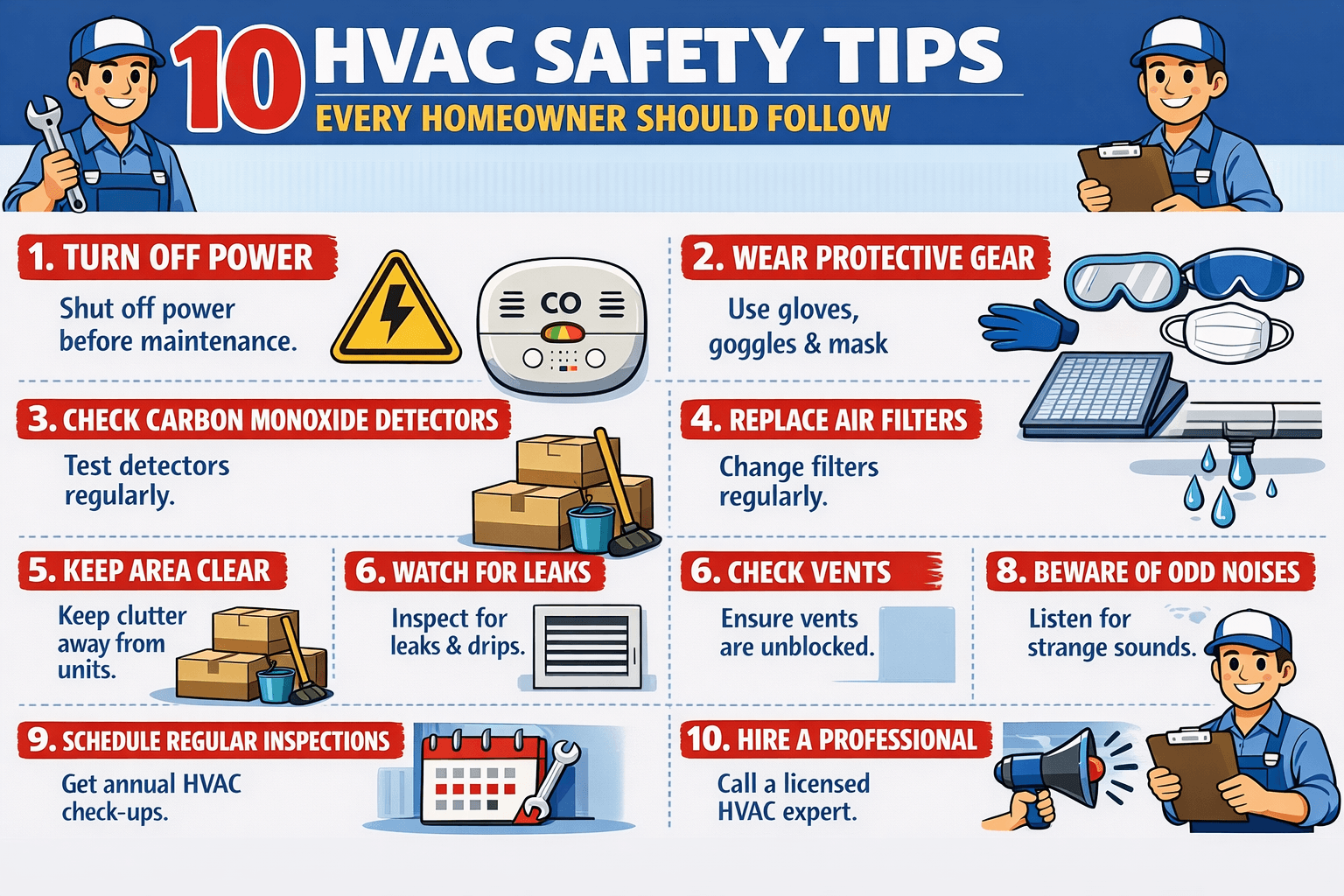
In this guide, we will walk through ten essential HVAC Safety Tips that every homeowner should follow. Whether you are a first-time homeowner or someone looking to optimize your current system, understanding and applying these tips can make all the difference in creating a safe, efficient, and reliable HVAC system that supports your home for years to come.
1. Schedule Regular Professional Maintenance
One of the most crucial HVAC Safety Tips every homeowner should follow is to schedule regular professional maintenance for their system. While it may be tempting to rely solely on routine DIY checks, nothing can replace the expertise of a trained HVAC technician. Professional maintenance goes beyond simply cleaning filters or checking thermostat settings—it involves a comprehensive inspection of every component, from the compressor and blower to electrical wiring and ductwork.
During a professional service visit, technicians can identify small issues before they escalate into costly repairs or safety hazards. For example, they can detect worn belts, loose connections, refrigerant leaks, or corrosion, all of which can compromise system efficiency and potentially lead to dangerous situations. A well-maintained system not only operates more efficiently but also reduces the risk of fire, carbon monoxide leaks, or sudden system failures that could leave your home uncomfortable or unsafe.
Experts typically recommend scheduling maintenance at least once a year for both heating and cooling systems, ideally before the start of peak seasons. For homes in extreme climates or older HVAC systems, more frequent check-ups may be necessary. Integrating this habit into your home care routine is one of the most effective HVAC Safety Tips for preventing emergencies, lowering energy bills, and ensuring a long-lasting, reliable system.
By prioritizing professional maintenance, homeowners gain peace of mind knowing their HVAC system is operating safely and efficiently, while also protecting their family’s health and comfort.
2. Replace Air Filters Regularly
Another essential component of proper HVAC care—and one of the most frequently overlooked HVAC Safety Tips—is regularly replacing your system’s air filters. Air filters play a critical role in maintaining indoor air quality by trapping dust, pollen, pet dander, and other airborne particles before they circulate through your home. Over time, however, these filters become clogged, reducing airflow and forcing your HVAC system to work harder than necessary.
When filters are neglected, restricted airflow can cause a range of problems, from uneven heating or cooling to increased energy consumption. More importantly, a clogged filter can lead to overheating in the system, which may damage key components or even pose a fire hazard. For homeowners with allergies or respiratory conditions, dirty filters also compromise air quality, increasing the risk of health issues. Following regular HVAC Safety Tips, including timely filter replacement, helps prevent these problems and keeps your system running safely and efficiently.
To prevent these risks, it’s recommended to check your filters at least once a month and replace them every 1–3 months, depending on the type of filter, household size, and presence of pets. High-efficiency filters may last longer, but they still require regular attention. Incorporating this practice into your routine is one of the most practical HVAC Safety Tips for maintaining a safe home environment. Some modern HVAC systems even feature filter change indicators, making it easier to stay on top of this critical maintenance task and adhere to recommended HVAC Safety Tips.
By prioritizing filter replacement, you not only protect your HVAC system from unnecessary strain but also ensure cleaner, healthier air for your family. This simple yet effective measure remains one of the most practical and impactful HVAC Safety Tips, saving both money and stress in the long run while keeping your home safe and comfortable year-round. Climate Care
Read more : 8 Indoor Air Quality Problems and How HVAC Systems Fix Them
3. Keep Vents and Registers Clear
One often overlooked yet highly effective measure in maintaining a safe and efficient HVAC system is keeping vents and registers clear of obstructions. This simple practice is a cornerstone of practical HVAC Safety Tips, and neglecting it can lead to a variety of problems, from reduced system efficiency to increased wear and tear.
Blocked vents restrict airflow, forcing your HVAC system to work harder to maintain the desired temperature. Over time, this added strain can cause components like the blower motor or fan to overheat, potentially leading to system malfunctions or even fire hazards in extreme cases. Furthermore, restricted airflow can create uneven heating or cooling in your home, leaving certain rooms uncomfortable while overworking others. southernliving
Maintaining clear vents is straightforward but requires consistent attention. Homeowners should avoid placing furniture, curtains, rugs, or other objects in front of vents and registers. Pet beds and toys should also be kept away from airflow pathways. In addition, regularly vacuuming or dusting vents can prevent debris buildup that might otherwise compromise air circulation. HVAC MORGAN
For homes with multiple HVAC zones, it’s especially important to ensure each vent remains unobstructed. Proper airflow not only improves system efficiency but also enhances indoor air quality by allowing the HVAC system to filter and circulate clean air effectively.
By taking the time to keep vents and registers clear, homeowners can prevent unnecessary strain on their system, reduce energy costs, and maintain a safer living environment. This simple step, while easy to overlook, is one of the most effective and accessible HVAC Safety Tips for protecting both your equipment and your family.
4. Install Carbon Monoxide Detectors
Ensuring the safety of your household extends beyond maintaining your HVAC system—it also involves protecting against invisible hazards such as carbon monoxide (CO). For homes with gas-powered furnaces, boilers, or water heaters, installing carbon monoxide detectors is one of the most critical HVAC Safety Tips a homeowner can follow.
Carbon monoxide is a colorless, odorless gas produced by incomplete combustion of fuels like natural gas, propane, oil, or wood. Even small amounts can be dangerous, causing symptoms ranging from headaches and dizziness to nausea, confusion, and, in extreme cases, death. Because CO is undetectable without specialized equipment, relying on smell or visible signs alone is never sufficient.
Modern carbon monoxide detectors are easy to install and can provide continuous monitoring throughout your home. For optimal safety, it is recommended to place detectors near sleeping areas and on each level of the house. Many newer models include digital readouts, battery backup, and smartphone connectivity, offering real-time alerts even when you are away.
Beyond installation, regular testing of CO detectors is essential. Batteries should be replaced at least once a year, and detectors should be replaced every 5–7 years according to manufacturer guidelines. Pairing these devices with regular HVAC inspections ensures that any potential gas leaks are identified early, reinforcing a comprehensive approach to home safety.
By integrating carbon monoxide detectors into your home safety plan, you significantly reduce the risk of CO exposure while complementing other preventative measures. This proactive step is not just a precaution—it is a cornerstone of responsible homeownership and a key part of any effective set of HVAC Safety Tips.
5. Maintain Clearance Around HVAC Units
Maintaining proper clearance around your HVAC system’s indoor and outdoor units is an essential yet often underestimated part of home safety. This step is a vital component of effective HVAC Safety Tips, as it ensures your system operates efficiently while reducing potential hazards.
Outdoor units, such as condensers and heat pumps, require unobstructed airflow to function correctly. If shrubs, debris, or even accumulated leaves block the unit, it can overheat, leading to decreased efficiency and increased wear on critical components like the compressor and fan. Overheating not only shortens the lifespan of your system but can also create fire risks in extreme cases.
Indoor units also benefit from clear surroundings. Furnishings, boxes, or other stored items placed too close to the furnace, air handler, or ductwork can restrict airflow and impede proper circulation. Restricted airflow may cause uneven heating or cooling and force the system to work harder, increasing energy consumption and the likelihood of mechanical failure.
To maintain proper clearance, ensure there is at least 2–3 feet of free space around indoor units and 3–5 feet around outdoor units. Regularly remove leaves, debris, and any objects from the vicinity, and trim nearby plants or shrubs that could interfere with airflow. In addition, make sure vents, access panels, and electrical components remain fully accessible for maintenance and emergency shut-offs.
By keeping HVAC units clear of obstructions, homeowners not only enhance system efficiency but also reduce potential safety risks. This proactive measure, while simple, is a critical element of HVAC Safety Tips that protects both your equipment and your household.
6. Check Electrical Connections
Electrical issues are among the most common yet potentially dangerous problems in HVAC systems. One of the most important HVAC Safety Tips for homeowners is regularly checking electrical connections and components to prevent malfunctions, equipment damage, or even fire hazards.
HVAC systems rely on a network of wiring, circuit breakers, fuses, and control boards to function properly. Over time, vibrations, wear, and environmental factors like humidity can loosen connections or cause wires to fray. Even minor issues, if left unaddressed, can escalate into system failures or electrical shorts, posing serious risks to both the equipment and your home.
While it’s not recommended for most homeowners to attempt complex electrical repairs themselves, you can perform basic visual inspections. Look for signs of damage such as burn marks, exposed wires, or unusual corrosion. Ensure that circuit breakers related to your HVAC system are functioning correctly and not tripping frequently. Any warning signs should be addressed immediately by a licensed HVAC professional.
During routine professional maintenance, technicians will test voltage, check connections, and verify that safety switches and controls are working correctly. This preventive approach not only safeguards your home but also extends the lifespan of your HVAC system and maintains its efficiency.
By paying attention to electrical components, you reduce the risk of costly repairs, unexpected system downtime, and potential safety hazards. Regular inspections and professional oversight make this one of the most effective and essential HVAC Safety Tips for every homeowner.
7. Never Ignore Unusual Noises or Odors
One of the most practical and easily overlooked HVAC Safety Tips is to pay close attention to any unusual noises or odors coming from your system. Your HVAC unit communicates its health through sounds and smells, and noticing anomalies early can prevent costly repairs or dangerous situations.
Strange noises such as rattling, grinding, squealing, or banging may indicate mechanical issues like loose components, worn belts, or failing motors. Ignoring these warning signs can lead to more significant damage, reduced efficiency, and, in severe cases, complete system failure. Similarly, unusual odors—especially burning, musty, or gas-like smells—can signal electrical problems, mold growth, or even natural gas leaks. Detecting these issues promptly is critical for both safety and comfort.
Homeowners should make it a habit to perform periodic walkthroughs while the system is operating, listening and smelling for anything out of the ordinary. If you notice anything unusual, shut down the system and contact a licensed HVAC professional immediately. Avoid attempting DIY repairs for complex problems, as this can exacerbate the issue or create additional hazards.
By staying attentive to these early warning signs, you can address problems before they escalate, maintain efficient operation, and protect your household. Recognizing and responding to unusual noises and odors remains one of the simplest yet most effective HVAC Safety Tips, combining vigilance with proactive maintenance to ensure safety and reliability.
8. Use the Correct Thermostat Settings
Proper thermostat management is a small but powerful way to maintain both comfort and safety in your home. One of the key HVAC Safety Tips homeowners often overlook is using the correct thermostat settings to avoid overworking the system. Improper settings, such as extreme temperature adjustments, can place unnecessary strain on your HVAC unit, increasing the risk of mechanical failure and higher energy bills.
Modern HVAC systems are designed to operate efficiently within specific temperature ranges. Setting the thermostat too high in summer or too low in winter forces the system to work harder to reach the desired temperature. Over time, this stress can shorten the lifespan of essential components like compressors, fans, and motors. Moreover, constant cycling due to frequent temperature changes can lead to inconsistent airflow and uneven heating or cooling in your home.
Smart thermostats and programmable models offer advanced solutions for managing indoor climate efficiently. They allow homeowners to create schedules that match daily routines, maintain steady temperatures, and reduce unnecessary system strain. Many smart thermostats also provide energy usage reports and remote control features, helping you monitor performance and detect potential problems early.
By maintaining proper thermostat settings, you not only protect your HVAC system from unnecessary wear but also optimize energy efficiency and comfort. Integrating this habit into daily home routines is one of the most effective and actionable HVAC Safety Tips, ensuring reliable operation and a safer living environment for your family.
9. Avoid DIY Repairs
While it can be tempting to attempt repairs on your HVAC system yourself, one of the most important HVAC Safety Tips is to leave complex maintenance and repairs to trained professionals. Modern HVAC systems are intricate, with electrical components, refrigerants, and mechanical parts that require specialized knowledge and tools. Attempting a DIY fix without proper expertise can not only damage the system but also create serious safety risks.
DIY repairs may seem cost-effective initially, but mistakes can lead to more expensive problems down the line. Mishandling refrigerants, for example, can harm both the environment and your health. Incorrectly wiring a component can trigger electrical shorts or even fires. Even seemingly minor errors, such as improper reinstallation of parts, can reduce system efficiency, leading to higher energy bills and uneven heating or cooling.
Professional HVAC technicians undergo extensive training to diagnose and repair systems safely. They have the tools and expertise to ensure repairs are performed correctly and in compliance with safety regulations. Regular maintenance visits also allow professionals to catch small issues before they escalate, which is another proactive way to implement HVAC Safety Tips.
By resisting the urge to perform DIY repairs, homeowners protect both their equipment and their families. This approach ensures the system continues to operate efficiently, safely, and reliably, providing peace of mind that your home’s HVAC system is in capable hands.
10. Educate Your Household
An often-overlooked yet essential aspect of HVAC safety is ensuring that everyone in your household knows how to operate the system safely and effectively. This step is a vital part of comprehensive HVAC Safety Tips, as even the best-maintained system can become a risk if users are unaware of proper practices. Incorporating education into your routine is one of the most effective ways to maximize the benefits of HVAC Safety Tips.
Household members should understand basic operation procedures, such as adjusting the thermostat correctly, keeping vents clear, and recognizing warning signs of potential problems—like unusual noises, odors, or sudden changes in system performance. Educating everyone on when and how to shut down the system in an emergency, as well as the importance of not tampering with components, is a crucial element of HVAC Safety Tips that helps reduce the risk of accidents or costly damage.
Children and teenagers should also be made aware of the dangers associated with touching electrical panels, exposed wires, or other HVAC equipment. Simple guidance, like not blocking vents or leaving flammable objects near the system, aligns with recommended HVAC Safety Tips and can prevent accidents while maintaining proper airflow and system efficiency.
By fostering awareness and responsibility among all household members, you create a safer living environment and reinforce good maintenance habits. Educating your household is one of the most proactive HVAC Safety Tips, ensuring that everyone contributes to the safe, efficient, and reliable operation of your HVAC system while helping to protect your home for the long term.
Conclusion
Maintaining a safe, efficient, and reliable HVAC system requires more than just basic operation—it demands consistent attention, preventive care, and informed decision-making. By following these ten essential HVAC Safety Tips, homeowners can protect their families, extend the lifespan of their equipment, and avoid costly emergencies.
From scheduling regular professional maintenance and replacing air filters to keeping vents clear, monitoring electrical components, and educating household members, each step plays a crucial role in creating a safe home environment. Simple actions, when practiced consistently, help prevent system malfunctions, improve indoor air quality, and optimize energy efficiency.
Ultimately, proactive care is the key to peace of mind. By prioritizing these HVAC Safety Tips, you ensure that your system operates smoothly year-round, your home remains comfortable, and your household is safeguarded against preventable risks. Safety, efficiency, and reliability go hand in hand, and with these practices, homeowners can confidently enjoy the full benefits of their HVAC system.
