


Table of Contents
The way we heat, cool, and ventilate our homes is advancing at an unprecedented pace. As we move into 2025, HVAC technologies have evolved far beyond basic temperature regulation. Today’s systems are designed to deliver intelligent comfort by combining energy efficiency, smart automation, advanced indoor air quality control, and environmentally responsible performance. Modern homeowners are no longer satisfied with systems that simply turn on and off; they expect HVAC solutions that actively learn their preferences, respond to changing conditions, and operate efficiently throughout the year.
Driven by rising energy costs, sustainability goals, and increased awareness of indoor air health, HVAC technologies now play a central role in creating healthier and more comfortable living environments. From AI-powered controls to high-efficiency heat pumps and air purification systems, these innovations help reduce utility bills while improving overall home comfort. Smart integration with connected devices also allows homeowners to monitor, manage, and optimize their HVAC systems remotely, ensuring comfort is maintained without unnecessary energy waste.
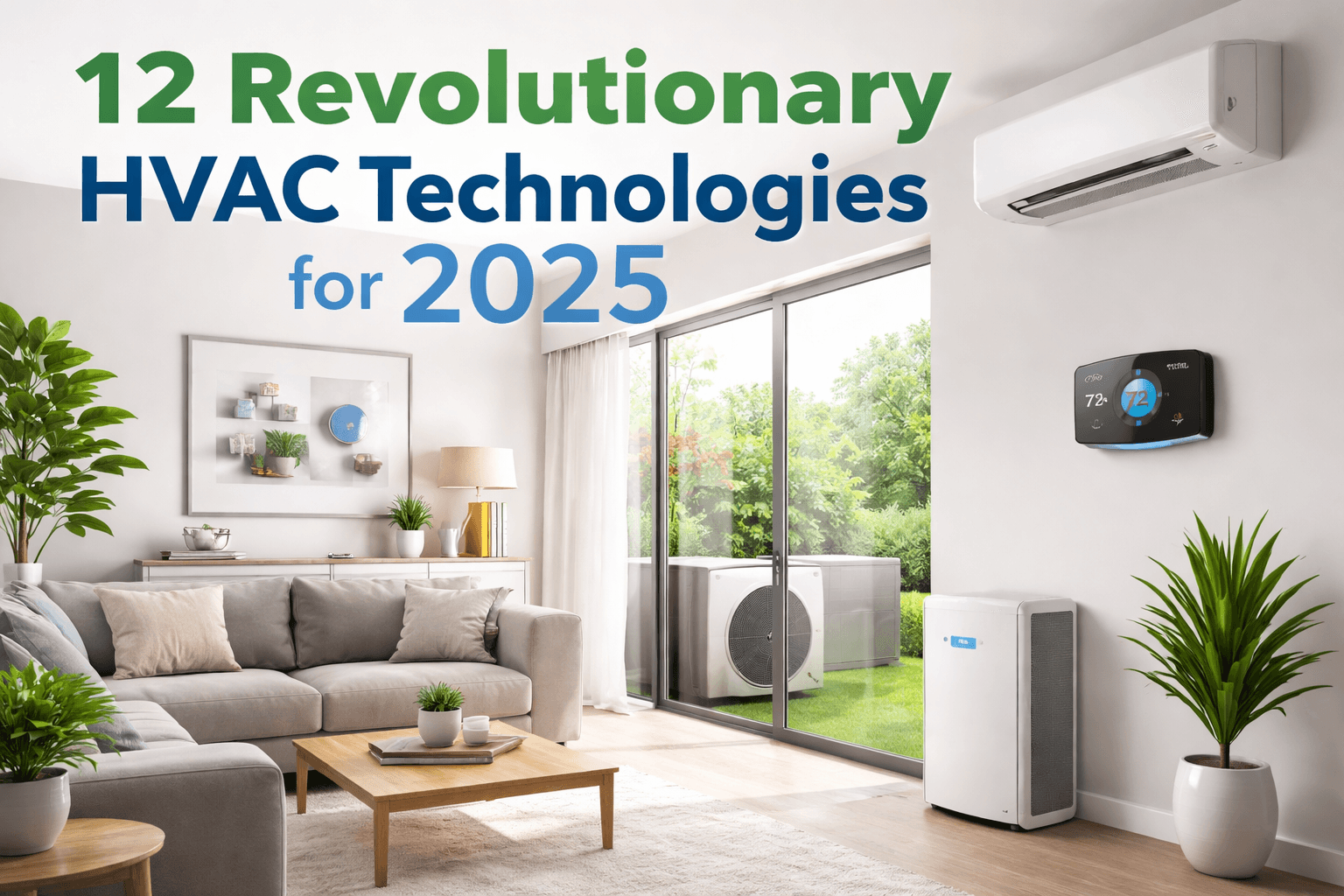
Below are 12 HVAC technologies transforming home comfort in 2025, showcasing how modern innovations are redefining residential heating, cooling, and ventilation to meet the demands of today’s smarter, greener homes.
1. Smart HVAC Systems with AI Learning
Among the most transformative HVAC technologies in 2025 are smart systems powered by artificial intelligence and machine learning. These advanced HVAC systems move beyond traditional programmable thermostats by continuously learning from homeowner behavior, occupancy patterns, and real-time environmental data. Instead of relying on fixed schedules, AI-driven HVAC technologies analyze daily routines, preferred temperature settings, and seasonal trends to automatically create the most efficient comfort profile for each home.
Smart HVAC technologies also integrate external data sources such as weather forecasts, humidity levels, and energy pricing. By anticipating temperature changes or peak energy demand, the system can proactively adjust heating and cooling output to maintain comfort while minimizing energy consumption. This predictive capability not only improves indoor comfort but also significantly reduces unnecessary system runtime, leading to lower utility bills and extended equipment lifespan. Sescom
Another major advantage of AI-enabled HVAC technologies is seamless smart home integration. These systems connect with voice assistants, mobile apps, and home automation platforms, allowing homeowners to monitor and control their HVAC system remotely. Whether adjusting settings while away from home or receiving alerts about system performance, users gain greater control and visibility over their indoor environment.
In 2025, smart HVAC technologies with AI learning also play a critical role in preventive maintenance. Built-in sensors continuously monitor system health, identifying inefficiencies or potential issues before they become costly repairs. By combining intelligent automation, predictive analytics, and energy optimization, AI-powered HVAC technologies are redefining home comfort as a personalized, efficient, and responsive experience.
2. Variable Refrigerant Flow (VRF) Systems
Variable Refrigerant Flow (VRF) systems are among the most advanced HVAC technologies transforming residential comfort in 2025. Originally developed for large commercial buildings, VRF technology has rapidly gained traction in modern homes due to its exceptional efficiency, flexibility, and precise temperature control. Unlike conventional HVAC systems that operate at full capacity regardless of demand, VRF systems continuously adjust the amount of refrigerant delivered to each indoor unit based on real-time heating or cooling needs.Accio
One of the defining advantages of VRF HVAC technologies is their zoning capability. Homeowners can independently control temperatures in different rooms or living areas, ensuring personalized comfort without wasting energy on unoccupied spaces. This level of control is especially valuable in multi-story homes, open-plan layouts, and properties with varying sun exposure, where temperature needs often differ from room to room.
Energy efficiency is another key reason VRF HVAC technologies are gaining popularity in 2025. By operating at variable speeds and delivering only the required refrigerant, these systems significantly reduce energy consumption compared to traditional on/off systems. This not only lowers monthly utility bills but also minimizes wear and tear on system components, resulting in quieter operation and longer equipment lifespan.
In addition to performance benefits, modern VRF HVAC technologies offer sleek indoor unit designs and compact outdoor equipment, making them ideal for homeowners who value both aesthetics and functionality. With their ability to deliver consistent comfort, precise control, and superior efficiency, VRF systems are redefining how advanced HVAC technologies support modern residential living.
3. Next-Generation Heat Pump Innovations
Heat pumps have become one of the most important HVAC technologies shaping home comfort in 2025, thanks to major advancements in performance, efficiency, and climate adaptability. Unlike traditional heating systems that generate heat through combustion, modern heat pumps transfer heat from the air or ground, making them one of the most energy-efficient HVAC solutions available today. Recent innovations have expanded their capabilities, allowing heat pumps to perform reliably even in extreme temperatures.
One of the biggest breakthroughs in heat pump HVAC technologies is improved cold-climate performance. Advanced compressor designs, enhanced refrigerants, and intelligent defrost cycles now enable heat pumps to operate efficiently in sub-zero conditions. This has made them a viable replacement for gas furnaces in regions that were once considered unsuitable for heat pump technology, supporting the global shift toward electrification and lower carbon emissions. Blowtica
In 2025, heat pump HVAC technologies also offer enhanced comfort control through variable-speed operation. Instead of cycling on and off, these systems adjust output gradually based on real-time demand, maintaining consistent indoor temperatures and reducing temperature swings. This results in quieter operation, improved humidity control, and a more comfortable living environment throughout the year.
Additionally, next-generation heat pump HVAC technologies integrate seamlessly with smart thermostats, solar energy systems, and home automation platforms. This connectivity allows homeowners to optimize energy use, track performance, and reduce operating costs while maintaining high comfort levels. With their ability to provide both heating and cooling efficiently, modern heat pump HVAC technologies are redefining sustainable home comfort in 2025.
4. Ductless Mini-Split Systems for Flexible Comfort
Ductless mini-split systems continue to be one of the most versatile HVAC technologies transforming home comfort in 2025. Designed to deliver targeted heating and cooling without the need for traditional ductwork, these systems offer an ideal solution for homes seeking improved efficiency, flexibility, and modern comfort control. Their growing popularity is driven by both performance advantages and the increasing demand for adaptable HVAC solutions in renovated and newly built homes.
One of the primary benefits of ductless mini-split HVAC technologies is their ability to eliminate energy losses commonly associated with duct systems. In many homes, ducts can account for significant efficiency losses due to leaks or poor insulation. By delivering conditioned air directly into living spaces, mini-split HVAC technologies maximize energy efficiency while maintaining consistent indoor temperatures.
In 2025, ductless HVAC technologies feature enhanced inverter-driven compressors that adjust output based on real-time demand. This variable-speed operation improves comfort by preventing temperature fluctuations, reducing system noise, and lowering overall energy consumption. Homeowners can independently control individual indoor units, allowing precise temperature management for specific rooms or zones.AirBest
Modern mini-split HVAC technologies also offer improved aesthetics and smart connectivity. Sleek, low-profile indoor units blend seamlessly into interior spaces, while advanced controls allow users to manage comfort through mobile apps or smart home systems. With simplified installation, superior efficiency, and customizable comfort, ductless mini-split HVAC technologies remain a key driver of next-generation home comfort in 2025.
5. Indoor Air Quality (IAQ) Monitoring Technology
In 2025, indoor air quality monitoring has become one of the most essential HVAC technologies transforming home comfort. As homeowners grow more aware of the health impact of indoor air, HVAC systems are no longer evaluated solely on temperature control. Modern HVAC technologies now actively measure, analyze, and improve the quality of the air people breathe every day.
Advanced IAQ monitoring HVAC technologies use built-in sensors to track key air quality indicators such as humidity levels, carbon dioxide (CO₂), volatile organic compounds (VOCs), and airborne particulate matter. These systems provide real-time feedback, allowing homeowners to understand exactly what is happening inside their living spaces. When air quality levels fall outside healthy ranges, the HVAC system automatically responds by adjusting ventilation, filtration, or humidity control to restore balance.
One of the major advantages of IAQ-focused HVAC technologies is their ability to operate proactively rather than reactively. Instead of waiting for discomfort or visible issues, the system continuously optimizes indoor conditions to prevent problems such as excessive dryness, high humidity, or pollutant buildup. This is especially important in modern airtight homes, where limited natural airflow can trap contaminants indoors.
In 2025, IAQ monitoring HVAC technologies also integrate seamlessly with smart home platforms and mobile applications. Homeowners can receive alerts, review air quality trends, and make adjustments remotely. By combining intelligent sensing with automated response, these HVAC technologies create healthier indoor environments while maintaining energy efficiency and consistent comfort throughout the home.
Read more : 8 Indoor Air Quality Problems and How HVAC Systems Fix Them
6. Advanced Air Filtration and Purification Systems
Advanced air filtration and purification have become essential components of modern HVAC technologies in 2025, as homeowners place greater emphasis on cleaner and healthier indoor environments. Traditional filters designed only to protect HVAC equipment are no longer sufficient. Today’s HVAC systems incorporate multi-layered filtration and purification technologies that actively remove airborne contaminants while maintaining efficient airflow and system performance.
Modern HVAC technologies now utilize high-efficiency filters capable of capturing fine particles such as dust, pollen, pet dander, and other allergens. In addition, many systems integrate purification methods including UV-C light, bipolar ionization, and electrostatic filtration. These technologies work together to neutralize bacteria, viruses, and odors, significantly improving indoor air quality without introducing harmful byproducts.
Another key advantage of advanced filtration HVAC technologies is their ability to operate continuously without compromising energy efficiency. Improved filter designs and smarter airflow management ensure that purification does not restrict circulation or increase energy consumption. This balance allows homeowners to enjoy cleaner air while keeping operating costs under control.
In 2025, advanced air filtration HVAC technologies are often combined with IAQ monitoring systems, creating a fully automated air quality solution. When pollutants are detected, the system increases filtration or activates purification features as needed. By integrating intelligent controls with powerful purification capabilities, these HVAC technologies are transforming home comfort into a safer, healthier, and more breathable experience.
7. Smart Thermostats with Predictive Control
Smart thermostats with predictive control have become foundational HVAC technologies in 2025, redefining how homeowners manage comfort and energy use. Unlike earlier programmable thermostats that relied on manual schedules, today’s smart thermostats use advanced algorithms, occupancy detection, and historical data to anticipate household needs. This predictive approach allows HVAC systems to maintain optimal comfort while minimizing unnecessary energy consumption.
Modern thermostat HVAC technologies continuously analyze user behavior, indoor conditions, and external factors such as weather forecasts. By learning daily routines and preferred temperature ranges, these systems can automatically adjust heating and cooling before changes are even noticed by occupants. This results in smoother temperature transitions, improved humidity balance, and a more comfortable living environment throughout the day.AirBest
Another major advantage of predictive thermostat HVAC technologies is their seamless integration with connected home ecosystems. Homeowners can monitor system performance, adjust settings remotely, and receive real-time insights through mobile applications. Many systems also provide energy usage reports and personalized recommendations, helping users make informed decisions that reduce utility costs without sacrificing comfort.
In 2025, smart thermostat HVAC technologies also support demand-response programs and energy-saving modes during peak usage periods. By intelligently balancing comfort with efficiency, predictive thermostats play a critical role in modern HVAC systems, ensuring homes remain comfortable, responsive, and energy-conscious year-round.
8. Energy Recovery Ventilation (ERV) Systems
Energy Recovery Ventilation systems have emerged as essential HVAC technologies in 2025, especially as modern homes become more airtight and energy-efficient. While tightly sealed buildings help reduce energy loss, they can also trap stale air and indoor pollutants. ERV systems solve this challenge by continuously exchanging indoor air with fresh outdoor air while retaining most of the heating or cooling energy already present in the home.
ERV HVAC technologies operate through a heat-exchange core that transfers thermal energy and, in many cases, moisture between incoming and outgoing air streams. This process allows fresh air to enter the home at a temperature and humidity level close to the existing indoor conditions. As a result, homeowners benefit from improved ventilation without placing additional strain on heating and cooling equipment.
In 2025, ERV HVAC technologies play a critical role in maintaining balanced indoor humidity. By managing moisture levels year-round, these systems help prevent issues such as excessive dryness in winter and high humidity in summer. This balance enhances overall comfort, protects building materials, and supports healthier indoor air quality.
Modern ERV HVAC technologies are often integrated with smart controls and IAQ monitoring systems, allowing ventilation rates to adjust automatically based on occupancy and air quality data. By delivering continuous fresh air while preserving energy efficiency, ERV systems are transforming HVAC technologies into smarter, healthier, and more sustainable solutions for modern homes.
9. Solar-Integrated HVAC Systems
Solar-integrated HVAC systems are among the most sustainable HVAC technologies transforming home comfort in 2025. By combining traditional heating, cooling, and ventilation with solar energy, these systems reduce reliance on the electrical grid while providing consistent, eco-friendly comfort. As energy costs rise and homeowners seek greener solutions, solar-integrated HVAC technologies offer both environmental and financial benefits.
These systems use photovoltaic panels to generate electricity that powers HVAC equipment, including heat pumps, air conditioners, and ventilation systems. Advanced solar HVAC technologies also incorporate energy storage solutions, allowing homes to continue operating efficiently even during periods of low sunlight. By harnessing renewable energy, homeowners can significantly lower utility bills while reducing their carbon footprint.
In addition to energy efficiency, solar-integrated HVAC technologies often include smart controls for maximum performance. Systems can automatically prioritize solar-generated energy during peak production hours, adjust settings based on weather forecasts, and integrate with other smart home devices. This ensures a seamless balance between comfort, efficiency, and sustainability.
By 2025, solar-integrated HVAC technologies are increasingly accessible for residential use, offering homeowners a way to embrace renewable energy without sacrificing comfort. With their ability to reduce costs, lower emissions, and integrate with modern home automation, these systems exemplify how HVAC technologies are evolving to meet the demands of eco-conscious living.
10. Hydronic Heating and Cooling Systems
Hydronic systems are a cornerstone of high-efficiency HVAC technologies in 2025, offering precise temperature control and even distribution of heat and cooling throughout the home. Unlike conventional forced-air systems, hydronic HVAC technologies circulate heated or cooled water through pipes, delivering comfort via radiant floors, wall panels, or fan coil units. This approach reduces drafts, improves thermal consistency, and creates a quieter indoor environment.
One of the primary advantages of hydronic HVAC technologies is energy efficiency. Water transfers heat more effectively than air, allowing these systems to operate at lower temperatures while providing the same level of comfort. Combined with advanced controls and integration with heat pumps, hydronic systems can achieve significant energy savings while maintaining consistent indoor climate control.
Hydronic HVAC technologies also offer customization and zoning flexibility. Homeowners can adjust temperatures for specific rooms or areas independently, enhancing comfort and minimizing wasted energy. With their quiet operation, reliable performance, and compatibility with modern energy-efficient equipment, hydronic systems remain a popular choice for forward-thinking residential HVAC solutions.
11. Connected HVAC Diagnostics and Predictive Maintenance
Connected HVAC diagnostics and predictive maintenance are rapidly becoming essential HVAC technologies in 2025, revolutionizing how homeowners manage system reliability. These technologies use sensors and smart analytics to monitor equipment performance in real-time, identifying inefficiencies or potential problems before they escalate into costly repairs.
Modern predictive HVAC technologies track parameters such as compressor performance, airflow, refrigerant levels, and system runtime. By analyzing this data, the system can alert homeowners to maintenance needs, schedule service proactively, and even optimize operation to prevent future issues. This approach reduces downtime, extends equipment lifespan, and ensures consistent home comfort.
Integration with mobile apps and smart home platforms allows homeowners to receive alerts, track system health, and monitor energy usage remotely. Predictive maintenance HVAC technologies not only enhance convenience but also support sustainable energy use by maintaining peak system efficiency throughout the year.
12. Sustainable Refrigerants and Eco-Friendly Design
Sustainability is a major focus of modern HVAC technologies in 2025, with new systems increasingly designed to minimize environmental impact. One key innovation is the use of low-global warming potential (GWP) refrigerants, which replace traditional chemicals that contribute to greenhouse gas emissions. These eco-friendly HVAC technologies provide the same level of performance while aligning with global environmental standards.
In addition to refrigerant improvements, sustainable HVAC technologies incorporate energy-efficient designs, materials, and smart system integration. From optimized heat exchangers to inverter-driven compressors, these systems reduce energy consumption without compromising comfort. Many also pair seamlessly with renewable energy sources, such as solar power, for even greater sustainability.
By prioritizing eco-friendly refrigerants, energy efficiency, and smart integration, these HVAC technologies not only meet regulatory requirements but also empower homeowners to reduce their carbon footprint. In 2025, sustainable HVAC innovations are transforming home comfort into a responsible, energy-conscious experience.
Conclusion: The Future of Home Comfort
The future of residential comfort lies in smarter, cleaner, and more efficient HVAC technologies. From AI-driven automation to sustainable energy solutions, these innovations are transforming how homes are heated, cooled, and ventilated in 2025.
By investing in modern HVAC technologies, homeowners can enjoy better comfort, lower energy bills, improved air quality, and a more sustainable lifestyle.
Read more : 10 HVAC Safety Tips Every Homeowner Should Follow
