


Table of Contents
Selecting the ideal cooling system for your home or commercial space is more than just a comfort decision—it’s a long-term investment that affects energy efficiency, indoor air quality, operating costs, and overall property value. One of the most common comparisons homeowners and business owners face is between Central AC and Split systems. While both are designed to provide reliable cooling, they differ significantly in structure, performance, installation requirements, and long-term maintenance.
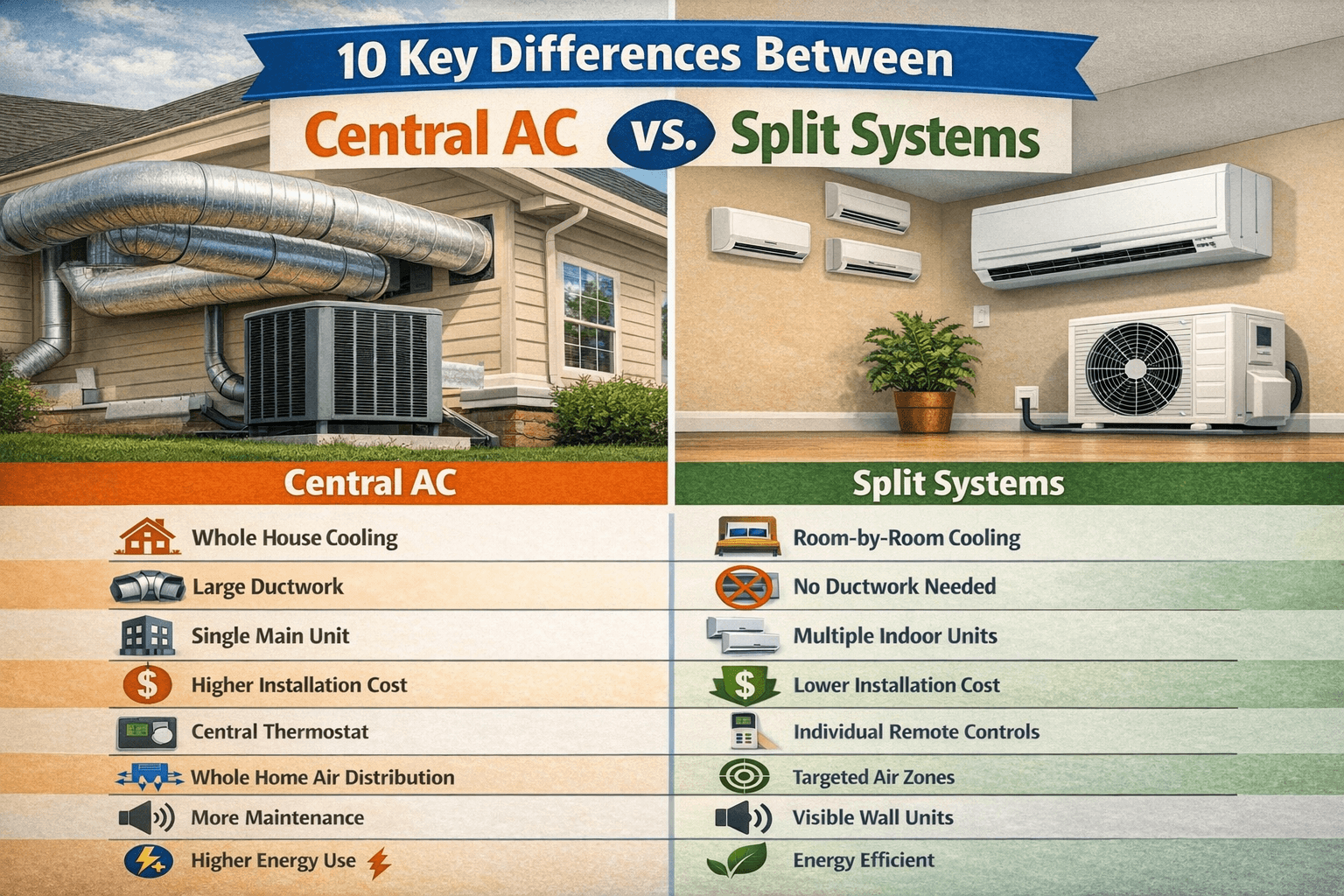
Understanding the differences between Central AC and Split systems is essential before making a commitment. Central air conditioning systems are typically designed to cool an entire building through a network of ducts, delivering conditioned air evenly across multiple rooms. On the other hand, split systems—often referred to as ductless mini-splits—consist of an outdoor compressor and one or more indoor air-handling units, allowing for targeted or zoned cooling. Each system serves a specific purpose, and the right choice depends on factors such as property size, insulation quality, climate conditions, and budget.
When evaluating Central AC and Split systems, it’s important to consider installation complexity. Central AC often requires pre-existing ductwork or significant modifications to install it properly. This can increase upfront costs but offers seamless whole-home comfort once installed. Split systems, in contrast, require minimal structural changes and are often easier and faster to install, making them a practical option for renovations, room additions, or properties without ductwork.
Energy efficiency is another major factor in comparing Central AC and Split systems. Split systems typically provide greater flexibility because they allow independent temperature control in different rooms or zones. This means you can cool only the areas you are actively using, potentially lowering energy consumption. Central AC systems, while highly effective for uniform cooling, may use more energy if the entire property is cooled at once without zoning controls.
Cost considerations also play a significant role. The upfront investment for Central AC and Split systems can vary widely depending on the size of the property and the number of units required. Central AC may involve higher installation costs due to ducts and labor, while split systems may require multiple indoor units for full-home coverage. Over time, operating and maintenance costs should also be evaluated to determine the most economical choice.
In addition to performance and cost, factors such as aesthetics, noise levels, and maintenance requirements can influence your decision. Central AC systems typically remain hidden behind walls and ceilings, maintaining a clean interior appearance. Split systems, while modern and sleek, have visible wall-mounted units that may affect room design preferences.
Ultimately, comparing Central AC and Split systems requires a careful assessment of your cooling needs, lifestyle, and long-term plans. In the following sections, we will explore the 10 key differences between Central AC and Split systems in detail, helping you confidently determine which option best aligns with your comfort goals and budget.
1.System Design and Structure of Central AC and Split
One of the most fundamental differences between Central AC and Split systems lies in how each system is designed and structured to deliver cool air. The overall architecture of the system directly affects installation, performance, airflow distribution, and long-term efficiency. tamcoair
When comparing Central AC and Split systems, central air conditioning is built around a single, centralized cooling unit. This system typically includes an outdoor condenser unit and an indoor air handler or evaporator coil, which is usually connected to a furnace or air handling system. What truly defines central air, however, is its reliance on ductwork. A network of supply and return ducts runs through walls, ceilings, or floors, distributing cooled air evenly throughout the entire building. This design allows one system to control the temperature of multiple rooms simultaneously using a single thermostat.
In contrast, split systems—often called ductless mini-splits—operate without ductwork. The structure of Central AC and Split systems differs significantly in this regard. A split system consists of an outdoor compressor unit connected directly to one or more indoor air-handling units via refrigerant lines. Each indoor unit is typically mounted on a wall or ceiling and is responsible for cooling a specific room or zone. Because there are no ducts involved, the cooled air is delivered directly into the space where the indoor unit is installed. croma
The structural design of Central AC and Split systems also impacts airflow management. In a central system, air circulates continuously through ducts, which can help maintain consistent temperatures across larger areas. However, ductwork can sometimes lead to energy loss if it is poorly sealed or insulated. On the other hand, split systems eliminate duct-related energy loss entirely, as air is delivered directly into each zone.
Another important structural difference between Central AC and Split systems is scalability. Central AC is typically designed as a whole-home solution from the start. Expanding or modifying it later can require significant duct adjustments. Split systems, however, offer modular flexibility. Additional indoor units can often be added if cooling needs expand, making them highly adaptable for home additions or renovations.
Ultimately, understanding the design and structural differences between Central AC and Split systems is crucial because the system layout influences installation cost, efficiency, comfort levels, and future upgrade options. The way each system is built determines how effectively it can meet your cooling demands and how seamlessly it integrates into your property’s infrastructure.antiquesinsandiego
2. Cooling Coverage: How Central AC and Split Systems Perform
One of the most important factors to consider when choosing between Central AC and Split systems is how effectively each system can cool your living or working space. The coverage area—meaning how far and evenly the cool air reaches—can significantly affect comfort, energy efficiency, and overall satisfaction with your cooling solution.
Central AC and Split systems differ greatly in this aspect. Central AC is designed to provide uniform cooling throughout an entire home or building. By using a network of ducts and vents, the system distributes conditioned air to multiple rooms simultaneously, ensuring a consistent temperature across large areas. This makes central air ideal for properties with multiple bedrooms, large open-plan spaces, or multiple floors, where maintaining an even climate is a priority. The centralized system allows you to control the overall indoor environment using a single thermostat, which simplifies operation while providing comprehensive coverage.tamcoair
Split systems, on the other hand, operate on a zoned or room-specific approach. Each indoor unit in a split system is dedicated to cooling a specific area or room. This allows for precise control over the temperature in individual spaces, giving homeowners the ability to adjust cooling based on actual usage. For example, living rooms and bedrooms can be cooled independently, reducing energy waste in rooms that are unoccupied. While this setup can provide highly efficient localized cooling, covering a larger home with a split system may require multiple indoor units, which can increase both installation and maintenance complexity.antiquesinsandiego
The difference in cooling coverage between Central AC and Split systems also affects airflow consistency. Central AC circulates air through ducts, which can sometimes result in minor temperature variations if ducts are improperly insulated or if airflow is uneven. Split systems deliver air directly into the room where the unit is installed, providing immediate cooling and often more consistent airflow in that specific zone. However, without multiple units, a split system may leave other parts of the house warmer, which is a limitation compared to central AC.
Additionally, climate and building layout play a role in choosing between Central AC and Split systems based on coverage. Homes with open floor plans and pre-installed ducts often benefit more from central AC, while older homes, apartments, or spaces without ductwork may achieve better results with split systems. Split systems are also advantageous in areas where targeted cooling is preferred, such as offices, individual rooms, or guest spaces.
In summary, the cooling coverage differences between Central AC and Split systems highlight a trade-off between whole-home uniformity and targeted, room-specific comfort. Understanding how each system distributes air can help you determine which setup will provide optimal comfort, energy efficiency, and practicality for your specific property.
3. Installation Requirements for Central AC and Split Systems
When deciding between Central AC and Split systems, one of the most significant considerations is the installation process. How each system is installed not only affects upfront costs but also impacts time, convenience, and potential structural modifications to your home or building.tamcoair
Central AC and Split systems have very different installation requirements due to their distinct designs. Central AC relies heavily on ductwork to distribute cool air throughout the property. If your home already has a well-designed duct system, installation can be straightforward, though it still requires professional handling of the indoor air handler, outdoor condenser, and proper refrigerant connections. For properties without existing ducts, installing central AC can be a major undertaking. Ductwork must be added or modified, which often involves opening walls, ceilings, or floors. This process can increase both labor time and material costs, making central AC a more involved and expensive option in terms of installation.antiquesinsandiego
Split systems, in contrast, are much more flexible and easier to install because they do not require ductwork. A typical split system consists of an outdoor compressor and one or more indoor units connected by refrigerant lines. Installing a split system usually involves mounting the indoor units on walls or ceilings and running a small line through a wall to connect to the outdoor unit. This process is less invasive, faster, and often more cost-effective than central AC installation, especially in homes where adding ducts would be impractical or impossible.croma
The installation differences between Central AC and Split systems also affect scalability and future modifications. Central AC installations are designed for whole-home coverage from the start, and adding new zones or expanding the system can be complex and costly due to the ductwork requirements. Split systems, on the other hand, are modular. Additional indoor units can be installed later if you want to extend cooling to new rooms or areas without major renovations.
Another factor to consider is the professional expertise required. Central AC installations demand skilled technicians familiar with duct design, airflow calculations, and system balancing to ensure even cooling. Split systems require specialized knowledge for refrigerant handling and correct mounting of indoor units, but generally, the process is less complex and disruptive.
In summary, understanding the installation requirements of Central AC and Split systems is crucial for planning your cooling project. Central AC may be ideal for homes with existing ductwork or for those seeking seamless whole-home cooling, while split systems offer a simpler, more flexible installation—especially for homes without ducts, apartments, or areas where minimal construction is preferred. The choice between the two often comes down to balancing convenience, cost, and the structural realities of your property.tamcoair
4. Energy Efficiency of Central AC and Split Systems
Efficiency
Energy efficiency is one of the most important factors to consider when choosing between Central AC and Split systems, as it directly impacts your electricity bills, environmental footprint, and overall comfort. While both systems are designed to cool indoor spaces effectively, the way they operate and distribute air leads to significant differences in energy consumption.croma
Central AC systems are generally designed to cool an entire home uniformly. Because the air is pushed through a network of ducts, the system runs to maintain a consistent temperature across all rooms. While this ensures even cooling, it can also result in energy waste if some areas of the home are unoccupied. Leaks or poor insulation in ducts can further reduce efficiency, causing the system to work harder and consume more energy. In addition, central AC systems often operate on a single thermostat, which means the system continues to cool spaces that don’t necessarily need it, contributing to higher energy usage.tamcoair
Split systems, on the other hand, are designed for zoned or room-specific cooling. Each indoor unit operates independently, allowing homeowners to cool only the rooms that are being used. This zoned approach can significantly reduce energy consumption because unused areas don’t require conditioning. For example, bedrooms can remain at a comfortable temperature during nighttime hours while living areas are turned off, maximizing efficiency. Many modern split systems also feature advanced inverter technology, which adjusts the compressor speed according to cooling demand, resulting in lower energy usage compared to traditional systems that cycle on and off.antiquesinsandiego
When comparing Central AC and Split systems, another consideration is climate and property layout. Large homes or buildings with multiple floors may see higher energy consumption with central AC if the system is oversized or if ducts are poorly insulated. Split systems can mitigate this by allowing precise control over each zone, ensuring that energy is only used where it’s needed most.
Maintenance also plays a role in efficiency. A well-maintained central AC system with clean ducts and regularly serviced components can be highly efficient, but neglected ducts or filters reduce performance. Split systems generally require less maintenance related to airflow loss since there are no ducts, although indoor units still need routine cleaning for optimal performance.
In conclusion, the energy efficiency differences between Central AC and Split systems can be substantial depending on your usage patterns, home layout, and system maintenance. Split systems often offer higher efficiency through zoned cooling and targeted operation, while central AC provides uniform comfort at the cost of potentially higher energy consumption if not properly managed. Evaluating how and where you need cooling can help determine which system will deliver the best balance of comfort and energy savings.tamcoair
Learn more : 8 Energy-Efficient Cooling Systems That Can Transform Your Home Comfort
5. Cost Considerations
When deciding between Central AC and Split systems, cost is a critical factor that goes beyond just the initial purchase price. Understanding the financial implications of each system—including installation, operation, and long-term maintenance—is essential for making a well-informed choice.
Central AC and Split systems differ significantly in terms of upfront investment. Central AC typically requires a larger initial outlay due to the complexity of the installation process. This includes the cost of the main outdoor condenser, indoor air handler, and the ductwork required to distribute cool air throughout the home. If your property already has ductwork, costs may be moderate, but for homes without existing ducts, the addition of supply and return vents, labor, and potential structural modifications can make central AC considerably more expensive.croma
Split systems, in contrast, are often more affordable upfront. Since they do not require ducts, installation is simpler and faster, reducing labor costs and potential construction expenses. Each indoor unit is installed in the desired room or zone, connected to a single outdoor compressor. However, in larger homes requiring multiple indoor units to cool several rooms or floors, the total cost of a split system can rise, sometimes approaching or exceeding that of a central AC system.
Long-term operating costs also differ between Central AC and Split systems. Central AC, while effective at cooling an entire home uniformly, can consume more energy if running continuously to maintain consistent temperatures across multiple rooms, especially in areas that are not in use. Split systems, with their zoned operation, allow you to control cooling more efficiently, reducing electricity usage by cooling only occupied spaces. Over time, this can result in noticeable savings on energy bills.antiquesinsandiego
Maintenance costs are another consideration. Central AC systems often require periodic duct inspections, filter replacements, and professional servicing of the air handler and condenser. Split systems generally have simpler maintenance needs, as there are no ducts, but each indoor unit must be cleaned and serviced individually. For properties with many indoor units, this can increase maintenance time and costs.tamcoair
It’s also worth considering the lifespan of each system. Both Central AC and Split systems are durable when properly maintained, but central AC may require more significant repairs if ductwork or components fail, potentially adding to long-term expenses. Split systems, with modular indoor units, allow for easier replacement of individual components rather than the entire system.
In summary, the cost considerations of Central AC and Split systems involve a balance between upfront installation expenses, ongoing energy usage, and maintenance requirements. Central AC can be more costly to install, especially without existing ducts, but may be simpler for whole-home coverage. Split systems often provide a lower initial cost and greater energy efficiency, but larger installations may increase total expenses. Evaluating your budget, home layout, and cooling needs will help determine which system offers the best financial value over time.croma
6. Maintenance Needs
Another key factor when comparing Central AC and Split systems is the level and type of maintenance required. Proper upkeep is essential for ensuring both systems operate efficiently, provide consistent cooling, and have a long lifespan. However, the maintenance demands differ significantly between the two types of systems.tamcoair
Central AC and Split systems share some basic maintenance tasks, such as cleaning or replacing filters and checking refrigerant levels. In both systems, neglecting these tasks can lead to reduced efficiency, higher energy consumption, and potential damage to key components. However, central AC systems involve additional maintenance responsibilities due to their reliance on ductwork. Over time, ducts can accumulate dust, debris, and even mold if not properly sealed and cleaned. Regular duct inspections and cleaning are necessary to maintain indoor air quality and system efficiency. Additionally, central AC units require periodic servicing of the outdoor condenser, indoor air handler, and thermostat to ensure proper airflow and temperature regulation.antiquesinsandiego
Split systems, by contrast, generally require less extensive maintenance because they do not use ductwork. Each indoor unit needs regular cleaning of filters, coils, and vents to prevent dust buildup and maintain optimal airflow. The outdoor compressor also requires periodic inspection, similar to central AC systems. However, one consideration is that if a property has multiple indoor units, maintenance may become more time-consuming since each unit must be serviced individually. Despite this, the absence of ducts eliminates the risk of duct-related energy losses, leaks, or air quality issues.
The differences in maintenance between Central AC and Split systems also affect long-term performance and reliability. Central AC systems, if neglected, can experience airflow inefficiencies due to clogged or leaky ducts, which can increase energy costs and reduce comfort. Split systems are less prone to these issues, as air travels directly from the indoor unit into the room. This can make split systems easier to maintain in properties where accessibility to ducts is limited or where owners prefer lower ongoing maintenance efforts.
Another factor to consider is professional servicing. While routine maintenance tasks such as filter cleaning can be handled by homeowners for both systems, periodic professional check-ups are recommended. For central AC, technicians may need to inspect ductwork, check refrigerant levels, and service the air handler. Split systems generally require professional inspection of the refrigerant lines, compressor, and indoor units, which is typically simpler than servicing central AC’s extensive duct network.tamcoair
In summary, the maintenance requirements of Central AC and Split systems are an important consideration when planning your cooling strategy. Central AC may involve more time, effort, and cost due to ductwork inspections and potential issues with airflow. Split systems generally offer simpler and more straightforward maintenance, though multiple indoor units can increase servicing needs. Understanding these differences helps ensure that your system remains efficient, reliable, and long-lasting.croma
Learn more : 7 Signs Your AC System Needs Immediate Maintenance
7. Aesthetic Impact
When comparing Central AC and Split systems, aesthetics is an often-overlooked factor, but it can play a significant role in homeowner satisfaction. The visual presence of your cooling system inside your home or office affects interior design, room layout, and overall appeal, and the two systems differ dramatically in how they integrate into living spaces.antiquesinsandiego
Central AC and Split systems have contrasting approaches to indoor appearance. Central AC is designed to be virtually invisible. The main components—the air handler and outdoor condenser—are typically hidden in utility rooms, basements, or outside the property. Cool air is delivered through discreet vents or registers installed in ceilings, walls, or floors. A single thermostat controls the system, further minimizing visual clutter. This hidden setup allows homeowners to maintain clean lines, uninterrupted wall space, and a cohesive interior design without compromising comfort. For those who prioritize a sleek, uncluttered look in their home, central AC is often the preferred choice.
Split systems, in contrast, are more noticeable inside the home. Each indoor unit is mounted on a wall, ceiling, or floor, depending on the design and cooling requirements. Modern split units are often sleek and compact, but they are still visible and occupy space within the room. While some homeowners appreciate the contemporary look of split units, others may find them intrusive or challenging to incorporate into certain design aesthetics. Additionally, when multiple units are installed for larger homes, the visual presence increases, which can affect room layout and interior design planning.tamcoair
Another aspect of aesthetic impact to consider is the placement of outdoor units. Both Central AC and Split systems have outdoor components, but central AC often requires a larger condenser unit that may need to be positioned in a visible part of the yard or side of the house. Split systems usually feature smaller outdoor compressors, which can be easier to conceal behind landscaping or along walls, reducing visual impact outside the home.
The aesthetic differences between Central AC and Split systems also influence flexibility in room design. Central AC allows for unobstructed walls and ceilings, making it easier to decorate, install cabinetry, or arrange furniture without accommodating cooling equipment. Split systems, however, require careful planning for the placement of indoor units to ensure optimal airflow while minimizing visual disruption.
In conclusion, the aesthetic impact of Central AC and Split systems is an important consideration for homeowners who value interior design and visual harmony. Central AC offers a clean, hidden solution that blends seamlessly into the home, while split systems provide flexibility and targeted cooling at the cost of visible indoor units. Understanding these differences can help you choose a cooling solution that balances comfort, efficiency, and the overall look of your living space.croma
8. Noise Levels
Noise is a critical factor that often influences the overall comfort and satisfaction of a cooling system, and the difference between Central AC and Split systems can be significant. How quietly a system operates can affect sleep, concentration, and daily living, especially in bedrooms, offices, or other quiet spaces.antiquesinsandiego
Central AC and Split systems generate noise differently because of their design and placement of components. In a central AC system, most of the noisy components—such as the compressor and condenser fan—are located outside the home. Indoors, only the gentle airflow from vents and the low hum of the air handler are typically audible. This separation of noisy parts from living areas makes central AC systems one of the quieter cooling options available, providing consistent comfort without significant disruption. However, if the ducts are poorly insulated or loose, airflow noise can sometimes be noticeable, especially when the system is operating at high speeds.croma
Split systems, in contrast, have indoor units mounted directly in the rooms they are cooling. These units house fans, blowers, and coils, which can produce some operational noise. While modern split systems are designed with quiet operation in mind—often comparable to a low hum or soft whisper—the noise level is generally higher indoors than central AC, especially if multiple units are operating simultaneously. Outdoor compressors for split systems operate similarly to central AC units, so the outdoor noise impact is comparable, but the presence of indoor unit noise is a distinct consideration.
The difference in noise levels between Central AC and Split systems also affects placement decisions. Central AC allows homeowners to control where the indoor airflow is delivered with minimal sound disturbance. Split systems require careful placement of indoor units to minimize disruption while still providing optimal airflow. For example, placing a unit too close to a bed or work area may lead to unwanted noise, whereas strategic placement can keep it almost imperceptible.tamcoair
Another consideration is that split systems allow for independent operation of each indoor unit, which can indirectly reduce perceived noise. Rooms that are not in use can have their units turned off, keeping the noise levels in occupied areas lower. Central AC, in contrast, operates as a whole-home system, so even if some rooms are unoccupied, the system continues to circulate air throughout the house, which may generate a subtle but constant background noise.
In summary, the noise level differences between Central AC and Split systems are an important factor for comfort-conscious homeowners. Central AC is generally quieter indoors due to the separation of noisy components, making it ideal for maintaining a peaceful environment. Split systems, while slightly noisier indoors, offer the advantage of zoned operation and modern quiet technologies, which can make them suitable for targeted cooling in specific rooms without significant disruption. Understanding these differences can help you select a system that balances both performance and acoustic comfort.
9. Temperature Control Flexibility
One of the most significant advantages to consider when comparing Central AC and Split systems is the level of control each offers over indoor temperatures. How precisely you can manage cooling in different areas of your home or building affects comfort, energy efficiency, and convenience.antiquesinsandiego
Central AC and Split systems differ fundamentally in temperature control. Central AC systems generally rely on a single thermostat to regulate the temperature of the entire home. This means that all rooms connected to the ductwork are cooled simultaneously to the same set temperature. While this approach ensures consistent comfort throughout the house, it offers limited flexibility. Occupied rooms and unoccupied spaces are cooled alike, which can lead to energy waste and prevent individualized comfort in different areas. Some central systems can be upgraded with zoning controls to allow partial flexibility, but this often involves additional ductwork, dampers, and increased costs.tamcoair
Split systems, in contrast, provide highly flexible temperature control. Each indoor unit operates independently, allowing you to set different temperatures in separate rooms or zones. For example, bedrooms can be kept cooler at night, while living spaces remain at a slightly higher temperature during the day. This zoned approach not only maximizes comfort but also improves energy efficiency by avoiding unnecessary cooling in unused areas. Homeowners can adjust settings to suit personal preferences or schedules, making split systems particularly appealing for families, multi-level homes, or spaces with varying occupancy patterns.
The flexibility of split systems also extends to operational modes. Many modern units offer advanced features such as programmable timers, sleep modes, and adaptive cooling that respond to room occupancy. These capabilities allow you to fine-tune comfort while minimizing energy consumption. Central AC systems, unless upgraded with smart zoning solutions, generally lack this degree of customization.croma
Another consideration is responsiveness. Split systems can cool a specific room more quickly because the indoor unit delivers air directly to the space without needing to circulate through ducts. Central AC, while effective for whole-home cooling, may take longer to reach the desired temperature in distant rooms, particularly on hot days or in larger homes.
In conclusion, temperature control flexibility is a key difference between Central AC and Split systems. Central AC provides uniform, whole-home cooling with a single control point, which is simple but less adaptable. Split systems offer individualized control over multiple zones, allowing homeowners to optimize comfort and energy usage simultaneously. For those seeking precise, room-specific cooling, the flexibility of split systems often makes them the preferred choice.tamcoair
10. Ideal Applications
When deciding between Central AC and Split systems, it’s important to consider the type of property and the specific cooling needs, as each system is better suited for certain applications. Understanding where each system performs best can help ensure maximum comfort, efficiency, and cost-effectiveness.antiquesinsandiego
Central AC and Split systems serve different purposes based on property size, layout, and existing infrastructure. Central AC systems are ideal for larger homes, multi-story buildings, or properties that already have ductwork installed. Because central AC provides uniform cooling throughout all connected rooms, it is especially effective in spaces where consistent temperature across the entire home is a priority. Properties with open floor plans or multiple bedrooms benefit from central AC’s ability to maintain even airflow and comfort in every area, controlled conveniently from a single thermostat.
Split systems, on the other hand, are better suited for smaller homes, apartments, or spaces without existing ductwork. They are also a popular choice for renovations or room additions because installation is minimally invasive and doesn’t require extensive construction work. Split systems are particularly effective for targeted cooling, such as in bedrooms, offices, or living rooms that are frequently used, allowing homeowners to save energy by cooling only the spaces they occupy. Multi-zone split systems can also be employed in larger homes, providing flexibility without the need for ductwork.croma
The choice between Central AC and Split systems may also depend on climate and energy priorities. In regions with high cooling demands, split systems allow for more precise control, reducing energy consumption in rooms that are not in use. Central AC, while slightly less flexible, offers convenience and uniformity, which can be advantageous in climates where consistent, whole-home cooling is needed for comfort and humidity control.
Maintenance considerations also affect ideal applications. Homes with ductwork already in place may find central AC easier to maintain over the long term, while properties without ducts may experience lower installation and maintenance costs with split systems. The modular nature of split systems also makes it easier to expand cooling capacity in the future, accommodating changes in occupancy or room usage without major renovations.tamcoair
In summary, the ideal application of Central AC and Split systems depends on property size, layout, infrastructure, and cooling priorities. Central AC is best suited for whole-home comfort in larger properties with ductwork, providing uniform temperature control and minimal indoor unit visibility. Split systems excel in ductless spaces, targeted cooling applications, and scenarios where flexibility, energy efficiency, and ease of installation are top priorities. Choosing the right system based on your specific property and needs ensures optimal comfort, efficiency, and long-term satisfaction.
Conclusion
Choosing the right cooling system for your home or business requires a careful evaluation of multiple factors, and understanding the differences between Central AC and Split systems is key to making an informed decision. Both systems are capable of providing reliable cooling, but their design, coverage, installation, efficiency, and overall functionality cater to different needs and preferences.
Central AC and Split systems each offer unique advantages. Central AC provides uniform, whole-home cooling, making it ideal for larger properties, multi-story homes, or spaces with existing ductwork. Its hidden indoor components and quiet operation ensure a seamless integration into your home while delivering consistent comfort. However, central AC may require higher upfront costs, more extensive installation, and greater energy use if zoning is not incorporated.
Split systems, on the other hand, excel in flexibility and targeted cooling. Their modular design allows independent temperature control for individual rooms or zones, improving energy efficiency and allowing homeowners to customize comfort according to their lifestyle. Split systems are easier to install, particularly in homes without ducts or during renovations, and they eliminate many of the duct-related maintenance issues associated with central AC.
When deciding between Central AC and Split, consider your home size, existing infrastructure, cooling needs, budget, and energy priorities. For whole-home comfort with minimal visual impact, central AC is often the preferred choice. For energy-efficient, room-specific cooling with installation flexibility, split systems offer an excellent alternative.
Ultimately, both Central AC and Split systems can provide years of reliable cooling if properly installed and maintained. Understanding their differences empowers you to select the system that best aligns with your property, lifestyle, and comfort goals, ensuring efficient, effective, and enjoyable indoor climate control for years to come.
