

Table of Contents
Selecting the right HVAC system for commercial spaces is one of the most important decisions a business can make, as it directly affects not only energy efficiency but also the overall comfort and productivity of the space. A poorly chosen system can lead to inconsistent temperatures, high energy bills, frequent maintenance issues, and even negative impacts on employee health and customer experience. On the other hand, choosing the right HVAC system ensures that your commercial facility operates smoothly, providing a consistent climate, improved air quality, and reliable performance year after year.
Commercial spaces vary greatly in size, layout, occupancy levels, and operational requirements, meaning a one-size-fits-all approach rarely works. Factors such as the type of business, number of people in the space, equipment heat loads, and building design all play a role in determining what system will work best. Beyond just heating and cooling, the right HVAC system can help manage humidity, filter airborne contaminants, and maintain compliance with safety and environmental standards.
Investing time in selecting the right HVAC system is an investment in the long-term success of your business. It can reduce energy consumption, lower operating costs, and minimize downtime caused by system failures. Moreover, a well-chosen system contributes to a healthier, more comfortable environment for employees, clients, and visitors, which can enhance overall satisfaction and productivity.
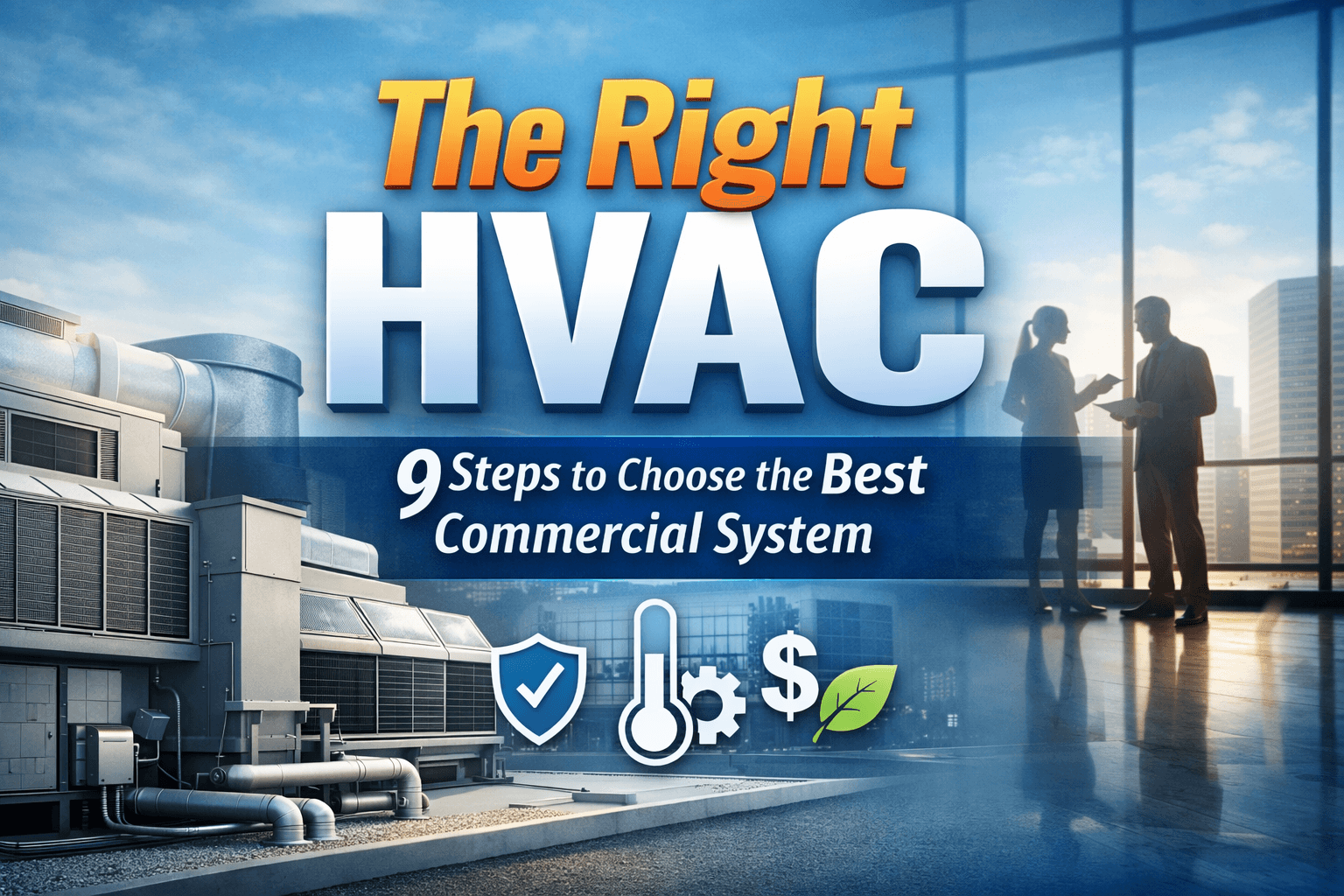
To simplify this complex process and make an informed choice, here are nine smart steps that businesses can follow to identify and implement the right HVAC system for their commercial space.
1. Assess Your Space Requirements
Before selecting the right HVAC system for a commercial space, it’s essential to conduct a thorough assessment of the facility itself. Commercial buildings vary widely in size, layout, and function—from open-plan offices and retail stores to warehouses and medical facilities. Each type of space presents unique heating, cooling, and ventilation challenges that must be considered to ensure comfort and efficiency. ASHRAE
Start by measuring the square footage, ceiling height, and overall volume of the space. Larger areas or spaces with high ceilings may require more powerful systems or multiple units to maintain consistent temperatures. Similarly, spaces with varying occupancy levels throughout the day may need zoning capabilities to provide precise temperature control in different areas.
Next, evaluate the internal load factors, such as the number of employees, heat generated by computers or machinery, and the presence of lighting systems. These factors can significantly influence the size and type of system needed. For example, a commercial kitchen will require more ventilation and cooling than a standard office environment. ENERGY STAR
The layout of your building also matters. Open spaces may require centralized systems, while segmented areas could benefit from ductless or multi-zone units. Additionally, consider existing infrastructure—ductwork, electrical systems, and plumbing—because retrofitting an inappropriate system can be costly and inefficient.
By carefully analyzing your facility’s unique characteristics, you can identify the right HVAC system that provides consistent comfort, reduces energy waste, and adapts to your business’s operational needs. This initial step lays the foundation for making informed choices in energy efficiency, system type, and long-term maintenance planning. DOE
2. Consider Energy Efficiency Ratings
When selecting the right HVAC system for a commercial space, energy efficiency should be one of the top priorities. Commercial HVAC systems can account for a significant portion of a building’s total energy consumption, and an inefficient system can lead to unnecessarily high utility bills and a larger environmental footprint. Investing in a system with high energy efficiency not only reduces operational costs but also contributes to sustainability goals and a greener workplace. ASHRAE
Start by examining key efficiency ratings such as SEER (Seasonal Energy Efficiency Ratio), EER (Energy Efficiency Ratio), and HSPF (Heating Seasonal Performance Factor). These ratings provide insight into how well a system performs under various conditions. A higher SEER or EER indicates that the system consumes less energy while delivering the same level of heating or cooling, which is particularly important in larger commercial spaces with constant demand.
In addition to numerical ratings, look for certifications such as ENERGY STAR. Systems that carry this certification have met rigorous standards for efficiency and reliability. Choosing the right HVAC with ENERGY STAR certification can lead to significant long-term savings and may even qualify your business for energy rebates or tax incentives. ENERGY STAR
It’s also important to consider the system’s efficiency across different operational modes. Some systems perform well under light loads but struggle when demand peaks. The right HVAC system maintains consistent performance whether it’s summer or winter, high occupancy or low, ensuring that your business avoids sudden spikes in energy consumption.
Finally, energy-efficient systems often come equipped with advanced technology, including variable-speed motors, smart thermostats, and automated zoning. These features allow the system to adapt in real-time to changes in the building’s environment, optimizing energy use without sacrificing comfort. By prioritizing efficiency when choosing the right HVAC system, businesses can reduce operating costs, enhance sustainability, and ensure a more comfortable, reliable climate for employees and clients alike.DOE
Learn more : Next-Gen Air Conditioning: Combining Smart Sensors with Energy Efficiency
3. Understand Your Budget Constraints
Selecting the right HVAC system for a commercial space isn’t just about performance and efficiency—it also requires careful consideration of your budget. The cost of an HVAC system extends far beyond the initial purchase price. Business owners must account for installation expenses, long-term maintenance, energy consumption, and potential upgrades, all of which can significantly impact overall operating costs. Understanding your financial boundaries upfront helps ensure that you make a strategic investment that balances quality, efficiency, and affordability. ASHRAE
Start by defining a realistic budget that covers both the upfront costs and ongoing operational expenses. While it might be tempting to choose the cheapest system available, this approach can backfire if the system underperforms or requires frequent repairs. On the other hand, investing in a premium system without considering the long-term operating costs may unnecessarily strain your finances. The right HVAC system is one that offers the ideal balance between upfront investment and long-term savings. ENERGY STAR
Consider installation costs carefully. Larger commercial spaces or buildings with complex layouts may require more labor, specialized equipment, or modifications to existing ductwork, all of which can increase expenses. Choosing the right HVAC means accounting for these factors and planning accordingly. Consulting with certified HVAC professionals can help provide an accurate estimate of total costs, including potential hidden expenses.
Ongoing operational costs are equally important. Energy-efficient systems may have a higher initial price but can dramatically reduce monthly utility bills. Similarly, systems with advanced filtration, automated controls, or zoning capabilities may cost more to install but provide long-term savings through reduced maintenance and energy use. The right HVAC system balances these upfront and recurring costs, allowing businesses to achieve optimal performance without compromising their budget.DOE
Finally, don’t overlook financing options, rebates, or incentives that can offset the initial investment. Many commercial HVAC systems qualify for energy efficiency incentives, which can make high-performance units more affordable. By evaluating your budget carefully and considering all associated costs, you can select the right HVAC system that delivers value, reliability, and efficiency over the long term.
4. Evaluate Air Quality Needs
One of the most important—but often overlooked—aspects of selecting the right HVAC system for commercial spaces is indoor air quality (IAQ). In offices, healthcare facilities, restaurants, and other commercial environments, poor air quality can lead to discomfort, health issues, and reduced productivity. By prioritizing air quality, businesses not only create a healthier workplace but also extend the lifespan of their HVAC equipment and ensure compliance with industry standards. ASHRAE
Start by considering the specific air quality requirements of your commercial space. High-traffic areas, kitchens, laboratories, or medical facilities may produce dust, fumes, or airborne contaminants that require specialized filtration. A standard HVAC system might provide adequate heating and cooling, but without advanced filtration, it may fail to maintain safe, clean air. Choosing the right HVAC system means evaluating options like HEPA filters, UV light sterilization, and air purifiers that target bacteria, viruses, and allergens.
Humidity control is another critical factor. Excess humidity can promote mold growth, damage building materials, and create an uncomfortable environment, while overly dry air can cause respiratory irritation and static electricity. The right HVAC system includes features for precise humidity regulation, ensuring a comfortable and safe indoor climate throughout the year.DOE
Ventilation is equally important. Proper airflow prevents stale air accumulation, reduces the concentration of indoor pollutants, and helps distribute conditioned air evenly. Systems with advanced ventilation designs and energy recovery ventilators (ERVs) can exchange indoor and outdoor air efficiently, improving IAQ while minimizing energy waste. ENERGY STAR
By carefully evaluating the air quality needs of your commercial space, you ensure that the right HVAC system not only regulates temperature but also maintains a healthy, comfortable environment. This proactive approach protects occupants, supports operational efficiency, and enhances the overall value of your facility.
5. Choose the Appropriate System Type
Once you have assessed your space, energy efficiency, budget, and air quality requirements, the next critical step in selecting the right HVAC system for a commercial space is choosing the appropriate system type. Commercial HVAC systems come in a variety of configurations, each designed to meet specific building layouts, operational demands, and energy considerations. Making the right choice at this stage ensures optimal performance, long-term reliability, and cost efficiency.
Commercial HVAC systems generally fall into several categories: split systems, packaged units, rooftop units, and ductless or multi-zone systems. Split systems separate the heating and cooling components, offering flexibility in installation and maintenance. Packaged units consolidate these components into a single system, often installed on rooftops, which can save valuable interior space. Ductless or multi-zone systems provide targeted temperature control, making them ideal for spaces with unique zoning requirements or older buildings with limited ductwork. ASHRAE
Choosing the right HVAC system requires a careful analysis of your building’s layout and occupancy patterns. Open-plan offices or retail spaces often benefit from centralized systems that can efficiently manage large volumes of air. In contrast, segmented spaces with multiple rooms or varying temperature needs may perform better with a multi-zone system that allows individual areas to be controlled independently. This not only increases comfort but also reduces energy consumption by avoiding unnecessary conditioning of unoccupied zones.
It is also important to consider the existing infrastructure of the building. Retrofitting an outdated or undersized ductwork system can be costly and may limit your options. Selecting the right HVAC system often involves evaluating how well the new system will integrate with electrical systems, plumbing, and structural components. In some cases, opting for a ductless or modular system can provide a more practical, cost-effective solution without major renovations.DOE
Finally, think about future scalability. Your business needs may grow, and your HVAC system should accommodate that growth. Systems that allow for expansion, modular upgrades, or additional zones provide long-term flexibility, ensuring that you continue to have the right HVAC system as your commercial space evolves. ENERGY STAR
By carefully considering system types, building layout, and operational needs, you can confidently select the right HVAC system that delivers consistent comfort, energy efficiency, and long-term reliability, setting the foundation for a productive and safe commercial environment.
6. Review Maintenance Requirements
Choosing the right HVAC system for a commercial space isn’t just about upfront performance—it’s equally important to consider long-term maintenance requirements. Even the most efficient and high-performing HVAC systems can underperform or fail prematurely without proper care. Understanding the maintenance needs of your system helps you minimize downtime, extend equipment lifespan, and protect your investment over time.DOE
Start by evaluating the complexity of the system. Some commercial HVAC systems come with advanced features such as variable-speed motors, automated zoning, or integrated air quality controls. While these features improve efficiency and comfort, they may also require specialized servicing. Selecting the right HVAC system involves balancing advanced technology with manageable maintenance needs to ensure that your team—or a professional service provider—can easily keep the system operating at peak performance. ASHRAE
Regular maintenance tasks include inspecting and replacing filters, cleaning coils, checking refrigerant levels, lubricating moving parts, and ensuring the proper function of sensors and thermostats. Neglecting these tasks can result in reduced efficiency, higher energy costs, and potential system failures. The right HVAC system should come with manufacturer guidelines for routine maintenance and easy access to components, reducing the time and cost of servicing.
Another important factor is the availability of professional support. Work with certified HVAC contractors who can provide regular inspections, emergency repairs, and preventive maintenance plans. A system that is easy to service and has readily available replacement parts minimizes downtime and ensures consistent comfort in your commercial space.
Additionally, consider implementing a predictive maintenance approach. Modern HVAC systems equipped with smart sensors and remote monitoring can alert you to potential issues before they become major problems. This proactive strategy ensures that the right HVAC system not only functions efficiently but also avoids costly breakdowns that disrupt business operations. ENERGY STAR
By carefully reviewing maintenance requirements and planning for ongoing care, you can ensure that your commercial HVAC system delivers reliable performance year after year. Investing in the right HVAC system with manageable maintenance needs protects your business, enhances comfort, and maximizes the return on your investment.
7. Factor in Noise Levels
When selecting the right HVAC system for commercial spaces, noise levels are an often-overlooked but crucial factor. While the primary function of an HVAC system is to regulate temperature and airflow, excessive noise can significantly impact the comfort, productivity, and overall experience of employees, clients, and visitors. A system that is too loud can cause distractions, interfere with concentration, and even contribute to stress in high-traffic or quiet work environments.ASHRAE
Start by identifying the noise sensitivity of your commercial space. Offices, conference rooms, classrooms, and healthcare facilities require quieter systems to maintain a professional and peaceful environment. Retail areas or industrial facilities, while less sensitive, still benefit from systems that operate without disruptive mechanical noise. Choosing the right HVAC system means prioritizing models engineered for low sound output while maintaining optimal performance.
Modern HVAC systems offer a variety of noise-reduction features, including variable-speed fans, insulated compressors, vibration-dampening mounts, and quiet duct designs. These technologies allow the system to operate efficiently without generating unnecessary sound. Additionally, zoning capabilities can help manage noise by reducing airflow or adjusting system operation in less critical areas, ensuring comfort without disturbance. ENERGY STAR
It is also important to consider the placement of units. Rooftop units, mechanical rooms, and hidden ductwork can help minimize noise intrusion into occupied spaces. When working with an HVAC professional, evaluate not only the system specifications but also installation strategies that reduce operational noise. The right HVAC system, combined with thoughtful placement, creates a comfortable acoustic environment while delivering consistent climate control.
Finally, consider long-term maintenance and how it affects noise levels. Dust buildup, loose components, and worn-out parts can increase operational noise over time. Regular maintenance ensures that the right HVAC system continues to function quietly and efficiently, preserving both comfort and productivity in the workplace.DOE
By factoring in noise levels during the selection and installation process, businesses can ensure that their HVAC system enhances the environment rather than detracts from it, making the space more enjoyable and functional for everyone.
8. Check for Smart Technology Integration
In today’s rapidly evolving commercial landscape, integrating smart technology into your HVAC system is no longer just a luxury—it’s a necessity. Selecting the right HVAC system with advanced automation and intelligent controls can significantly improve energy efficiency, simplify management, and enhance comfort for building occupants. Smart HVAC systems provide real-time monitoring, predictive maintenance, and adaptive control, making them an essential component of modern commercial spaces.ASHRAE
Start by evaluating the type of smart features offered by different systems. Modern systems may include programmable thermostats, remote access via mobile apps, occupancy sensors, and learning algorithms that adjust temperature based on usage patterns. By incorporating these features, businesses can ensure that the right HVAC system adapts to changing conditions, reducing energy waste while maintaining optimal comfort levels.
Predictive maintenance is another key advantage of smart HVAC technology. Sensors embedded within the system can monitor performance metrics such as airflow, refrigerant levels, and component wear. If an issue arises, the system can alert facility managers before it escalates into a costly breakdown. Choosing the right HVAC system with predictive capabilities ensures long-term reliability, reduces downtime, and minimizes emergency repair costs.DOE
Smart integration also enables zoning and individualized control in commercial spaces with multiple areas or varying occupancy levels. For example, conference rooms, offices, and common areas can have independent temperature settings based on real-time demand. This level of precision ensures energy is not wasted conditioning unoccupied areas, making the right HVAC system both efficient and environmentally responsible.
Finally, consider compatibility with existing building management systems (BMS) or IoT platforms. A seamless integration allows centralized monitoring and control, empowering facility managers to make informed decisions about energy use, maintenance, and occupant comfort. Investing in the right HVAC system with smart technology not only improves operational efficiency but also positions your business for future scalability and innovation. ENERGY STAR
By prioritizing smart technology integration, businesses can leverage the full potential of modern HVAC systems, achieving energy savings, improved comfort, and proactive maintenance—all while ensuring that they are truly investing in the right HVAC system for their commercial space.
Learn more : 5 Ways Smart Heating Technology Is Redefining Home Comfort
9. Partner with a Trusted Installer
Even the most advanced and efficient system will fail to deliver optimal performance if it is not installed correctly. Partnering with a certified, experienced installer is a critical step in ensuring that you get the right HVAC system for your commercial space. Proper installation affects everything from energy efficiency and system longevity to indoor air quality and overall comfort.
Start by seeking installers with a proven track record in commercial HVAC projects. Look for certifications, professional affiliations, and positive client testimonials. An experienced installer understands the nuances of commercial buildings, including load calculations, zoning requirements, ductwork design, and compliance with local codes. Selecting the right HVAC system is only half the battle—the other half is ensuring it is implemented accurately and efficiently.ASHRAE
Installation quality directly impacts long-term maintenance and operational costs. Poorly installed systems can result in uneven temperatures, increased energy consumption, frequent repairs, and even premature equipment failure. By working with a trusted installer, you reduce these risks, ensuring that the right HVAC system operates as intended from day one.
Communication and collaboration are also key. A reliable installer will take the time to understand your building’s specific needs, provide detailed recommendations, and explain the benefits of different system options. This partnership ensures that the chosen system aligns with your business goals, budget, and operational requirements.
Additionally, a trusted installer can provide ongoing support, including regular maintenance, emergency repairs, and guidance for future upgrades. This relationship ensures that the right HVAC system continues to perform efficiently over its lifespan, protecting your investment and maintaining a comfortable environment for employees, clients, and visitors.DOE
By carefully selecting an experienced and reputable installer, businesses can ensure that their HVAC system is not only properly sized and configured but also optimized for performance, energy efficiency, and longevity. Partnering with the right professional is the final, crucial step in securing the right HVAC system for your commercial space. ENERGY STAR
Conclusion
Selecting the right HVAC system for a commercial space is a complex decision that goes far beyond simply picking a unit off the shelf. It requires careful consideration of space requirements, energy efficiency, budget constraints, air quality, system type, maintenance needs, noise levels, smart technology integration, and professional installation. Each of these factors plays a critical role in ensuring that your system delivers consistent comfort, operational efficiency, and long-term reliability.
Investing in the right HVAC system has a direct impact on your business’s bottom line. An efficiently designed and properly installed system reduces energy consumption, lowers maintenance costs, and minimizes downtime, all while creating a healthier and more comfortable environment for employees, clients, and visitors. Additionally, a well-chosen system with smart technology and zoning capabilities allows businesses to adapt to changing occupancy patterns and future growth, ensuring flexibility and scalability.
Ultimately, the key to success lies in a holistic approach. Businesses that carefully assess their specific needs, consult with experienced professionals, and prioritize quality and efficiency are far more likely to achieve optimal performance and long-term savings. Choosing the right HVAC system is not merely a functional decision—it is an investment in the sustainability, productivity, and comfort of your commercial space. By following the nine steps outlined in this guide, businesses can make informed choices, avoid costly mistakes, and enjoy the peace of mind that comes from knowing their HVAC system is perfectly suited to their operational needs.
