


Table of Contents
Modern homes are built with innovation in mind. Advanced insulation, high-performance windows, sealed ductwork, and energy-efficient construction techniques are all designed to reduce energy consumption, lower utility bills, and create a more stable indoor climate. On the surface, this seems like the perfect formula for comfort. However, the very features that make contemporary houses efficient can also create an unintended consequence: declining Indoor Air Quality.
Unlike older homes that naturally allowed air to flow through small gaps and cracks, today’s airtight construction significantly limits natural ventilation. While this prevents heat loss and improves energy performance, it also traps airborne contaminants inside. Pollutants from furniture, cleaning products, cooking, building materials, and even human activity accumulate over time. With limited fresh air exchange, these particles linger and circulate repeatedly throughout the home, gradually reducing Indoor Air Quality without obvious warning signs.
Many homeowners believe outdoor pollution is the primary concern, especially in urban areas or near traffic. While outdoor air quality certainly matters, multiple environmental health studies suggest that indoor air can be two to five times more polluted than the air outside. This happens because indoor environments concentrate pollutants in confined spaces. Everyday activities—cooking dinner, lighting candles, vacuuming, or using disinfectants—can release microscopic particles and volatile organic compounds that directly impact Indoor Air Quality. In energy-efficient homes, these pollutants often remain trapped for extended periods.
Another important factor is lifestyle. Modern living means more synthetic materials, more electronic devices, and more chemical-based products than ever before. Upholstered furniture, laminate flooring, paints, adhesives, and plastics slowly release gases in a process known as off-gassing. Over time, these emissions accumulate, subtly degrading Indoor Air Quality and potentially contributing to headaches, allergies, fatigue, or respiratory discomfort.
Understanding the hidden causes of poor Indoor Air Quality is not about creating fear—it is about building awareness. The air you breathe indoors directly affects your health, sleep quality, focus, and overall well-being. Identifying the overlooked contributors inside your home is the first and most powerful step toward creating a cleaner, safer environment.
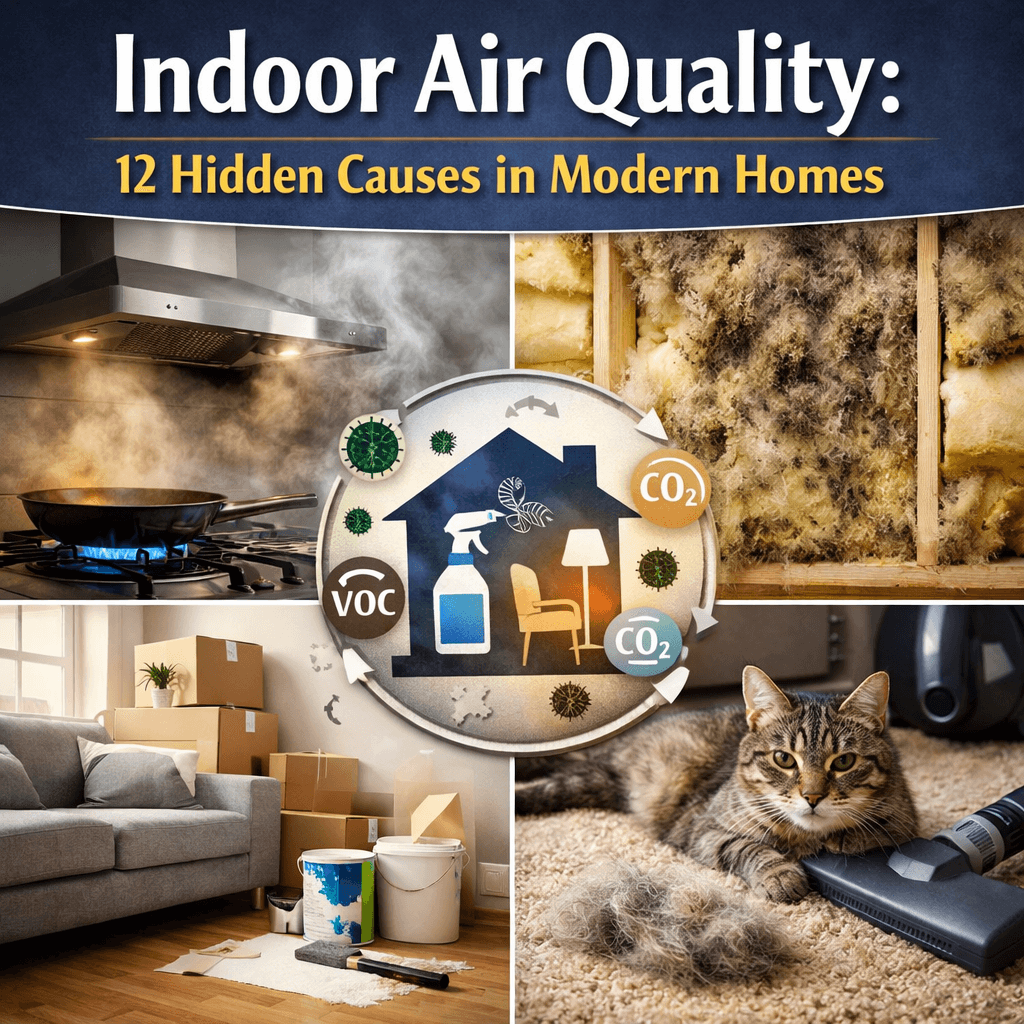
Below, we explore 12 often-ignored factors that may be silently affecting the air you and your family breathe every single day.
1. Poor Ventilation in Airtight Homes
Modern construction standards prioritize insulation, sealed building envelopes, and minimal air leakage. While these features dramatically improve energy efficiency, they also reduce natural airflow—the very mechanism older homes relied on to refresh indoor air. In the past, small cracks around windows, doors, and walls allowed outside air to enter and indoor air to escape. Today’s tightly sealed homes eliminate those gaps, but in doing so, they also limit the natural dilution of indoor pollutants.
Without proper ventilation systems in place, airborne contaminants accumulate gradually. Everyday activities such as cooking, showering, cleaning, and even breathing release moisture, carbon dioxide, and microscopic particles into the air. In an airtight home, these pollutants remain trapped and continuously recirculated. Over time, this buildup significantly impacts Indoor Air Quality, often without immediate or visible signs. epa
Mechanical ventilation systems, such as exhaust fans or energy recovery ventilators (ERVs), are designed to compensate for this lack of natural airflow. However, if they are poorly designed, improperly installed, or rarely used, the air exchange rate remains insufficient. As a result, stale air lingers, odors persist longer, and humidity levels fluctuate. Elevated humidity can further worsen Indoor Air Quality by encouraging mold growth and dust mite activity.
The challenge is that poor ventilation does not feel dramatic—it feels normal. There may be no obvious smoke or strong smell, yet the air quality steadily declines. Headaches, fatigue, allergies, and respiratory irritation can slowly become more common, and homeowners may not immediately connect these symptoms to ventilation issues. Recognizing that airtight efficiency must be balanced with controlled airflow is essential for protecting long-term Indoor Air Quality in modern homes.
2. Dirty HVAC Systems
Heating, ventilation, and air conditioning (HVAC) systems act as the lungs of your home. They circulate air through ducts, regulate temperature, and help filter airborne particles. However, when these systems are neglected, they can become one of the primary contributors to declining Indoor Air Quality.
Air filters are designed to capture dust, pollen, pet dander, and other pollutants before they spread throughout the house. Over time, these filters become clogged. When that happens, airflow is restricted, and the system works harder to push air through. Not only does this reduce energy efficiency, but it also allows smaller particles to bypass filtration and circulate freely. A dirty filter transforms the HVAC system from a protective barrier into a distribution channel for contaminants, directly affecting Indoor Air Quality. aafa
Beyond filters, ductwork itself can accumulate layers of dust, debris, and even mold if moisture is present. Each time the system cycles on, these particles can be released into living spaces. In homes with pets or recent renovations, the buildup may be even more significant. Without routine inspection and cleaning, the system continuously recirculates the same polluted air, compounding the problem.
Another overlooked issue is microbial growth within HVAC components. Condensation around cooling coils creates damp conditions, which can foster mold and bacteria. When spores enter the airflow, they spread invisibly throughout the home, further compromising Indoor Air Quality and potentially triggering allergies or respiratory conditions.
Routine maintenance—such as replacing filters every 1–3 months, scheduling annual inspections, and cleaning ducts when necessary—is critical. A well-maintained HVAC system supports healthy airflow and filtration. A neglected one, however, can quietly undermine Indoor Air Quality day after day without homeowners realizing the source of the problem.
Learn more :8 Environmental Benefits of Modern HVAC Systems
3. Off-Gassing from Furniture and Building Materials
One of the most overlooked contributors to declining Indoor Air Quality is something many homeowners proudly invest in: new furniture, fresh paint, updated flooring, or recently installed cabinetry. While these upgrades improve aesthetics and comfort, they often introduce invisible chemical emissions into the home through a process known as off-gassing.
Many modern household products are manufactured using synthetic materials, adhesives, sealants, and chemical treatments. These materials release volatile organic compounds (VOCs) into the air over time. VOCs are gases emitted from solids or liquids, and they can continue to be released for weeks, months, or even years after installation. In airtight homes with limited ventilation, these emissions accumulate and gradually reduce Indoor Air Quality. niehs
New carpets, laminate flooring, pressed-wood furniture, mattresses, and even decorative items may contain formaldehyde or other chemical compounds. That “new home smell” or “new furniture scent” is often the result of these airborne chemicals. While the smell may fade, low-level emissions can persist, subtly affecting Indoor Air Quality long after the initial installation.
Short-term exposure to elevated VOC levels may cause headaches, eye irritation, throat discomfort, or dizziness. Over time, prolonged exposure in poorly ventilated spaces can contribute to chronic respiratory irritation. Children, older adults, and individuals with asthma are particularly sensitive to declining Indoor Air Quality caused by off-gassing materials.
The challenge is that off-gassing is invisible. There are no obvious warning signs like visible dust or mold. Without proper ventilation and material selection—such as choosing low-VOC paints, certified wood products, and natural materials—chemical emissions can quietly compromise Indoor Air Quality in even the most modern and beautifully designed homes.
4. Excess Indoor Humidity
Humidity plays a critical role in maintaining healthy Indoor Air Quality, yet it is frequently misunderstood. While dry air can cause discomfort, excessive indoor humidity can be far more damaging. When moisture levels consistently rise above 60%, the indoor environment becomes an ideal breeding ground for biological pollutants.
High humidity encourages the growth of mold, mildew, and dust mites. These organisms thrive in damp conditions and release spores and microscopic waste particles into the air. Once airborne, these contaminants circulate throughout the home, significantly reducing Indoor Air Quality and increasing the risk of allergies, asthma flare-ups, and other respiratory issues.
Modern homes often trap moisture due to airtight construction. Everyday activities—such as cooking, showering, drying clothes indoors, or even breathing—release water vapor into the air. Without proper ventilation or dehumidification, this moisture accumulates. Bathrooms, kitchens, laundry rooms, and basements are particularly vulnerable areas where poor airflow can quickly lead to condensation on walls and windows.
Hidden moisture problems can be even more concerning. Leaky pipes behind walls, roof leaks, or poorly insulated areas may create damp pockets where mold can grow undetected. Even if visible mold is not present, elevated humidity alone can negatively impact Indoor Air Quality by making the air feel heavy and uncomfortable while increasing allergen levels.
Maintaining balanced humidity—ideally between 30% and 50%—is essential for protecting Indoor Air Quality. Using exhaust fans, dehumidifiers, and properly maintained ventilation systems can prevent moisture buildup and reduce the risk of long-term air quality issues. In modern homes, managing humidity is not just about comfort; it is a fundamental step in preserving a healthy indoor environment.
5. Hidden Mold Growth
When most people think about mold, they imagine dark stains on bathroom tiles or visible patches on ceilings. However, one of the most dangerous threats to Indoor Air Quality is mold that grows completely out of sight. Hidden mold colonies can develop behind drywall, beneath flooring, inside insulation, under sinks, or within HVAC systems—spreading silently without obvious visual clues.
Mold thrives in damp, poorly ventilated environments. Even minor water leaks from plumbing, roof damage, or condensation buildup can create enough moisture for spores to settle and multiply. In modern airtight homes, limited airflow can worsen the situation by trapping humidity in confined spaces. As mold grows, it releases microscopic spores into the air, which circulate throughout the home and significantly reduce Indoor Air Quality. aafa
Because the growth often occurs behind walls or under materials, homeowners may only notice subtle warning signs. A persistent musty odor, unexplained allergy symptoms, chronic coughing, sinus congestion, or worsening asthma may all indicate compromised Indoor Air Quality caused by hidden mold. In some cases, the mold problem can continue for months or even years before being detected.
The real concern lies in prolonged exposure. Mold spores and fragments can irritate the respiratory system and trigger allergic reactions, especially in children, older adults, or individuals with pre-existing lung conditions. Over time, poor Indoor Air Quality due to hidden mold can affect sleep quality, concentration, and overall well-being.
Regular inspections, prompt leak repairs, proper ventilation, and humidity control are essential in preventing concealed mold growth. Addressing moisture issues early not only protects the structural integrity of the home but also preserves healthy Indoor Air Quality for everyone inside.
6. Household Cleaning Products
Ironically, products designed to make your home cleaner can sometimes harm Indoor Air Quality. Many conventional cleaning sprays, disinfectants, air fresheners, and surface treatments contain synthetic chemicals that release volatile organic compounds (VOCs) into the air. While these products may eliminate visible dirt and bacteria, they can introduce invisible pollutants that linger long after cleaning is complete.
When sprayed into the air or applied to surfaces, chemical cleaners evaporate and disperse microscopic particles throughout the room. In poorly ventilated spaces, these airborne substances accumulate, gradually lowering Indoor Air Quality. Strong fragrances, in particular, often contain complex chemical blends that can trigger headaches, throat irritation, or allergic reactions in sensitive individuals.
Frequent cleaning in enclosed spaces—such as bathrooms, kitchens, and small laundry rooms—can amplify the issue. Without adequate airflow, chemical vapors remain suspended in the air and continue circulating through the home’s ventilation system. Over time, repeated exposure can contribute to chronic respiratory irritation and persistent discomfort linked to declining Indoor Air Quality.niehs
Another overlooked factor is the mixing of cleaning products. Combining certain chemicals, even unintentionally, can create harmful gases that severely compromise Indoor Air Quality in a short period. This highlights the importance of reading product labels and using cleaning agents responsibly.
Improving Indoor Air Quality does not mean eliminating cleaning altogether—it means making smarter choices. Opting for low-VOC or fragrance-free products, using natural alternatives when possible, and ensuring proper ventilation during cleaning can significantly reduce chemical buildup. By being mindful of what is introduced into the air, homeowners can maintain cleanliness without sacrificing healthy Indoor Air Quality. epa
7. Gas Stoves Without Proper Venting
Cooking is an essential part of daily life, but in many homes, the very act of preparing meals can unknowingly reduce Indoor Air Quality. Gas stoves, while popular for their quick heating and precise control, release pollutants such as nitrogen dioxide (NO₂), carbon monoxide (CO), and particulate matter directly into the kitchen environment. Without proper ventilation, these harmful substances accumulate indoors and spread to adjoining rooms, silently affecting the air you breathe.
Nitrogen dioxide is a respiratory irritant that can aggravate asthma, trigger coughing, and reduce lung function over time. Carbon monoxide, though odorless and invisible, poses a serious health risk if levels rise in enclosed spaces. In homes where exhaust hoods are absent, inefficient, or vented incorrectly, these pollutants are trapped inside, lowering overall Indoor Air Quality and potentially causing both short-term symptoms like headaches or dizziness, as well as long-term health concerns.niehs
Proper ventilation is key to protecting Indoor Air Quality in kitchens. A high-quality range hood that vents outdoors is far more effective than simply relying on recirculating fans. Even opening windows can help, but it may not fully remove the invisible pollutants produced by gas combustion. Regular maintenance of stove components and hoods ensures they operate efficiently, minimizing the impact on indoor air.
8. Dust Accumulation
Dust is often dismissed as a minor nuisance, yet it is one of the most persistent contributors to poor Indoor Air Quality. Far more than just visible particles on surfaces, dust is a complex mixture of skin cells, pollen, pet dander, textile fibers, soil particles, and microscopic debris. These elements accumulate over time, settling on floors, furniture, carpets, curtains, and even inside ventilation ducts.
Once disturbed—by walking, vacuuming, or airflow—dust particles become airborne and can be inhaled repeatedly. In homes with inadequate filtration or improper cleaning routines, this continual circulation of dust reduces Indoor Air Quality and can exacerbate allergies, asthma, or other respiratory conditions. Children and elderly individuals are particularly vulnerable to the effects of dust-laden air. aafa
Modern homes may actually worsen dust problems despite appearing cleaner. Carpets, upholstery, and decorative textiles act as reservoirs, trapping fine particles that are released over time. HVAC systems can spread dust throughout the house if filters are not properly maintained, turning the system into a conduit for airborne pollutants. Even high-efficiency filters require regular replacement to maintain effective Indoor Air Quality.
Managing dust is critical for maintaining healthy indoor environments. Frequent vacuuming with HEPA filters, wiping surfaces with damp cloths, cleaning or replacing HVAC filters, and minimizing clutter can significantly reduce airborne particles. By controlling dust accumulation, homeowners can dramatically improve Indoor Air Quality and create a safer, more comfortable living space.
9. Air Fresheners and Scented Candles
Many people use air fresheners, scented candles, and plug-in diffusers to make their homes smell pleasant. However, these products can be hidden culprits that silently degrade Indoor Air Quality. While the fragrances mask odors, they often introduce volatile organic compounds (VOCs) and particulate matter into the air. These chemicals can include formaldehyde, acetaldehyde, and synthetic fragrance compounds that remain airborne long after the scent is noticeable.
Scented candles, especially those made from paraffin wax, release fine soot particles when burned. These particles are tiny enough to penetrate deep into the lungs, potentially irritating respiratory tissues over time. Even natural or soy-based candles are not entirely free of emissions, as essential oils and wicks can release VOCs during combustion. In homes without proper ventilation, these airborne pollutants accumulate, further lowering Indoor Air Quality.
Air fresheners and sprays pose another risk. They often contain chemical propellants and solvents designed to disperse fragrances quickly. In small, enclosed spaces, these chemicals can linger for hours or days, contributing to chronic exposure. Prolonged inhalation may trigger headaches, throat irritation, or allergic reactions, particularly in sensitive individuals such as children or those with pre-existing respiratory conditions.
To maintain healthy Indoor Air Quality, it is important to use fragrance products sparingly and to prioritize ventilation. Opting for natural ventilation, exhaust fans, or HEPA air purifiers can reduce the concentration of chemical pollutants. When possible, choosing unscented or plant-based alternatives can improve indoor environments without compromising comfort or ambiance.epa
10. Pet Dander and Allergens
Pets bring joy and companionship, but they also contribute significantly to declining Indoor Air Quality. Pet hair, skin flakes, saliva, and dander are microscopic particles that easily become airborne and accumulate on furniture, carpets, and clothing. These allergens are pervasive and persistent, often remaining suspended in the air or trapped in soft furnishings for extended periods.
Individuals with allergies or asthma are particularly sensitive to pet dander. Even in homes where pets are bathed regularly, allergens can spread through grooming, shedding, and contact with floors and fabrics. HVAC systems may also recirculate dander if air filters are not adequately maintained, amplifying the impact on Indoor Air Quality.
Beyond dander, pets can introduce other allergens into the home, including pollen, mold spores, and dust carried on fur. Cleaning routines, such as vacuuming and washing bedding, play a critical role in controlling allergen levels. High-efficiency particulate air (HEPA) filters in vacuums or purifiers can help capture these tiny particles and improve Indoor Air Quality.
For pet owners, balancing companionship with healthy indoor air involves consistent cleaning, maintaining ventilation, and strategically using air filtration. Properly managing these factors ensures that pets remain part of the family without compromising Indoor Air Quality or household health.
11. Infrequent Window Cleaning
Windows are more than just sources of light and a view—they also influence Indoor Air Quality. While it may seem like a minor task, infrequent cleaning of windows and window tracks can allow dirt, dust, pollen, and other outdoor pollutants to accumulate. When windows are opened for ventilation, these particles can enter the home and spread through living spaces, gradually reducing indoor air quality. epa
Additionally, window tracks and frames often trap moisture and organic debris. This combination of dirt and dampness creates an ideal environment for mold and bacteria to grow. Invisible microbial colonies can then release spores and odor-causing compounds into the air, further compromising Indoor Air Quality. Over time, even seemingly clean windows can harbor substances that subtly degrade indoor environments.
Regular window maintenance, including cleaning glass, frames, and tracks, prevents the accumulation of dust, pollen, and microbial growth. Using screens or filters when opening windows can further reduce the entry of outdoor pollutants. By treating window cleaning as part of a broader air-quality strategy, homeowners can maintain healthier Indoor Air Quality and reduce the risk of allergen exposure.
12. Attached Garages
Attached garages are convenient for modern homes, offering protection from weather and easy access to vehicles. However, they can be a hidden source of indoor air pollution that significantly reduces Indoor Air Quality. Cars, lawn equipment, and stored chemicals emit fumes containing carbon monoxide, nitrogen oxides, benzene, and other harmful compounds. When garages are connected to living areas, these pollutants can seep indoors through gaps in walls, doors, or ventilation ducts.
Even brief exposure to vehicle exhaust can introduce hazardous particles into the home’s air. Over time, repeated infiltration from an attached garage increases the concentration of indoor pollutants, negatively affecting Indoor Air Quality. The risk is amplified if the garage is used for idling vehicles, chemical storage, or maintenance activities that release VOCs or particulate matter. epa
Preventing garage-related air pollution involves multiple strategies. Sealing gaps, maintaining proper ventilation, and ensuring the garage door is well-insulated can reduce the transfer of pollutants indoors. Installing air purifiers near doorways or entrances can further limit airborne contaminants. By proactively managing these sources, homeowners can preserve Indoor Air Quality without sacrificing the convenience of an attached garage.
Conclusion
Maintaining healthy Indoor Air Quality in modern homes is more complex than many homeowners realize. While energy-efficient designs, airtight construction, and contemporary amenities improve comfort and reduce utility costs, they can inadvertently trap pollutants and create environments where contaminants accumulate. From hidden mold and dust to chemical emissions from furniture, cleaning products, and scented items, the sources of poor indoor air are often invisible yet highly impactful. Even everyday activities like cooking with a gas stove or having pets in the home contribute to subtle declines in air quality over time.
The health implications of poor Indoor Air Quality are significant. Long-term exposure can exacerbate allergies, trigger respiratory conditions, reduce sleep quality, and even impact overall well-being. Children, the elderly, and individuals with pre-existing health issues are particularly vulnerable, but no one is completely immune. Recognizing the hidden causes is the first step toward prevention.
The good news is that improving Indoor Air Quality is achievable with awareness and action. Regular HVAC maintenance, proper ventilation, moisture control, dust management, and thoughtful product selection can dramatically reduce airborne pollutants. Even simple measures, such as cleaning windows, using air purifiers, or ensuring garages are properly sealed, make a meaningful difference. By addressing these often-overlooked factors, homeowners can create a safer, healthier, and more comfortable living environment—proving that clean air is not just an amenity, but a vital component of modern home wellness.
Healthy indoor air is the foundation for a thriving home. Awareness, proactive care, and smart choices empower homeowners to protect their families from the silent dangers that compromise Indoor Air Quality, ensuring that modern living remains both comfortable and safe.
