

Table of Contents
Your Air Conditioner is far more than a seasonal convenience—it is a critical home system that directly impacts comfort, indoor air quality, and overall energy efficiency. During hot months, your Air Conditioner works continuously to regulate temperature, control humidity, and create a healthy indoor environment for your family. Because of this constant demand, even small oversights in care or usage can gradually take a toll on your Air Conditioner’s performance and longevity.
Unfortunately, many homeowners are unaware that everyday habits and overlooked maintenance tasks can dramatically shorten the lifespan of an Air Conditioner. Issues such as improper operation, delayed repairs, or neglected maintenance often cause the system to work harder than necessary. Over time, this excess strain leads to frequent breakdowns, rising energy bills, inconsistent cooling, and ultimately premature system replacement—costing homeowners far more than routine preventive care ever would.
By recognizing these common but avoidable mistakes, you gain the ability to protect your Air Conditioner and keep it operating at peak efficiency for years to come. Proactive care not only reduces wear and tear on essential components like the compressor and fan motor, but also helps maintain consistent airflow, better indoor air quality, and stable energy consumption throughout the cooling season.
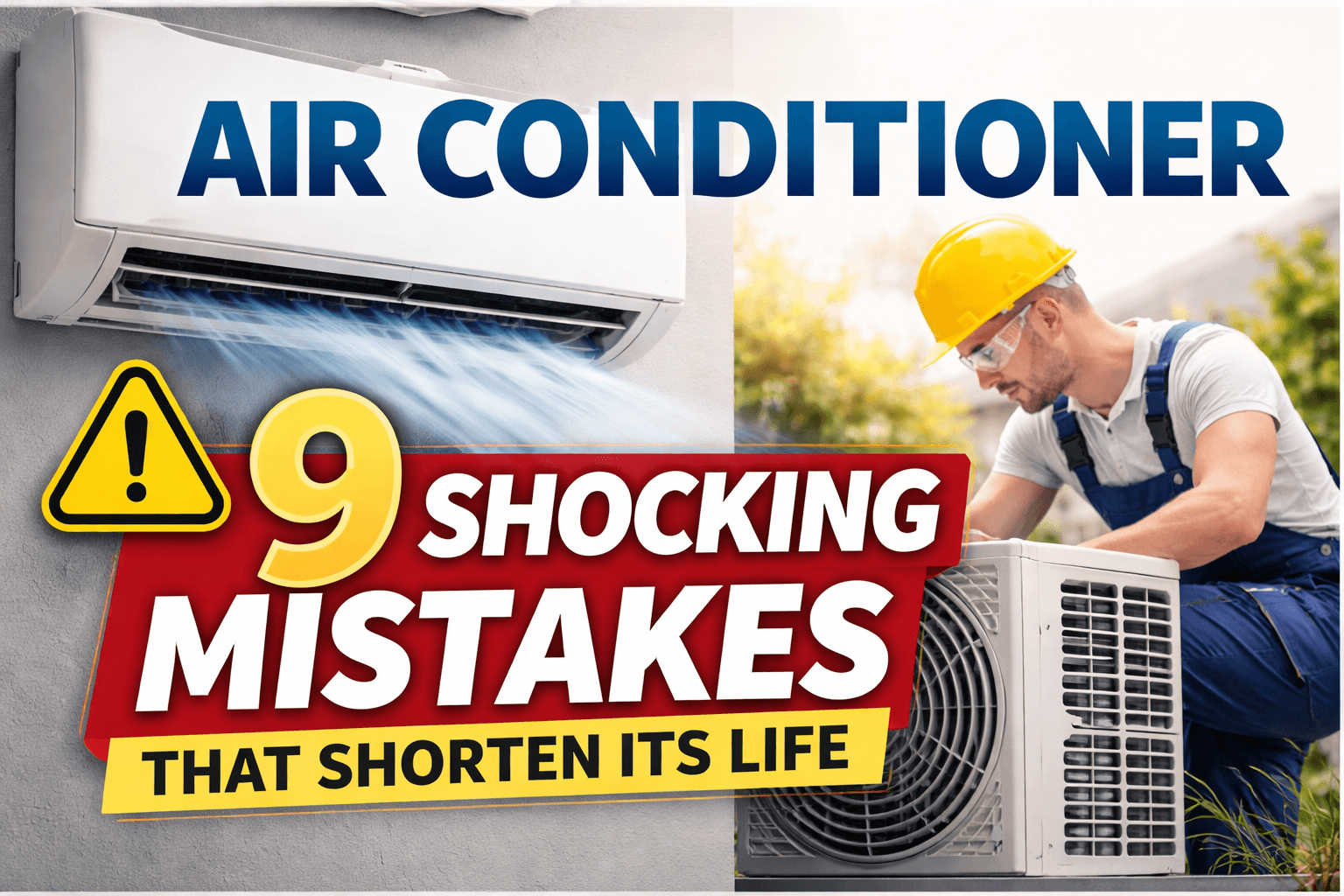
Below, we break down the nine most common mistakes that shorten the life of your Air Conditioner, along with practical guidance on how to prevent them. Understanding these risks empowers you to make smarter decisions, extend the service life of your Air Conditioner, and avoid costly repairs or early replacement—while enjoying reliable comfort in your home season after season.
1. Skipping Regular Air Conditioner Maintenance
Skipping regular Air Conditioner maintenance is one of the most damaging—and most common—mistakes homeowners make. Many people assume their Air Conditioner is functioning properly as long as it’s blowing cool air, but hidden issues often develop long before noticeable performance problems appear. Without routine inspections and servicing, minor wear and tear can quietly escalate into serious mechanical failures. Energy
Over time, dust, dirt, and debris accumulate inside your Air Conditioner, coating essential components such as evaporator coils, condenser coils, and fan blades. This buildup reduces heat transfer efficiency and forces the Air Conditioner to work harder to achieve the same level of cooling. As strain increases, internal parts like the compressor and motor experience accelerated wear, significantly shortening the system’s lifespan.
Regular professional maintenance allows technicians to identify problems early—such as refrigerant leaks, electrical issues, loose connections, or failing components—before they cause extensive damage. A well-maintained Air Conditioner runs more efficiently, consumes less energy, and maintains consistent indoor comfort throughout the cooling season.ASHRAE
Neglecting maintenance also leads to higher utility bills. When an Air Conditioner operates inefficiently, it requires more power to cool your home, driving up energy consumption month after month. In contrast, scheduled tune-ups help restore optimal performance, improve airflow, and ensure your Air Conditioner operates within manufacturer-recommended specifications.
Ultimately, routine maintenance is not an unnecessary expense—it is an investment in the longevity and reliability of your Air Conditioner. Homeowners who schedule annual inspections and seasonal servicing often extend the life of their Air Conditioner by several years while avoiding costly emergency repairs and premature system replacement.The Spruce
Learn more :7 Signs Your AC System Needs Immediate Maintenance
2. Ignoring Dirty or Clogged Air Filters
One of the simplest yet most harmful mistakes homeowners make with their Air Conditioner is ignoring the condition of the air filters. Air filters are designed to trap dust, pollen, pet dander, and other airborne particles, preventing them from entering the system and circulating throughout your home. Over time, these filters become clogged, restricting airflow and placing unnecessary strain on your Air Conditioner.
When airflow is obstructed, your the unit must work harder to maintain the desired indoor temperature. This extra effort increases energy consumption, reduces cooling efficiency, and accelerates wear on critical components such as the blower motor and compressor. In many cases, clogged filters can lead to uneven cooling, hot spots in your home, and even system overheating—problems that could have been easily prevented with regular filter maintenance.ASHRAE
Neglecting filters also affects indoor air quality. As dirt and debris accumulate, the Air Conditioner may recirculate pollutants, aggravating allergies and respiratory conditions for your household. Regularly cleaning or replacing air filters—generally every one to three months, depending on usage and filter type—ensures that your Air Conditioner functions efficiently while keeping the air in your home clean and healthy. Energy
Professional HVAC technicians emphasize that proper filter maintenance is one of the most cost-effective ways to extend the lifespan of your Air Conditioner. Not only does it reduce wear and tear, but it also minimizes the likelihood of emergency repairs and keeps energy bills under control. In short, clean air filters are essential for a healthy, efficient, and long-lasting Air Conditioner.
3. Running the Air Conditioner Constantly
Many homeowners make the mistake of running their the unit nonstop, believing that keeping it on at all times is the best way to maintain a consistently cool home. However, continuous operation can actually be detrimental to your Air Conditioner, reducing its efficiency and shortening its overall lifespan.ASHRAE
When an the unit runs non-stop, key components such as the compressor, fan motor, and refrigerant lines are under constant strain. Over time, this continuous load accelerates wear and can lead to overheating or premature failure of critical parts. Even modern, energy-efficient systems are not designed to operate indefinitely without rest. The more your Air Conditioner cycles without breaks, the greater the risk of breakdowns and costly repairs.The Spruce
Another common issue with constant operation is energy waste. Running the system continuously—even during periods when cooling is not necessary—significantly increases electricity usage, leading to higher utility bills. Ironically, this can make your the unit less efficient than if it were operating on a controlled, well-managed schedule.
A smart approach involves using programmable or smart thermostats, which allow your Air Conditioner to cycle on and off based on actual cooling needs. By maintaining optimal indoor temperatures without unnecessary operation, these systems reduce stress on the Air Conditioner, improve energy efficiency, and help extend its service life. Energy
In addition, short, scheduled cycles give internal components time to rest and prevent overheating. This practice not only protects your the unit from excessive wear but also ensures that it can perform reliably during peak summer months when you need it most.
In summary, constant operation may seem convenient, but it puts your Air Conditioner at risk. Proper cycling, combined with intelligent thermostat use, keeps your system running efficiently, reduces energy costs, and significantly prolongs the lifespan of your Air Conditioner.
4. Incorrect Air Conditioner Sizing
One of the most overlooked mistakes that can drastically shorten the life of your Air Conditioner is installing a unit that is improperly sized for your home. Both oversized and undersized systems create significant problems, reducing efficiency, increasing wear, and ultimately leading to premature system failure.
An oversized Air Conditioner may cool your home quickly, but it will cycle on and off frequently in a process called “short cycling.” Each cycle puts stress on critical components like the compressor and fan motor, increasing the risk of breakdowns. Short cycling also prevents the Air Conditioner from running long enough to properly dehumidify the air, leaving your home feeling damp and uncomfortable even when the temperature is cool.ASHRAE
On the other hand, an undersized Air Conditioner struggles to meet your home’s cooling demands, running continuously for extended periods. This constant operation puts enormous strain on the system, causing excessive energy consumption, accelerated wear on internal components, and a higher likelihood of overheating. Over time, the system becomes less reliable and may fail long before its expected lifespan.
Proper Air Conditioner sizing requires careful evaluation of several factors, including the square footage of your home, insulation quality, number of windows, and local climate conditions. HVAC professionals use a process called a “Manual J load calculation” to determine the exact cooling capacity needed for optimal performance.Energy
Investing in a properly sized the unit is more than a matter of comfort—it is a long-term strategy to protect your system, reduce energy costs, and ensure consistent, reliable cooling. A correctly sized unit operates efficiently, cycles appropriately, and maintains ideal indoor humidity, all of which contribute to a longer, healthier life for your Air Conditioner.The Spruce
5. Blocking Air Conditioner Vents and Registers
Another common mistake that can significantly reduce the lifespan of your Air Conditioner is blocking vents and registers. Many homeowners unintentionally obstruct airflow by placing furniture, curtains, or other objects in front of supply vents, thinking it won’t affect the system. In reality, these obstructions disrupt the airflow your the unit needs to function efficiently, causing stress on critical components.
When airflow is restricted, your Air Conditioner must work harder to circulate cool air throughout your home. This additional strain increases energy consumption and accelerates wear on the blower motor and other internal parts. Over time, this can lead to uneven cooling, hot and cold spots, and even system overheating. In some cases, blocked vents can trigger the Air Conditioner’s safety mechanisms, forcing the system to shut down unexpectedly.ASHRAE
Maintaining clear, unobstructed airflow is simple but essential. Ensure that furniture is not placed directly in front of vents, keep curtains or blinds from covering registers, and remove any debris that may accumulate on or around vents. By allowing air to move freely, your the unit can operate efficiently, distribute cooling evenly, and reduce unnecessary stress on internal components.
Additionally, regular inspection of vents and registers ensures that there are no hidden blockages, such as dust buildup or small debris, which can silently degrade performance over time. A well-maintained airflow system not only improves the comfort of your home but also contributes significantly to the longevity of your the unit, keeping it running efficiently for years.Energy
6. Ignoring Warning Signs from Your Air Conditioner
Many homeowners make the critical mistake of ignoring warning signs that indicate their Air Conditioner is struggling. Unusual noises, weak airflow, warm air, or frequent cycling are all signals that something is wrong. Unfortunately, these early warning signs are often overlooked until a major breakdown occurs, which can be costly and reduce the lifespan of your Air Conditioner.ASHRAE
Unusual sounds such as rattling, grinding, or hissing can indicate loose components, failing motors, or refrigerant leaks. Weak airflow or inconsistent cooling may point to clogged filters, blocked ducts, or compressor issues. Even seemingly minor problems, if left unaddressed, can escalate into severe mechanical failures that require extensive repairs or complete system replacement.
Prompt attention to these warning signs is crucial. Scheduling an inspection at the first indication of trouble allows a trained HVAC technician to diagnose and fix issues before they become catastrophic. This proactive approach reduces strain on the unit, preserves energy efficiency, and protects major components like the compressor, fan motor, and coils.The Spruce
Moreover, responding to warning signs early prevents unnecessary downtime. A functioning Air Conditioner is essential for maintaining comfort, particularly during hot or humid seasons. Ignoring problems not only shortens the system’s life but also risks leaving your home without reliable cooling when it’s needed most. Energy
In short, paying attention to your Air Conditioner’s signals and addressing problems promptly is one of the most effective ways to extend its life. Routine inspections, combined with immediate repairs at the first sign of trouble, ensure that your system operates efficiently, reliably, and comfortably for many years.
7. Poor Installation of the Air Conditioner
Even the most advanced Air Conditioner can fail prematurely if it is installed incorrectly. Poor installation is a surprisingly common problem that many homeowners overlook, but it can have serious long-term consequences for system efficiency, performance, and lifespan.ASHRAE
Improper installation can take many forms. Incorrect refrigerant charge, improper duct connections, uneven placement of the outdoor unit, or faulty electrical wiring can all compromise the operation of your the unit. For example, an improperly charged system may struggle to cool effectively, forcing the compressor to work harder than necessary. Over time, this strain can lead to overheating and component failure.
Faulty ductwork or poorly sealed connections can result in air leaks, which reduce the system’s efficiency and make your Air Conditioner run longer to maintain desired indoor temperatures. Similarly, an outdoor unit that is installed on an uneven surface may experience vibration, which can damage sensitive components and reduce the system’s overall lifespan.The Spruce
Professional installation ensures that every component of your Air Conditioner is set up according to manufacturer specifications. Certified technicians verify refrigerant levels, confirm electrical connections, properly align ductwork, and ensure that airflow is optimized throughout your home. This meticulous setup allows the Air Conditioner to operate at peak efficiency, reduces wear on critical components, and minimizes the risk of early breakdowns.
Investing in professional installation is not just about immediate comfort—it is a long-term strategy to protect your Air Conditioner, avoid costly repairs, and extend its operational life. By starting with a properly installed system, you set the foundation for years of reliable, efficient cooling. Energy
8. Neglecting the Outdoor Air Conditioner Unit
The outdoor unit of your Air Conditioner, often referred to as the condenser, plays a critical role in removing heat from your home and maintaining efficient cooling. Neglecting this component is a common mistake that can significantly shorten the lifespan of your the system and compromise its overall performance. Energy
Outdoor units are exposed to the elements year-round, which means they are susceptible to dirt, leaves, grass clippings, and other debris. When debris accumulates around or inside the condenser, it restricts airflow and reduces the system’s ability to release heat efficiently. This forces your the system to work harder, placing additional stress on the compressor and fan motor, which can lead to premature failure and costly repairs.
In addition to keeping the area clean, it’s important to ensure that the outdoor unit has adequate clearance—ideally at least two feet on all sides—so air can circulate freely. Obstructions such as plants, fencing, or outdoor furniture can block airflow and reduce cooling efficiency, causing your Air Conditioner to consume more energy and wear out fasterThe Spruce
Regular maintenance of the outdoor unit includes cleaning the coils, removing debris, checking the fan, and ensuring proper drainage. Homeowners should also inspect for signs of corrosion, bent fins, or other physical damage that can affect performance. By taking these steps, you help your the system operate efficiently, reduce unnecessary strain on internal components, and extend the system’s lifespan.
Neglecting the outdoor unit may seem harmless at first, but over time it can lead to reduced cooling efficiency, higher energy bills, and a significantly shortened life for your Air Conditioner. Simple preventive measures and routine care are essential to keep the system running smoothly year after year. ASHRAE
9. Delaying Air Conditioner Repairs
Delaying repairs is one of the most costly mistakes homeowners make with their Air Conditioner. When issues arise—such as strange noises, inconsistent cooling, or minor leaks—postponing service can turn a small, manageable problem into a major mechanical failure. This not only shortens the life of your Air Conditioner but also increases repair costs and risks leaving your home without cooling when you need it most.The Spruce
Even minor problems, like a worn-out belt or low refrigerant levels, put added strain on the system. Over time, this strain can damage critical components such as the compressor, fan motor, or evaporator coils. A small issue left unaddressed may eventually require a complete system replacement, costing significantly more than timely repairs would have.Energy
Addressing problems promptly helps your Air Conditioner operate efficiently and prevents minor issues from escalating. Professional HVAC technicians can quickly diagnose and repair problems, ensuring the system maintains proper airflow, refrigerant levels, and cooling capacity. This proactive approach not only protects your the system
but also reduces energy consumption and maintains comfort in your home.
Furthermore, routine inspection and timely repairs can prevent emergency breakdowns during extreme weather. A well-maintained and promptly repaired the system is more reliable, lasts longer, and provides consistent cooling performance throughout its expected lifespan.
In short, delaying repairs is a false economy. By responding quickly to any warning signs and performing necessary repairs without delay, you safeguard your Air Conditioner, extend its life, and avoid costly, unexpected replacements. ASHRAE
Learn more :10 Latest Air Conditioning Technologies That Save Money and Energy
Conclusion
Your Air Conditioner is one of the most important systems in your home, providing comfort, improved indoor air quality, and energy efficiency year-round. Unfortunately, common mistakes—from skipping regular maintenance to delaying necessary repairs—can drastically shorten its lifespan and reduce performance.
By understanding and avoiding the nine most frequent errors outlined in this guide, you can protect your Air Conditioner, maintain consistent cooling, and extend the life of your system. Regular maintenance, timely repairs, proper installation, and attention to airflow and outdoor unit care all play a crucial role in keeping your the systemrunning efficiently and reliably.
Taking a proactive approach not only helps prevent costly breakdowns but also ensures that your Air Conditioner continues to deliver optimal performance for years to come. By treating your system with care and addressing issues promptly, you maximize both its efficiency and longevity—keeping your home cool, comfortable, and energy-efficient no matter the season.
