
Table of Contents
Using Air Conditioning for the first time often feels like a major upgrade in comfort, especially during intense summer heat waves when indoor temperatures become unbearable. The instant relief provided by Air Conditioning can transform a living space into a cool, comfortable refuge. However, many homeowners step into this experience without fully understanding how Air Conditioning systems work or how to use them efficiently.
As a result, first-time users frequently make avoidable mistakes that go unnoticed at the beginning but gradually lead to higher energy bills, uneven cooling, unnecessary system strain, and even premature equipment failure. Improper temperature settings, poor usage habits, and lack of basic maintenance can all reduce the overall performance of an Air Conditioning system and significantly shorten its lifespan.
Understanding these common pitfalls is essential for homeowners who want to protect their investment and enjoy consistent indoor comfort. When used correctly, Air Conditioning not only cools the home but also improves air quality, regulates humidity, and supports a healthier living environment. Smart usage and informed decisions make a noticeable difference in both comfort and long-term operating costs.
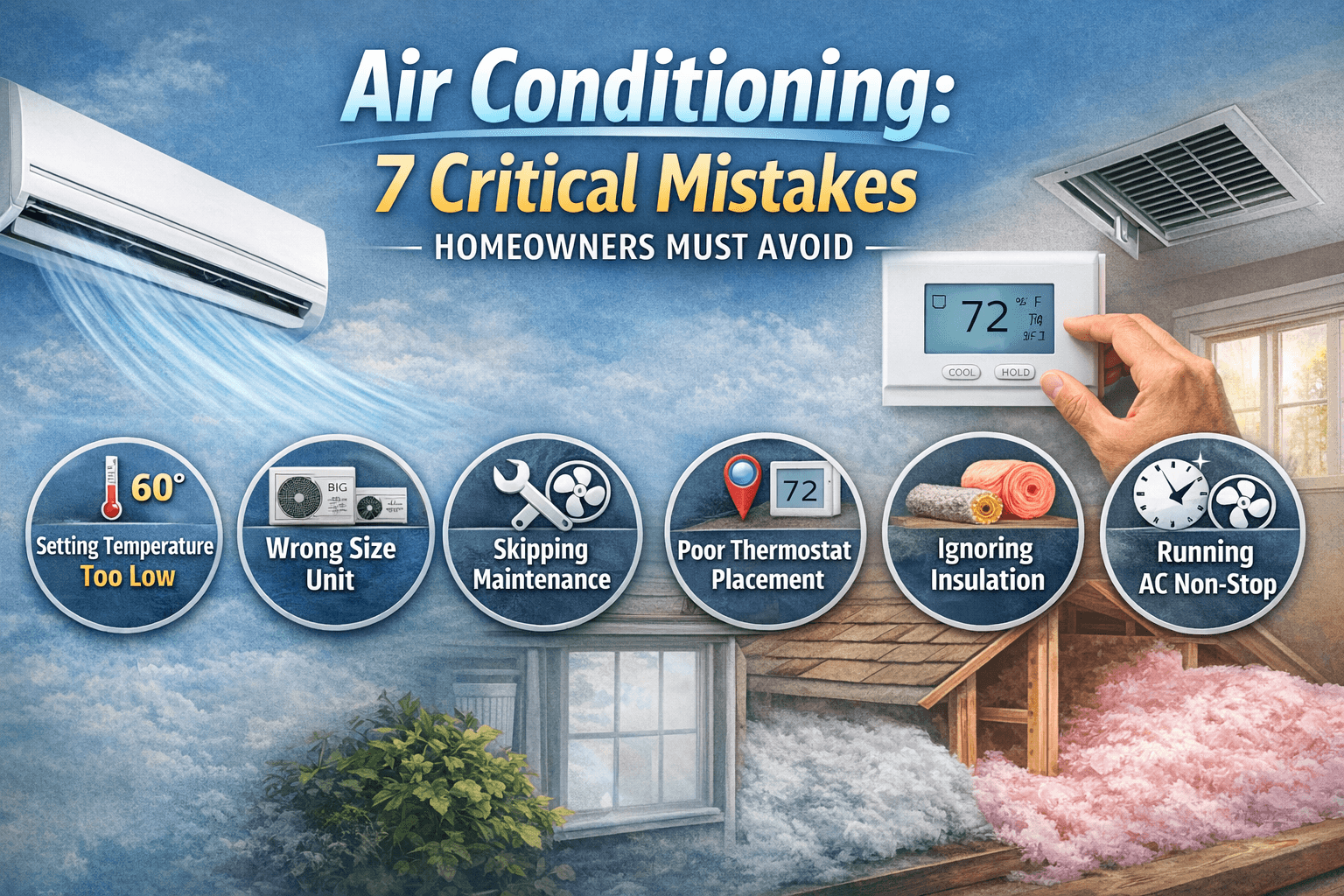
Below, we explore the seven most common mistakes homeowners make when using Air Conditioning for the first time, along with practical guidance on how to avoid them. By recognizing these errors early, you can ensure your Air Conditioning system operates efficiently, reliably, and cost-effectively from day one.
1. Setting the Air Conditioning Temperature Too Low
One of the most common mistakes first-time homeowners make when using Air Conditioning is setting the thermostat far lower than necessary. Many assume that lowering the temperature aggressively will cool the home faster, especially during extreme heat. In reality, Air Conditioning systems operate at a fixed cooling rate, meaning the system will take the same amount of time to cool the space regardless of how low the thermostat is set. Consumer Reports
When the temperature is set too low, the Air Conditioning system is forced to run continuously for extended periods. This not only leads to excessive energy consumption but also places unnecessary stress on critical components such as the compressor and fan motor. Over time, this strain can result in reduced efficiency, higher maintenance costs, and a shorter system lifespan.
Another issue with excessively low settings is indoor discomfort. Overcooling can create large temperature differences between rooms, cause drafts, and even contribute to health issues such as dry air, headaches, or respiratory irritation. Instead of improving comfort, improper Air Conditioning temperature settings often achieve the opposite effect.HVAC
For optimal performance and comfort, homeowners should set their Air Conditioning system to a moderate, stable temperature and avoid constant adjustments. Gradual cooling allows the system to maintain consistent indoor conditions while operating efficiently. Pairing the Air Conditioning unit with a programmable or smart thermostat can further improve energy management by automatically adjusting temperatures based on occupancy and time of day.
By understanding how Air Conditioning systems function and resisting the urge to overcool, homeowners can enjoy better comfort, lower utility bills, and a more reliable cooling system throughout the summer. EPA
2. Choosing the Wrong Air Conditioning System Size
Another major mistake homeowners make when using Air Conditioning for the first time is choosing a system that is not properly sized for their home. Many people assume that a more powerful Air Conditioning unit will deliver better cooling, while others try to reduce costs by selecting a smaller system. Both approaches can lead to serious performance and efficiency problems.HVAC
An undersized AC system system struggles to cool the space effectively, especially during peak summer temperatures. It often runs continuously without reaching the desired indoor temperature, leading to excessive energy use and premature wear on key components. Over time, this constant operation can shorten the lifespan of the Air Conditioning unit and increase the likelihood of breakdowns. Consumer Reports
On the other hand, an oversized Air Conditioning system cools the home too quickly and shuts off before completing a full cooling cycle. This frequent on-and-off cycling, known as short cycling, reduces efficiency and prevents proper humidity control. As a result, homeowners may experience cold but clammy indoor conditions, uneven temperatures, and higher electricity bills despite having a powerful Air Conditioning system.
Proper Air Conditioning sizing depends on several factors, including home square footage, ceiling height, insulation quality, window placement, and local climate conditions. Professional load calculations ensure the Air Conditioning system is matched precisely to the home’s cooling needs. EPA
By selecting the correct Air Conditioning size from the start, homeowners can enjoy consistent comfort, better humidity control, lower energy costs, and a system that operates efficiently for many years.
Learn more : 10 Tips for Choosing the Best Air Conditioning Contractor for Your Home or Business
3. Neglecting Regular Air Conditioning Maintenance
Many first-time homeowners believe that a new Air Conditioning system will operate flawlessly for years without any attention. This assumption often leads to one of the most damaging mistakes: neglecting regular Air Conditioning maintenance. Even modern, high-efficiency systems require routine care to maintain optimal performance.HVAC
Without basic maintenance, dust and debris accumulate in air filters, coils, and vents. Dirty filters restrict airflow, forcing the AC system system to work harder to cool the home. This increased workload not only raises energy consumption but also accelerates wear on critical components such as the blower motor and compressor.
Lack of maintenance can also affect indoor air quality. A poorly maintained Air Conditioning system may circulate allergens, dust, and moisture, contributing to respiratory discomfort and unpleasant odors. Over time, minor issues such as clogged drains or dirty coils can escalate into costly repairs or complete system failure. EPA
Regular AC system maintenance—including filter replacement, coil cleaning, and professional inspections—helps identify potential problems before they become serious. Preventive care improves efficiency, reduces operating costs, and extends the lifespan of the Air Conditioning unit. Consumer Reports
By establishing a simple maintenance routine from the beginning, homeowners can ensure their Air Conditioning system delivers reliable cooling, healthier indoor air, and long-term peace of mind.
4. Closing Air Vents in Unused Rooms
Many homeowners believe that closing air vents in unused rooms will help save energy and improve Air Conditioning efficiency. While this idea seems logical, it often creates the opposite effect. Air Conditioning systems are designed to distribute air evenly throughout the home, maintaining balanced airflow and pressure. EPA
When vents are closed, airflow becomes restricted, causing pressure to build up inside the duct system. This added strain forces the AC system system to work harder to push air through the remaining open vents. Over time, this can reduce efficiency, increase energy consumption, and lead to premature wear on key components such as the blower motor.HVAC
In some cases, closing vents can also cause uneven cooling throughout the home. Certain rooms may become too cold while others remain uncomfortably warm, reducing overall comfort. Additionally, excessive pressure in the ductwork may lead to air leaks, further decreasing Air Conditioning performance and increasing cooling costs.
Instead of closing vents, homeowners should focus on improving insulation, sealing duct leaks, and using zoning systems if available. These solutions allow the AC system system to operate as intended while delivering consistent comfort across the home.
Keeping vents open ensures proper airflow, protects the Air Conditioning system, and helps maintain a balanced and efficient cooling environment. Consumer Reports
5. Poor Thermostat Placement and Misuse
Another common mistake homeowners make when using Air Conditioning for the first time is improper thermostat placement and usage. The thermostat serves as the control center of the Air Conditioning system, and its location plays a critical role in how accurately the system responds to indoor temperature changes.
When a thermostat is installed near windows, doors, kitchens, or in direct sunlight, it can receive false temperature readings. Heat from sunlight, appliances, or electronics may cause the thermostat to sense warmer conditions than the rest of the home, prompting the AC system system to run longer than necessary. This leads to overcooling, increased energy consumption, and unnecessary system strain. Consumer Reports
Misuse of the thermostat can also affect Air Conditioning performance. Constantly adjusting temperature settings throughout the day may confuse the system and reduce efficiency. Sudden temperature changes force the AC system unit to work harder, increasing wear on components and driving up electricity costs.
For best results, the thermostat should be placed in a central location away from heat sources and direct sunlight. Homeowners are encouraged to maintain consistent temperature settings and use programmable or smart thermostats to automate cooling schedules. These tools allow the Air Conditioning system to operate efficiently while maintaining comfort based on daily routines.
Proper thermostat placement and smart usage ensure accurate temperature control, improved Air Conditioning efficiency, and a more comfortable living environment.HVAC
6. Overlooking Insulation and Air Sealing
One of the most common and often overlooked mistakes first-time homeowners make when using Air Conditioning is underestimating the importance of proper insulation and air sealing in their home. Even the most advanced, high-efficiency AC system system cannot operate at peak performance if cooled air is constantly escaping and warm outdoor air is seeping in. This fundamental issue not only reduces comfort but also drives up energy costs and shortens the lifespan of the system. Consumer Reports
Poor insulation in walls, attics, ceilings, and floors allows heat to transfer easily into living spaces, especially during the hottest months. As a result, the AC system system is forced to run longer and work harder to maintain a consistent indoor temperature. Similarly, gaps around windows, doors, vents, and duct connections create air leaks that allow conditioned air to escape and hot air to enter, leading to uneven cooling, hot spots, and overall inefficiency.
Many homeowners unknowingly try to compensate for these deficiencies by setting the thermostat lower than necessary. While this might provide temporary relief, it does not solve the underlying problem. Instead, it increases energy consumption, inflates utility bills, and puts additional strain on the Air Conditioning system. Over time, this extra workload can lead to mechanical wear, higher maintenance costs, and ultimately a shorter system lifespan. EPA
The good news is that improving insulation and sealing air leaks is often one of the most cost-effective ways to boost Air Conditioning efficiency. Simple steps such as adding weather-stripping around doors, caulking or sealing window gaps, insulating attics and crawl spaces, and ensuring ductwork is properly sealed can dramatically reduce cooling loss. These measures allow the Air Conditioning system to maintain stable, comfortable indoor temperatures with less effort and lower energy usage.
Addressing insulation and air sealing issues early not only improves the performance of the Air Conditioning system but also enhances overall home comfort. Homeowners benefit from more consistent temperatures, reduced energy costs, and a more sustainable, energy-efficient living environment. In essence, proper insulation and air sealing are foundational elements that allow your Air Conditioning system to operate as intended, maximizing both comfort and cost-effectiveness throughout the year.HVAC
7. Running Air Conditioning Continuously Without a Plan
Many first-time homeowners assume that the best way to stay comfortable during extreme heat is to leave their Air Conditioning running all day, regardless of whether anyone is home. At first glance, this strategy seems like a simple solution to maintain a consistently cool indoor environment. However, operating Air Conditioning continuously without a clear strategy is often counterproductive, leading to excessive energy consumption, higher utility bills, and accelerated wear and tear on the system. HVAC
Continuous operation puts unnecessary strain on the components of an Air Conditioning system. Key parts, such as compressors, fans, and electrical controls, are designed to handle regular cycles, not nonstop use. When these components are forced to run constantly, they wear out faster, increasing the likelihood of mechanical failures and costly repairs. Over time, this overuse can significantly shorten the system’s overall lifespan, leaving homeowners facing unexpected replacement costs.
Another consequence of running AC system without strategy is reduced efficiency during peak hours. Many homeowners unknowingly have their units working hardest when outdoor temperatures are highest, which drives up energy costs without delivering a proportional increase in comfort. Even a high-performance system cannot compensate for energy wasted during unnecessary operation, and the environmental impact of excessive electricity use should not be overlooked. EPA
Fortunately, modern AC system systems can be used much more intelligently. Programmable and smart thermostats allow homeowners to schedule cooling according to their daily routines, ensuring the system operates efficiently only when needed. For instance, raising the temperature slightly during periods when the home is empty and cooling the space before occupants return strikes the perfect balance between comfort and energy efficiency. This approach reduces waste, lowers monthly energy bills, and decreases stress on the Air Conditioning system.
Strategic operation of Air Conditioning also has long-term benefits beyond immediate comfort. By allowing the system to cycle appropriately and avoid constant, unnecessary use, homeowners can extend the life of their unit, minimize repair costs, and maintain consistent cooling performance year after year. Ultimately, understanding that Air Conditioning is most effective when used thoughtfully—and not continuously—empowers homeowners to enjoy optimal indoor comfort while keeping their energy bills and system maintenance under control. Consumer Reports
Conclusion
For homeowners using Air Conditioning for the first time, the experience can be both exciting and overwhelming. While the promise of cool, comfortable indoor air during scorching summer months is appealing, first-time users often make a series of avoidable mistakes that can compromise efficiency, inflate energy bills, and reduce the lifespan of their system. From setting the thermostat too low and choosing the wrong system size to neglecting routine maintenance and ignoring insulation, these errors may seem minor initially, but their cumulative impact can be substantial over time.
Understanding how Air Conditioning systems function and adopting proper usage practices is essential for maximizing both comfort and cost-effectiveness. Properly sizing your system ensures consistent cooling without unnecessary cycling, while regular maintenance—such as cleaning filters, checking coils, and inspecting ductwork—keeps the system running efficiently and prevents expensive repairs. Smart thermostat placement and usage, along with attention to insulation and air leaks, help maintain balanced temperatures and reduce energy waste. Additionally, using your Air Conditioning strategically rather than running it continuously allows you to enjoy comfort when needed while protecting the system from undue strain.
By taking a proactive, informed approach, homeowners can transform their Air Conditioning system from a simple cooling appliance into a long-term investment in comfort, energy efficiency, and indoor air quality. These best practices not only enhance the immediate cooling experience but also ensure that the system continues to perform reliably for years to come, ultimately saving money and reducing stress.
In essence, a well-maintained and thoughtfully operated Air Conditioning system provides more than just temporary relief from heat—it delivers lasting comfort, energy savings, and peace of mind. For anyone stepping into the world of home cooling for the first time, understanding and avoiding these common mistakes is the key to enjoying all the benefits that modern Air Conditioning has to offer.
Learn more : Common Air Conditioner Mistakes That Increase Your Electricity Bill and Damage the Unit
