

Table of Contents
Introduction
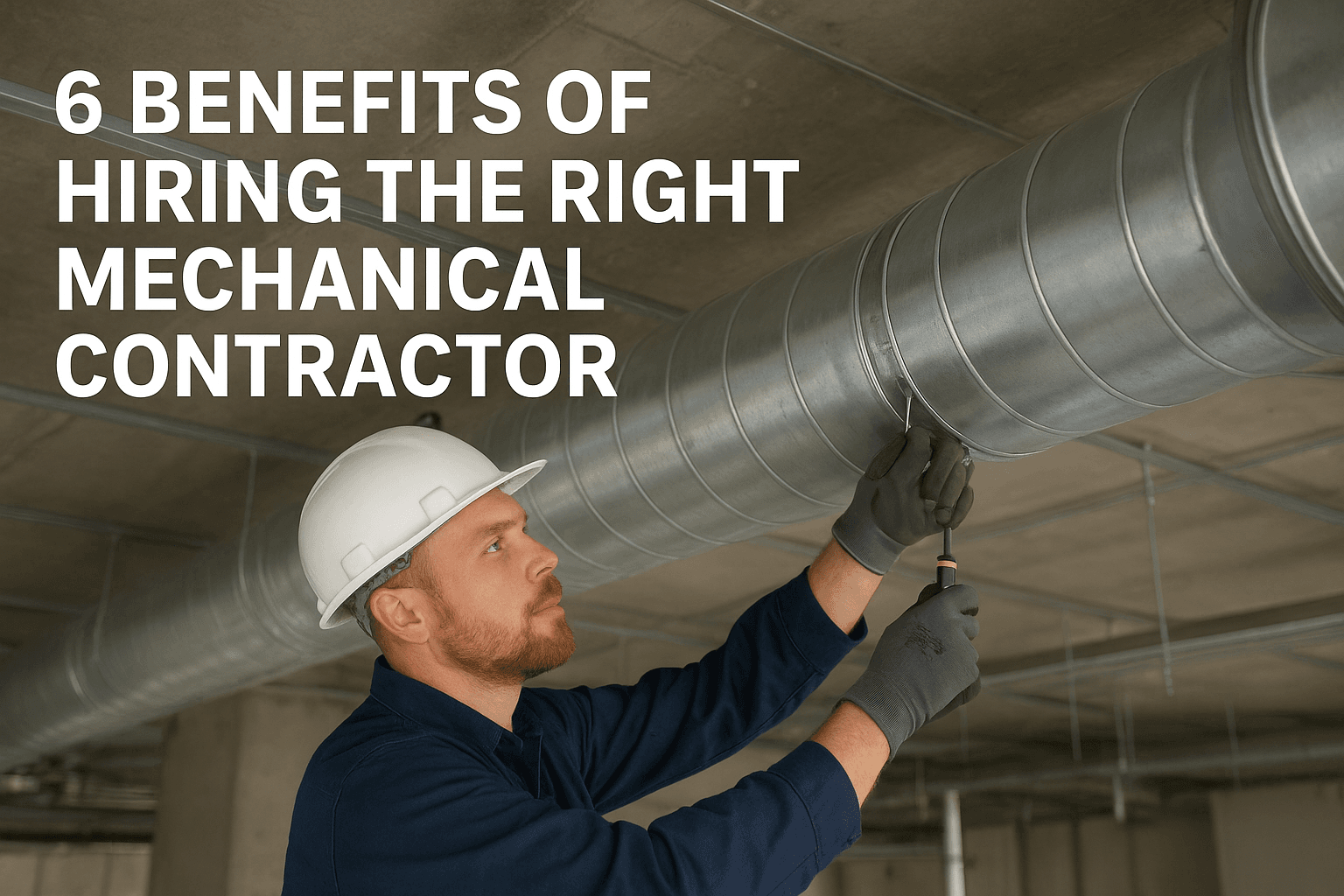
Choosing the right Mechanical Contractor Services is one of the smartest investments a building owner, facility manager, or developer can make. Whether you’re constructing a new property, renovating an existing site, or maintaining operations, your mechanical contractor directly influences project timelines, system efficiency, regulatory compliance, and long-term costs.
Mechanical systems — HVAC, plumbing, piping, fire protection, and control systems — act like the lungs and veins of a building. If they’re poorly designed or installed, performance suffers and energy costs rise. But when executed correctly, these systems enhance comfort, reliability, and operational efficiency.
This guide explores six major benefits of choosing the right contractor — from faster delivery to higher asset value — and explains how this decision can save you time, energy, and money over your building’s lifetime.
1. Faster, More Predictable Project Delivery — Save Time
Why It Matters
Every delay in mechanical installation or commissioning can translate into lost income, higher labor costs, and missed opportunities. For commercial projects like hospitals, office towers, or retail centers, every extra day before occupancy hurts profitability.
A skilled mechanical contractor understands project sequencing, risk management, and coordination — ensuring deadlines are met without compromising quality.
How the Right Contractor Speeds Delivery
1. Early design collaboration
Top contractors get involved during the pre-construction phase. Their input helps optimize routing, equipment selection, and constructability. This reduces design changes later that can cause major delays.
2. Smart scheduling and coordination
Professional teams use advanced scheduling tools like look-ahead plans and BIM coordination to avoid conflicts with other trades (electrical, structural, or plumbing).
3. Supply chain mastery
Experienced contractors pre-order long-lead items — such as chillers, boilers, or air handling units — and manage delivery timelines efficiently.
4. Commissioning readiness
Contractors that integrate commissioning teams early verify system performance during construction, ensuring a smooth handover.
📘 Reading: Commissioning & Testing Services
Real Example
A commercial tower in Chicago avoided a six-week delay because the contractor coordinated directly with the HVAC supplier months in advance. That proactive approach allowed the developer to start leasing earlier — saving both time and lost revenue.
What to Look For
Ask about project duration performance, supply-chain management processes, and whether they assign dedicated project managers and commissioning leads.
2. Lower Operating Costs Through Energy-Efficient Design — Save Energy & Money
Why It Matters
Mechanical systems account for up to 60% of total building energy use. Poor system design can lock in high utility bills for decades.
Choosing a contractor with expertise in energy-efficient design ensures lower operating costs and reduced environmental impact.
How the Right Contractor Improves Efficiency
1. Right-sizing equipment
Avoiding oversized systems prevents unnecessary energy consumption and short cycling, extending equipment life.
2. Selecting high-efficiency systems
Modern Energy-Efficient HVAC Solutions like VRF systems and heat recovery units drastically cut energy usage.
3. Integrating smart controls (BAS)
Automation through Building Automation System Integration allows for scheduling, occupancy-based control, and load balancing.
4. Quality installation
Even the most efficient system can fail if ductwork leaks or piping is poorly insulated. Skilled contractors ensure precision installation.
5. Energy recovery technologies
Recovering waste heat or preheating ventilation air improves system efficiency and sustainability.
Financial Impact
A properly executed energy-efficient project can save 10–20% annually on mechanical energy use. Over ten years, that can mean hundreds of thousands in savings, paying back the investment in just a few years.
- ASHRAE Standards & Guidelines
- U.S. Department of Energy — Energy Efficiency
- USGBC LEED Certification
What to Look For
Ask for documented energy savings from past projects and post-commissioning performance reports.
3. Improved Comfort and Indoor Air Quality — Health, Productivity, and Satisfaction
Why It Matters
Indoor air quality (IAQ) directly affects occupant health, satisfaction, and productivity. Poor ventilation or humidity control can cause discomfort and even health problems.
How the Right Contractor Ensures IAQ
1. Proper ventilation and filtration
Using correct air changes per hour and MERV-rated filters maintains a healthy environment.
2. Humidity control
Controlling humidity reduces mold risks and maintains comfort — vital for healthcare and laboratory buildings.
3. Zone control
Smart zoning systems enable independent temperature control for different building zones.
4. Ongoing verification
Routine testing, balancing, and IAQ monitoring ensure consistent performance.
5. Maintenance and rapid response
Good contractors include HVAC Maintenance Plans with emergency support and system calibration.
Benefits
Studies show that improved IAQ boosts cognitive performance and reduces absenteeism — meaning healthier, more productive employees and satisfied tenants.
4. Extended Equipment Life and Reduced Maintenance Costs — Save Money
Why It Matters
Equipment failures can be costly, disruptive, and preventable. With proper installation and preventive maintenance, equipment can last years longer and operate more efficiently.
How the Right Contractor Helps
1. Precision installation
Correct alignment, vibration control, and duct sealing prevent premature wear.
2. Protection during construction
Covering equipment during installation shields it from debris and damage.
3. Preventive maintenance programs
Comprehensive Preventive Maintenance Contracts include regular inspections, lubrication, filter changes, and calibration.
4. Spare part management
Contractors who stock critical parts ensure quick repairs.
5. Training for facility teams
Providing training helps on-site teams perform simple maintenance tasks safely.
Real-World Payoff
A single avoided chiller failure can save over $100,000 in repair and downtime costs.
What to Look For:
Ask about their maintenance team’s structure, response times, and service-level agreements (SLAs).
5. Compliance, Risk Reduction, and Improved Safety — Protect People & Assets
Why It Matters
Mechanical systems impact fire safety, air quality, and compliance. Failing inspections can delay occupancy or invalidate insurance coverage.
How the Right Contractor Reduces Risk
1. Regulatory expertise
Reputable contractors stay current with ASHRAE, NFPA, and local code requirements.
2. Certified technicians
They employ licensed welders, refrigeration technicians, and BAS specialists.
3. Strong safety culture
Adhering to OSHA and lockout/tagout standards prevents accidents.
4. Documentation and traceability
Detailed as-built drawings and commissioning records support audits and maintenance.
5. Fire protection and safety
Proper installation of Fire Protection Systems ensures compliance and saves lives.
Consequences of Negligence
Noncompliance can lead to costly fines, legal issues, and safety incidents — all preventable with a reliable mechanical contractor.
6. Higher Asset Value and Faster ROI — Strategic Advantage
Why It Matters
Well-maintained mechanical systems boost property value, attract high-quality tenants, and reduce operational costs — all factors that contribute to better ROI.
How the Right Contractor Adds Value
1. Energy performance and green certification
Efficient systems help earn LEED or ENERGY STAR status, improving building marketability.
2. Reduced operating expenses
Lower energy and maintenance costs directly enhance net operating income (NOI).
3. Tenant satisfaction and retention
Comfortable, reliable systems minimize complaints and turnover.
4. Lifecycle cost planning
Expert contractors provide long-term cost analysis to optimize investment.
ROI Example
A 15% annual reduction in utility costs can repay mechanical system upgrades in under five years while adding lasting property value.
How to Choose the Right Mechanical Contractor — Checklist
Before signing a contract, use this checklist:
- Experience with similar projects
- Pre-construction involvement
- Clear project management structure
- Reliable vendor and supply-chain control
- Proven energy modeling and BAS expertise
- Strong safety record and certifications
- Comprehensive maintenance offerings
- Transparent communication and documentation
📘 Read also: Commissioning & Testing Services
Common Mistakes Owners Make (and How to Avoid Them)
- Choosing the lowest bid: The cheapest option often sacrifices quality.
- Bringing in contractors too late: Early input avoids redesigns and delays.
- Skipping commissioning: Leads to underperformance and wasted energy.
- Ignoring maintenance planning: Causes premature failures.
- Neglecting controls: Even efficient equipment fails without proper control strategies.
The right contractor eliminates these risks through proactive planning and expertise.
Final Thoughts — Make Mechanical Decisions Strategic, Not Accidental
Mechanical systems define building performance, comfort, and safety. A trusted mechanical contractor is not just a vendor but a strategic partner ensuring efficient operation, lower costs, and higher asset value.
Investing time in choosing the right contractor is one of the smartest business decisions an owner can make. When mechanical systems run seamlessly, the entire building thrives — saving time, energy, and money for years to come.
🏁 Conclusion: The Right Mechanical Contractor
Choosing the right Mechanic isn’t just about co
When you invest in a skilled mechanical contractor, you’re not just hiring a service provid
- Projects are deliv and within bu
- Systems perform with maxi.
- Equipment lasts longer, requiring fewer repa.
- Your property’s value, comfort,
In an era where energy performance and sustainability define success, mechanical contractors are the unsung heroes that keep everything running seamlessly behind the scenes. Whether it’s an office complex, manufacturing facility, or residential tower, their expertise shapes how efficiently and safely your building operates.
If you’re ready to transform your property’s performance, partner with a trusted Mechanical Contractor today — one that prioritizes quality, compliance, and long-term value over short-term savings.
