

Table of Contents
Heating, ventilation, and air conditioning systems are essential for maintaining indoor comfort in homes, offices, and commercial facilities. However, many property owners overlook one critical factor that directly affects system performance, energy efficiency, and long-term costs: HVAC Maintenance.
Preventive HVAC Maintenance is the practice of regularly inspecting, cleaning, and servicing HVAC systems before problems occur. Instead of waiting for expensive breakdowns, proactive HVAC Maintenance ensures that systems operate efficiently throughout the year. Businesses and homeowners who prioritize HVAC Maintenance often experience lower energy bills, fewer emergency repairs, and longer system lifespans.
Despite its importance, many organizations still underestimate how much consistent HVAC Maintenance can impact operational costs and indoor comfort. In reality, investing in regular HVAC Maintenance can prevent many hidden issues that gradually reduce system efficiency.
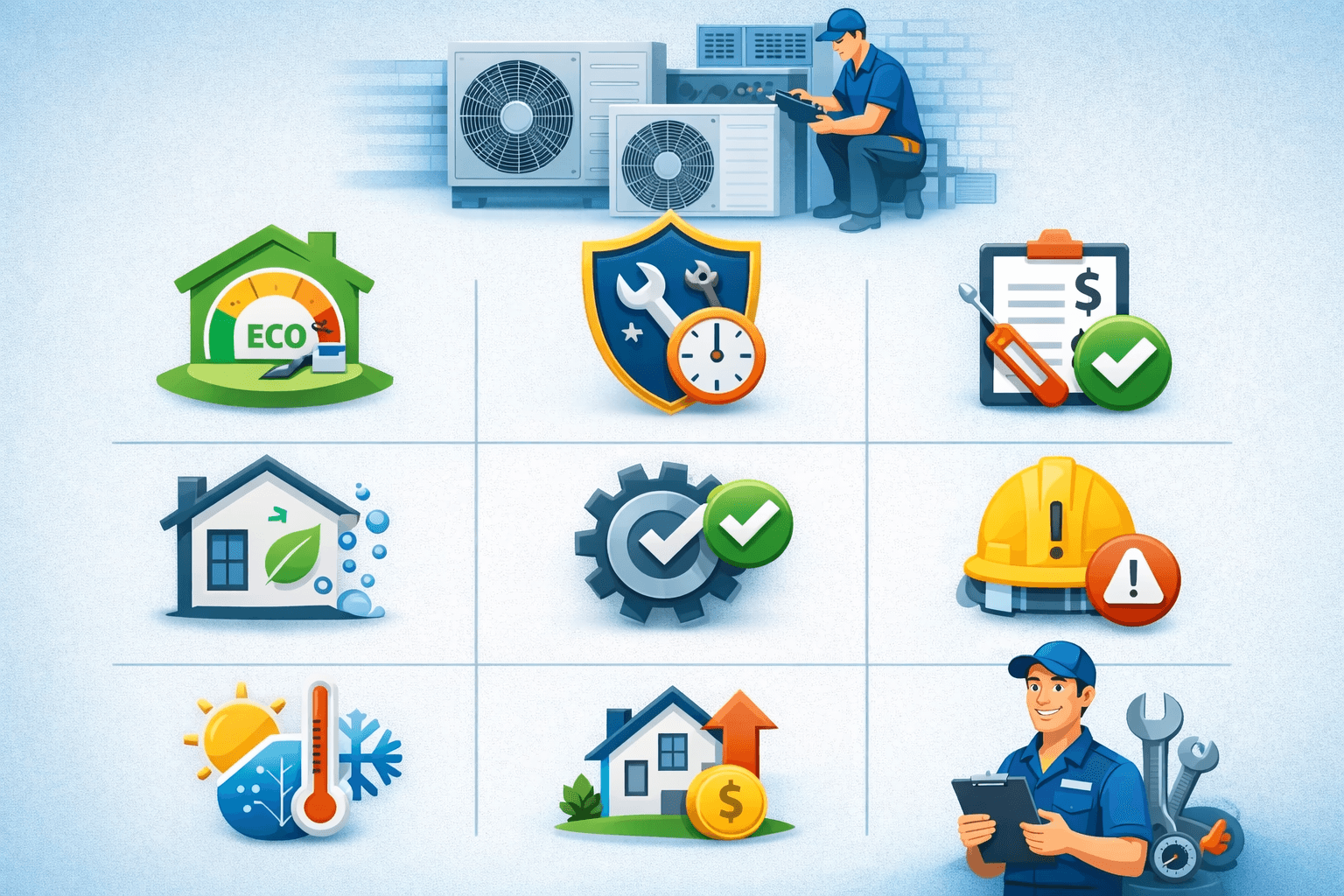
In this article, we will explore 8 powerful benefits of preventive HVAC Maintenance and why every property owner should make it a priority.
11. Improved Energy Efficiency
One of the most important advantages of preventive HVAC system servicing is the significant improvement in energy efficiency. HVAC systems are responsible for a large portion of energy consumption in residential and commercial buildings. When these systems are not properly maintained, they often consume far more energy than necessary to maintain indoor comfort. Regular HVAC Maintenance helps ensure that every component of the system operates at peak efficiency, reducing energy waste and lowering utility costs. NADCA
Over time, dust, dirt, and debris naturally accumulate inside HVAC systems. Air filters become clogged, evaporator coils collect dust, and condenser units may become obstructed by outdoor debris such as leaves or dirt. When these components are dirty, airflow becomes restricted and heat transfer becomes less efficient. As a result, the system must run longer cycles to achieve the desired temperature. Without routine HVAC Maintenance, this increased workload can significantly raise energy consumption.
Regular HVAC system servicing includes cleaning critical components such as coils, fans, and filters. Clean filters allow air to circulate freely through the system, while clean coils improve heat exchange efficiency. These improvements enable the HVAC unit to cool or heat spaces more effectively without using excessive energy. Even a simple step like replacing a clogged air filter during scheduled HVAC Maintenance can dramatically improve system performance.
Another important part of HVAC Maintenance involves checking refrigerant levels and ensuring the refrigerant cycle operates correctly. Low refrigerant levels force the compressor to work harder, which increases electricity usage and places additional stress on the system. Technicians performing professional HVAC Maintenance verify that refrigerant levels are balanced and that there are no leaks in the system.
Thermostat calibration is also a key element of preventiveHVAC system servicing. If a thermostat is inaccurate, the system may run longer than necessary or cycle inefficiently. During routine HVAC Maintenance, technicians test thermostat functionality to ensure the system maintains precise temperature control. This optimization helps reduce unnecessary system operation and improves energy efficiency.
Preventive HVAC Maintenance also includes inspecting ductwork and airflow pathways. Leaky ducts or blocked vents can cause conditioned air to escape before it reaches occupied spaces. When this happens, HVAC systems must work harder to maintain indoor temperatures. By identifying and fixing airflow issues during regular HVAC Maintenance, technicians help ensure that the system delivers conditioned air efficiently throughout the building.
Energy efficiency improvements from consistent HVAC Maintenance can be substantial. Many energy studies indicate that neglected HVAC systems can consume up to 20–30% more energy than properly maintained systems. Over time, this difference can lead to significantly higher electricity bills. For businesses operating large facilities, the financial impact of inefficient HVAC systems can be enormous.
In addition to financial savings, improved efficiency through HVAC Maintenance also benefits the environment. Lower energy consumption reduces greenhouse gas emissions and supports more sustainable building operations. Many organizations now prioritize energy efficiency as part of their sustainability goals, and routine HVAC system servicing plays a crucial role in achieving those objectives.
Ultimately, preventive HVAC Maintenance ensures that heating and cooling systems operate as efficiently as possible. By keeping components clean, calibrated, and functioning properly, property owners can reduce energy costs while maintaining reliable indoor comfort.
Learn more :Next-Gen Air Conditioning: Combining Smart Sensors with Energy Efficiency
2. Extended Equipment Lifespan
HVAC systems are major investments for homeowners, property managers, and businesses. The cost of replacing a complete heating and cooling system can be substantial, making it essential to maximize the lifespan of existing equipment. One of the most effective ways to protect this investment is through consistent HVAC Maintenance.
Like any mechanical system, HVAC equipment experiences wear and tear over time. Components such as motors, compressors, fans, belts, and electrical connections gradually degrade with continuous use. Without proper care, these components can fail prematurely, leading to costly repairs or complete system replacement. Preventive HVAC Maintenance helps slow this natural deterioration and keeps the system operating smoothly for many years. Lee Company
During scheduled HVAC Maintenance, technicians perform detailed inspections of all critical components. They check electrical connections, examine moving parts, test safety controls, and evaluate system performance. These inspections allow technicians to identify small issues before they escalate into serious mechanical failures.
For example, a loose electrical connection may seem insignificant, but over time it can cause overheating or damage to sensitive components. Similarly, worn belts or failing motors may operate normally for a while but eventually lead to major system breakdowns. Routine HVAC Maintenance allows technicians to detect and correct these problems early, preventing unnecessary stress on the system.
Lubrication of moving parts is another important aspect of preventive HVAC system servicing. Components such as motors and bearings require proper lubrication to operate smoothly. Without lubrication, friction increases and parts wear out much faster. By applying appropriate lubrication during regular HVAC Maintenance, technicians reduce mechanical strain and extend the lifespan of key components.
Cleaning system components is also essential for long-term durability. Dirt buildup on coils, fans, and heat exchangers forces the system to work harder, which accelerates component wear. Regular HVAC Maintenance removes this buildup and ensures that the system operates under optimal conditions. Reduced strain means that components last longer and require fewer replacements.
Preventive HVAC system servicing also protects the system’s compressor, which is often the most expensive component to replace. When airflow is restricted or refrigerant levels are incorrect, the compressor must work harder to maintain cooling performance. Over time, this excessive workload can lead to compressor failure. Through regular HVAC Maintenance, technicians verify airflow, refrigerant levels, and system pressure to ensure the compressor operates within safe limits.
Another advantage of consistent HVAC Maintenance is improved system stability. When equipment operates smoothly without frequent breakdowns, components experience less stress and fewer abrupt shutdowns. This stable operation significantly contributes to extending the overall life of the HVAC system.
In many cases, HVAC systems that receive regular HVAC system servicing can last 5 to 10 years longer than neglected systems. Considering the high cost of system replacement, this extended lifespan represents a major financial benefit for property owners.
Additionally, documented HVAC Maintenance records provide proof that the system has been properly cared for. This documentation can be valuable for warranty claims or when selling a property, as buyers are more confident in equipment that has been regularly maintained.
In the long run, consistent HVAC Maintenance protects one of the most important mechanical assets in any building. By identifying potential problems early, reducing mechanical stress, and maintaining optimal operating conditions, preventive HVAC Maintenance helps ensure that HVAC systems deliver reliable performance for many years.
3. Lower Repair Costs
One of the most practical advantages of preventive HVAC Maintenance is the ability to significantly reduce repair costs over time. HVAC systems are complex mechanical systems that include many components working together—compressors, motors, coils, fans, electrical wiring, and refrigerant lines. When even a single component begins to malfunction, it can create a chain reaction that affects the entire system. Regular HVAC system servicing helps identify and resolve these small issues before they develop into expensive repairs.
Many HVAC breakdowns do not happen suddenly. In most cases, failures begin with small warning signs such as unusual noises, minor refrigerant leaks, clogged filters, or worn electrical components. Without regular HVAC Maintenance, these early signs often go unnoticed until the system stops working entirely. At that point, repairs become much more expensive and may even require replacing major parts of the system. OCNJ Daily
Routine HVAC Maintenance allows technicians to inspect critical components and detect potential problems early. For example, during scheduled HVAC system servicing , professionals check refrigerant pressure, inspect electrical connections, test system controls, and examine moving parts for wear. Identifying issues early allows technicians to perform minor adjustments or replace inexpensive parts before they cause serious damage.
Another important factor in reducing repair costs is preventing system overload. When filters are clogged or coils are dirty, airflow becomes restricted. This forces the HVAC system to operate under higher stress levels, which accelerates wear on motors, compressors, and fans. Preventive HVAC Maintenance ensures that these components remain clean and properly functioning, reducing unnecessary strain on the system.
Electrical components are also a common cause of HVAC failures. Loose connections, worn capacitors, and aging relays can cause systems to operate inconsistently or fail completely. During routine HVAC Maintenance, technicians inspect these electrical parts to ensure they remain safe and reliable. Replacing a failing capacitor during scheduled HVAC Maintenance costs very little compared to replacing a burned-out compressor caused by electrical failure.
Preventive HVAC Maintenance also helps avoid emergency repair situations. HVAC systems often fail during peak seasons when they are working the hardest—during extreme heat in summer or freezing temperatures in winter. Emergency repairs during these periods can be significantly more expensive due to higher service demand. Property owners who invest in consistent HVAC Maintenance are far less likely to experience these urgent and costly breakdowns.
In addition, routine HVAC Maintenance allows technicians to maintain proper system balance. Correct airflow, refrigerant levels, and electrical performance ensure that the system operates efficiently without unnecessary mechanical stress. This balanced operation reduces the likelihood of sudden equipment failures.
Over the lifespan of an HVAC system, the savings from preventive HVAC Maintenance can be substantial. Property owners who skip maintenance often face frequent repair bills and unexpected system failures. In contrast, those who schedule regular HVAC Maintenance typically spend far less on repairs because most issues are resolved before they become serious.
Ultimately, preventive HVAC system servicing acts as a cost-control strategy. Instead of dealing with unpredictable and expensive repairs, property owners can rely on routine servicing to keep their HVAC systems running smoothly and economically.
4. Better Indoor Air Quality
Indoor air quality has become an increasingly important concern for homeowners, businesses, and facility managers. People spend a large portion of their time indoors, whether at home, in offices, or in commercial spaces. Because HVAC systems circulate air throughout a building, their condition directly affects the quality of the air occupants breathe. Regular HVAC Maintenance plays a crucial role in ensuring healthy and clean indoor air.
Over time, HVAC systems accumulate dust, pollen, mold spores, bacteria, and other airborne contaminants. These pollutants often become trapped inside air filters, ducts, and internal system components. Without proper HVAC Maintenance, these contaminants can circulate continuously throughout indoor spaces, negatively affecting air quality. ZipDo
Air filters are the first line of defense against airborne particles. However, when filters become clogged or overloaded, they lose their ability to effectively trap pollutants. During routine HVAC Maintenance, technicians replace or clean air filters to ensure that they continue capturing dust and allergens. This simple step in HVAC Maintenance can dramatically improve indoor air quality.
Another critical component addressed during HVAC Maintenance is the ductwork system. Air ducts transport conditioned air throughout a building, but they can also accumulate dust and debris over time. If ducts are dirty or leaking, contaminants can spread easily through the ventilation system. Preventive HVAC Maintenance includes inspecting ductwork to ensure proper airflow and cleanliness.
Moisture control is also an essential part of maintaining healthy indoor air. HVAC systems naturally remove humidity from indoor environments, but poorly maintained systems may develop condensation issues. Standing moisture can lead to mold growth within HVAC components or ductwork. Regular HVAC Maintenance ensures that drainage systems and evaporator coils function properly, preventing moisture buildup and mold development.
Ventilation performance is another factor that affects air quality. During professional HVAC Maintenance, technicians check airflow and ventilation balance to ensure fresh air is circulating properly. Proper ventilation reduces indoor pollutant concentration and improves overall air freshness.
Improved indoor air quality offers significant health benefits. Clean air can reduce allergy symptoms, respiratory irritation, and fatigue caused by poor ventilation. In workplaces, better air quality can also improve employee productivity and concentration. For businesses that serve customers indoors, maintaining high air quality through regular HVAC system servicing helps create a more comfortable environment.
Healthcare facilities, schools, and office buildings especially depend on consistent HVAC Maintenance to maintain healthy indoor environments. Poorly maintained systems in these spaces can contribute to widespread discomfort and even health concerns among occupants.
Ultimately, preventive HVAC Maintenance ensures that HVAC systems do more than simply regulate temperature—they also support a healthier indoor environment. By keeping filters clean, ducts inspected, and ventilation balanced, routine HVAC Maintenance helps maintain high indoor air quality for everyone inside the building.AC Maintenance, property owners can significantly improve the quality of the air people breathe every day. Springer
5. Increased System Reliability
Reliability is essential for any HVAC system, especially in commercial buildings where climate control is critical for operations. A system failure during peak summer or winter conditions can disrupt business activities and create uncomfortable environments.
Preventive HVAC Maintenance significantly improves system reliability by ensuring that all components function properly. Routine inspections allow technicians to test electrical connections, lubricate moving parts, and verify thermostat accuracy. ZipDo
When HVAC Maintenance is performed regularly, potential issues are detected long before they lead to complete system failure. This proactive approach ensures that HVAC systems operate consistently throughout the year.
Businesses that prioritize HVAC Maintenance often experience fewer disruptions caused by unexpected equipment breakdowns. This reliability is particularly important for industries that depend on stable indoor environments, such as data centers, hospitals, and manufacturing facilities.
In short, preventive HVAC Maintenance helps ensure that HVAC systems perform reliably when they are needed most.
6. Consistent Indoor Comfort
Maintaining consistent indoor temperatures is one of the primary purposes of HVAC systems. However, neglected systems often struggle to deliver stable heating and cooling performance.
Regular HVAC Maintenance ensures that thermostats, sensors, and airflow systems operate correctly. During routine HVAC Maintenance, technicians calibrate temperature controls and inspect airflow pathways to ensure balanced distribution throughout the building. OCNJ Daily
Without proper HVAC Maintenance, certain rooms may become too hot or too cold due to blocked vents, dirty coils, or failing components. These inconsistencies can make indoor spaces uncomfortable for occupants.
Preventive HVAC Maintenance also ensures that systems respond quickly to thermostat adjustments. A properly maintained system can heat or cool spaces more efficiently, maintaining consistent comfort levels.
For businesses, consistent indoor comfort contributes to employee satisfaction and productivity. Customers also feel more comfortable spending time in well-climate-controlled environments.
Therefore, regular HVAC Maintenance plays a key role in maintaining stable and comfortable indoor conditions year-round.
Learn more :9 Factors That Affect Indoor Humidity and Comfort Levels
7. Improved Safety
Safety is another critical benefit of preventive HVAC Maintenance. HVAC systems involve electrical components, refrigerants, and combustion processes that must be properly maintained to avoid potential hazards.
Routine HVAC Maintenance includes inspecting electrical wiring, testing safety controls, and checking gas connections in heating systems. These inspections help prevent dangerous issues such as electrical failures, gas leaks, or carbon monoxide exposure. Lee Company
Without regular HVAC Maintenance, small safety issues can remain undetected until they pose serious risks to building occupants.
Technicians performing HVAC Maintenance also ensure that ventilation systems operate correctly, preventing harmful gases from accumulating indoors.
By prioritizing professional HVAC Maintenance, property owners can reduce safety risks and ensure that HVAC systems operate securely and reliably.
8. Higher Property Value
Well-maintained building systems contribute significantly to overall property value. Potential buyers and tenants often evaluate HVAC systems when assessing a property’s condition.
Properties with documented HVAC Maintenance records demonstrate responsible ownership and proper equipment care. Buyers are more confident investing in properties where HVAC systems have been regularly serviced. NADCA
Consistent HVAC Maintenance also ensures that systems operate efficiently during property inspections. A poorly maintained system may require costly replacements, which can negatively impact property value.
In commercial real estate, preventive HVAC system servicing is often part of professional facility management strategies designed to preserve building assets.
Ultimately, maintaining a reliable and efficient HVAC system through routine HVAC system servicing can increase the long-term value and attractiveness of a property.
Conclusion
Preventive HVAC Maintenance is far more than a routine service—it is a strategic investment in comfort, efficiency, and long-term cost savings. From improving energy efficiency and indoor air quality to extending equipment lifespan and reducing repair costs, the benefits of regular HVAC Maintenance are substantial.
Ignoring HVAC Maintenance may seem like a way to save money in the short term, but it often leads to higher energy bills, frequent breakdowns, and costly replacements. On the other hand, proactive HVAC Maintenance helps ensure that HVAC systems operate reliably and efficiently throughout the year.
Whether you own a home, manage a commercial building, or oversee multiple facilities, prioritizing preventive HVAC Maintenance is essential for protecting your investment and maintaining a comfortable indoor environment.
In the long run, consistent HVAC Maintenance not only saves money but also ensures peace of mind knowing that your heating and cooling systems are performing at their best.
