

Table of Contents
When managing a property—whether residential, commercial, or mixed-use—owners often prioritize visible improvements. Renovations, décor upgrades, landscaping, and smart technology installations usually receive immediate attention because they are tangible and easy to appreciate. However, behind the walls and ceilings lies one of the most critical systems in any building: the heating, ventilation, and air conditioning system. Despite its central role in comfort and operational stability, HVAC Maintenance is frequently treated as a reactive expense rather than a strategic investment.
Many homeowners and business operators adopt a “fix it when it breaks” mindset. The system runs quietly in the background, so it’s easy to assume everything is functioning properly—until airflow weakens, temperatures fluctuate, or the unit stops working entirely. By that point, what could have been resolved through routine HVAC Maintenance often turns into a costly emergency repair or even premature system replacement. This reactive approach not only increases expenses but also disrupts daily operations and occupant comfort.
Preventive HVAC Maintenance takes a fundamentally different approach. Instead of waiting for visible failure, it focuses on early detection, performance optimization, and system longevity. Small issues—like minor refrigerant imbalances, worn belts, dirty coils, or electrical irregularities—can be identified and corrected before they escalate. Over time, this proactive strategy translates into measurable financial savings, improved efficiency, and greater reliability.
Beyond cost control, HVAC Maintenance directly impacts energy consumption. HVAC systems are among the largest energy users in most buildings. When components are dirty, misaligned, or under strain, the system must work harder to maintain desired temperatures. This added workload increases utility bills and accelerates wear and tear. Regular inspections and servicing ensure that airflow, calibration, and mechanical parts operate at peak efficiency, reducing energy waste and improving overall performance.
Operational stability is another major factor. For businesses especially, unexpected HVAC failure can interrupt productivity, affect employee comfort, and create negative customer experiences. In residential settings, breakdowns during extreme heat or cold can quickly become urgent and stressful situations. Scheduled HVAC Maintenance significantly lowers the risk of such disruptions by ensuring consistent system reliability throughout peak seasons.
Comfort and indoor air quality are equally important. A properly maintained system regulates humidity, filters airborne contaminants, and distributes air evenly throughout a property. Neglected systems, on the other hand, may circulate dust, allergens, and pollutants, contributing to health concerns and discomfort. Routine HVAC Maintenance supports a healthier indoor environment while maintaining stable temperature control year-round.
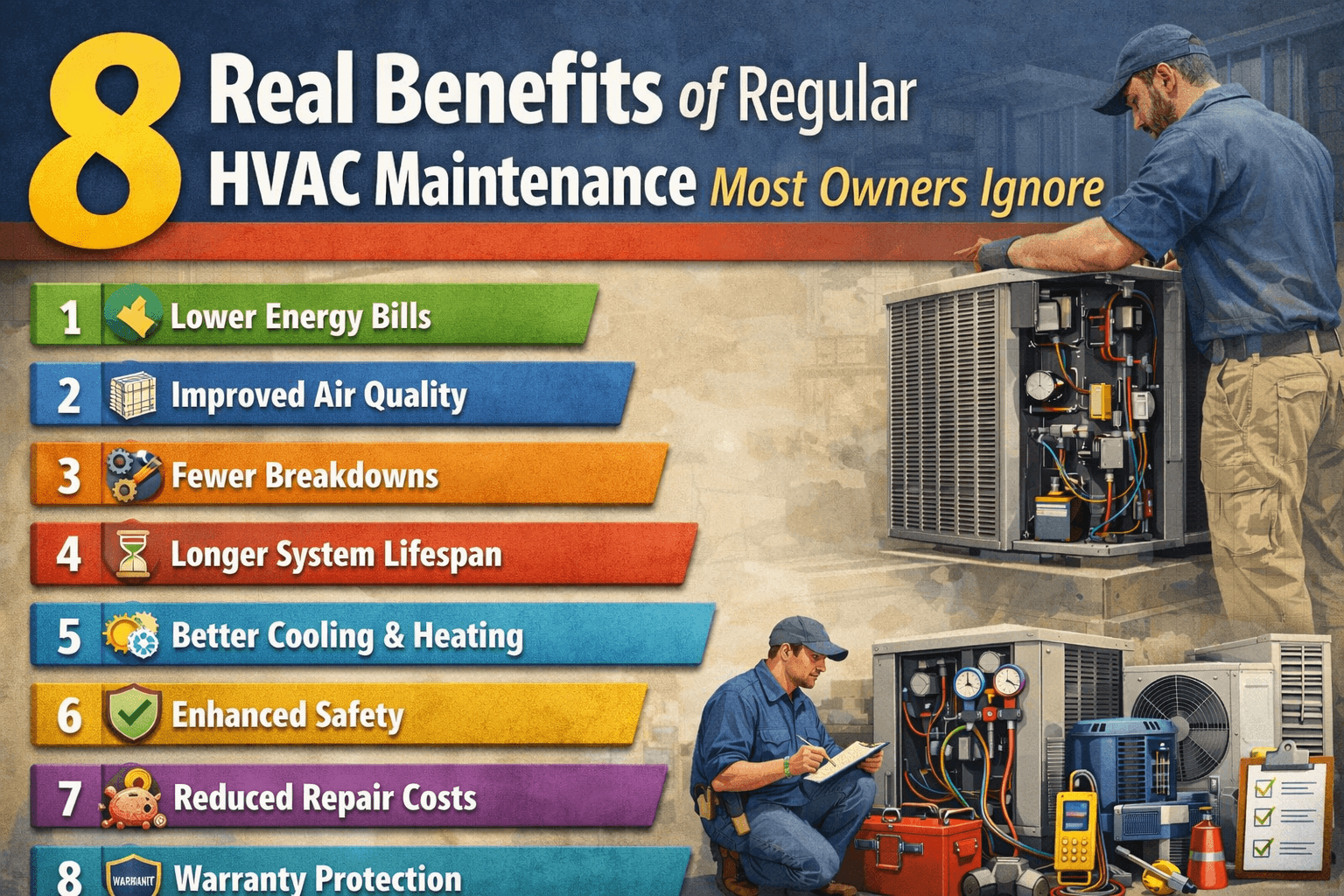
Ultimately, HVAC Maintenance should not be viewed as an optional service but as a core component of responsible property management. It protects your investment, enhances system efficiency, safeguards occupant comfort, and reduces long-term operational costs. The following eight benefits highlight why routine HVAC Maintenance is one of the smartest and most overlooked strategies property owners can implement.
1. Lower Energy Bills
One of the most immediate and measurable advantages of consistent HVAC Maintenance is improved energy efficiency. Heating and cooling systems account for a significant portion of a property’s total energy consumption—often representing the largest share of monthly utility costs. When the system is not properly maintained, even minor issues can dramatically reduce efficiency and drive up expenses.
Over time, dust and debris accumulate on coils, filters become clogged, and internal components experience natural wear. These small inefficiencies restrict airflow and reduce heat transfer performance. As a result, the system must run longer cycles and consume more electricity or fuel to maintain the desired indoor temperature. Without routine HVAC Maintenance, this extra strain becomes the norm, quietly increasing energy bills month after month. horizonairsolutions
Professional HVAC Maintenance addresses these hidden inefficiencies before they escalate. During service visits, technicians clean evaporator and condenser coils, replace or wash filters, inspect duct connections, lubricate moving parts, and verify proper refrigerant levels. They also check thermostat calibration and system controls to ensure accurate temperature regulation. Each of these steps contributes to smoother operation and optimized performance.
When airflow is unrestricted and mechanical components operate without excessive strain, the system requires less energy to achieve the same comfort level. This improved efficiency translates directly into reduced energy waste and noticeably lower monthly utility costs. Instead of overworking to compensate for neglected parts, the system runs as designed—efficiently and consistently. pvehvac
Over the long term, regular HVAC Maintenance can reduce energy expenses by 10–20%, depending on the age, condition, and usage patterns of the equipment. For homeowners, that means meaningful annual savings. For businesses managing larger facilities, the financial impact can be even more substantial.
Ultimately, investing in scheduled HVAC Maintenance is one of the most practical and cost-effective strategies for controlling operational expenses while maintaining reliable indoor comfort. okatmechanical
Learn more : Tips for Reducing Air Conditioner Energy Consumption and Lowering Bills
2. Extended Equipment Lifespan
HVAC systems are among the most expensive mechanical assets in any property. Whether for a home or a commercial facility, replacing a heating and cooling system represents a major capital expense. Yet many owners unknowingly shorten the lifespan of their equipment simply by neglecting routine HVAC Maintenance. pvehvac
Like any complex mechanical system, HVAC units experience natural wear and tear over time. Motors run for thousands of hours each year, compressors handle constant pressure changes, and electrical components cycle repeatedly. Without regular HVAC Maintenance, small performance issues—such as minor lubrication problems, loose electrical connections, or restricted airflow—gradually place additional stress on these critical parts.
When a system consistently operates under strain, components deteriorate faster than expected. For example, a clogged filter forces the blower motor to work harder, while dirty coils reduce heat transfer efficiency and increase compressor workload. Over time, this excessive stress can lead to premature breakdowns and early system failure. What might have lasted 15–20 years with proper care could fail several years sooner without consistent HVAC Maintenance.
Preventive HVAC Maintenance helps protect every major component within the system. Technicians inspect moving parts, tighten connections, test electrical systems, verify refrigerant levels, and ensure balanced airflow. By correcting small irregularities early, routine HVAC Maintenance minimizes mechanical strain and promotes smoother, more stable operation.horizonairsolutions
Extending equipment lifespan doesn’t just delay replacement—it maximizes return on investment. When owners commit to scheduled HVAC Maintenance, they protect their capital investment, reduce long-term depreciation costs, and avoid the financial shock of premature system replacement.
In the long run, consistent HVAC Maintenance is not simply about preventing breakdowns; it is about preserving the value, reliability, and longevity of one of the most essential systems in any property.okatmechanical
3. Fewer Emergency Repairs
Unexpected HVAC breakdowns rarely happen at convenient times. Systems tend to fail during peak demand—on the hottest summer day or the coldest winter night—when they are working the hardest. These emergencies are not only stressful but also significantly more expensive. One of the most practical advantages of routine HVAC Maintenance is the dramatic reduction in unexpected repair situations.horizonairsolutions
Most major system failures do not occur suddenly without warning. They are typically the result of small, overlooked issues that gradually worsen over time. A loose electrical connection, a minor refrigerant leak, a worn belt, or a struggling capacitor may seem insignificant at first. However, without scheduled HVAC Maintenance, these minor faults can escalate into compressor failures, motor burnout, or complete system shutdown.
Preventive HVAC Maintenance is designed to detect these warning signs early. During routine inspections, technicians test electrical components, measure refrigerant pressure, examine moving parts, and evaluate overall system performance. By identifying wear and irregularities before they become critical, regular HVAC Maintenance allows for planned, affordable repairs instead of urgent, high-cost emergencies.okatmechanical
Emergency repairs often come with premium service fees, expedited parts costs, and potential downtime. For businesses, this can mean lost productivity or customer discomfort. For homeowners, it can mean days without proper heating or cooling. Consistent HVAC Maintenance significantly reduces the likelihood of these disruptions, providing greater operational stability and peace of mind. pvehvac
Ultimately, investing in routine HVAC Maintenance shifts the approach from reactive crisis management to proactive system care—saving money, preventing stress, and ensuring reliable performance when you need it most.
4. Improved Indoor Air Quality
Beyond comfort and energy efficiency, one of the often-overlooked benefits of regular HVAC Maintenance is its impact on indoor air quality. The air inside a home or commercial building can contain dust, allergens, mold spores, and other pollutants that affect the health and well-being of occupants. A poorly maintained HVAC system can exacerbate these issues, circulating contaminants throughout the space rather than removing them.horizonairsolutions
Over time, filters become clogged, coils collect dust, and ducts can accumulate debris. When these components are neglected, the system struggles to properly filter and circulate air, leading to stagnant, polluted, or unevenly distributed airflow. This can trigger allergy flare-ups, respiratory problems, and general discomfort for residents or employees.
Scheduled HVAC Maintenance addresses these hidden hazards. Technicians replace or clean filters, inspect and clean ductwork, remove dirt and buildup from coils, and ensure that airflow is balanced throughout the property. Proper ventilation and filtration not only help to reduce airborne particles but also maintain optimal humidity levels, which can prevent mold growth and structural moisture issues.okatmechanical
Consistent HVAC Maintenance creates a cleaner, healthier indoor environment. For homeowners, this means breathing easier and protecting family members from allergens and pollutants. For businesses, it contributes to employee wellness, reduces sick days, and enhances overall occupant satisfaction. In short, HVAC Maintenance doesn’t just keep your system running—it helps keep the air you and others breathe safe and comfortable. pvehvac
Learn more : 12 Ways to Improve Indoor Air Quality with a Professional AC Contractor
5. More Consistent Comfort
One of the most noticeable benefits of regular HVAC Maintenance is the improvement in indoor comfort. Temperature fluctuations, uneven heating or cooling, and poor airflow are often signs of a system that hasn’t received the care it needs. Over time, neglected equipment struggles to maintain the desired climate, leaving rooms too hot, too cold, or inconsistently conditioned. pvehvac
Routine HVAC Maintenance ensures that every component of your system operates efficiently and effectively. Technicians check thermostat calibration, inspect ductwork for leaks or blockages, verify that fans and blowers are functioning correctly, and confirm that refrigerant levels are optimized. This attention to detail ensures that warm or cool air is distributed evenly, eliminating hot or cold spots and creating a consistent environment throughout the property.okatmechanical
Beyond temperature control, proper HVAC Maintenance also helps manage humidity. Excess moisture in the air can create discomfort, promote mold growth, and damage furniture or building materials. Conversely, overly dry air can lead to dry skin, respiratory irritation, and static electricity. Through preventive service, HVAC systems maintain ideal humidity levels, enhancing overall comfort.
For homeowners, this means a more pleasant living environment year-round. For businesses, it translates to a stable, comfortable workspace that supports productivity and employee satisfaction. In essence, regular HVAC Maintenance ensures your system performs as designed, delivering reliable, consistent comfort no matter the season.horizonairsolutions
6. Protection of Manufacturer Warranty
Another critical, yet often overlooked, benefit of regular HVAC Maintenance is that it helps protect the manufacturer’s warranty. Many HVAC manufacturers include clauses requiring documented, routine maintenance as a condition for warranty coverage. Failing to comply with these requirements—by skipping service visits or neglecting proper care—can void the warranty, leaving owners fully responsible for expensive repairs or replacements.okatmechanical
Routine HVAC Maintenance ensures that all system components are inspected, cleaned, and serviced according to the manufacturer’s specifications. Technicians typically provide detailed reports or maintenance logs, which serve as proof that the system has been properly cared for. These records are essential if a warranty claim becomes necessary, demonstrating that the owner fulfilled all obligations.
Beyond compliance, regular HVAC Maintenance can also prevent warranty-related claims from being triggered by avoidable issues. For example, proper lubrication, airflow checks, and refrigerant monitoring reduce the likelihood of component failures that might otherwise be denied under warranty due to “neglect.” pvehvac
For property owners, this means peace of mind knowing that their investment is protected. It also helps avoid significant out-of-pocket expenses for repairs or replacements that might have been covered under warranty if HVAC Maintenance had been consistently performed. In short, staying on top of preventive service safeguards both your system and your financial investment.
7. Increased Property Value
Regular HVAC Maintenance doesn’t just benefit the system itself—it can also have a tangible impact on the overall value of your property. Whether you’re preparing to sell a home, lease a commercial space, or simply maintain long-term asset value, a well-maintained HVAC system signals responsible ownership and proper property care to potential buyers or tenants.horizonairsolutions
A property with documented HVAC Maintenance demonstrates that the heating and cooling system is reliable, efficient, and less likely to require costly repairs in the near future. Buyers are often willing to pay a premium or move faster on a purchase when they know that critical systems, like heating and cooling, have been professionally maintained. For commercial properties, tenants are more likely to commit to long-term leases when they trust that the building’s climate control system will consistently perform without interruption.
Beyond buyer perception, regular HVAC Maintenance can directly influence appraisals and market valuation. Appraisers and real estate professionals often consider the age, condition, and service history of major mechanical systems when determining property value. A property with a history of consistent HVAC Maintenance is seen as lower risk, which can enhance its marketability and even justify higher asking prices.okatmechanical
Additionally, preventive maintenance reduces the likelihood of emergency repairs or system failures that could disrupt property showings, tenant comfort, or operational continuity. For homeowners, this means a smoother sale process; for commercial property owners, it ensures that tenants remain satisfied and rental income remains stable. pvehvac
In essence, investing in regular HVAC Maintenance not only protects your equipment but also strengthens the overall financial and functional value of your property, making it a smart strategy for both current comfort and long-term return on investment.
8. Safer System Operation
Beyond efficiency, comfort, and cost savings, one of the most critical benefits of regular HVAC Maintenance is safety. Heating and cooling systems involve complex electrical components, gas lines, and pressurized refrigerants. Without proper care, even minor faults can escalate into serious hazards that threaten property and occupant safety.
For example, gas furnaces or boilers that are not routinely inspected may develop leaks, potentially leading to dangerous carbon monoxide exposure. Electrical issues, such as frayed wires or worn connections, can cause short circuits or even fires. Additionally, clogged filters or restricted airflow can result in overheating, placing undue stress on the system and increasing the risk of mechanical failure.horizonairsolutions
Routine HVAC Maintenance includes comprehensive safety inspections that detect these issues early. Technicians check gas connections, test for leaks, inspect electrical components, verify proper airflow, and ensure that safety controls function correctly. These preventive measures identify hazards before they become emergencies, significantly reducing the risk of injury, property damage, or costly insurance claims.
For homeowners, this means peace of mind knowing that family members are safe and that the system is operating correctly. For businesses, it protects employees, customers, and physical assets while maintaining compliance with safety regulations. pvehvac
Ultimately, scheduled HVAC Maintenance is not just about improving comfort or efficiency—it is an essential practice to ensure that your system operates safely, reliably, and responsibly at all times.
Conclusion
Regular HVAC Maintenance is far more than a routine chore—it is a strategic investment that pays off in multiple ways. From reducing energy bills and extending the lifespan of equipment to preventing emergency repairs, improving indoor air quality, and ensuring consistent comfort, the benefits are both immediate and long-term. Additionally, maintaining a proper service history protects manufacturer warranties, enhances property value, and, most importantly, safeguards the safety of occupants.
Ignoring preventive HVAC Maintenance may seem convenient in the short term, but the consequences—higher costs, system failures, and health or safety risks—quickly outweigh any perceived savings. By committing to scheduled inspections, cleaning, and tune-ups, property owners not only protect their investment but also ensure optimal system performance, efficiency, and reliability.
In essence, regular HVAC Maintenance transforms a necessary utility into a well-managed, cost-effective, and safe asset. It is a smart, proactive strategy that every homeowner and business operator should prioritize—because a properly maintained HVAC system is not just a convenience; it is the foundation of comfort, safety, and financial peace of mind.
