

Table of Contents
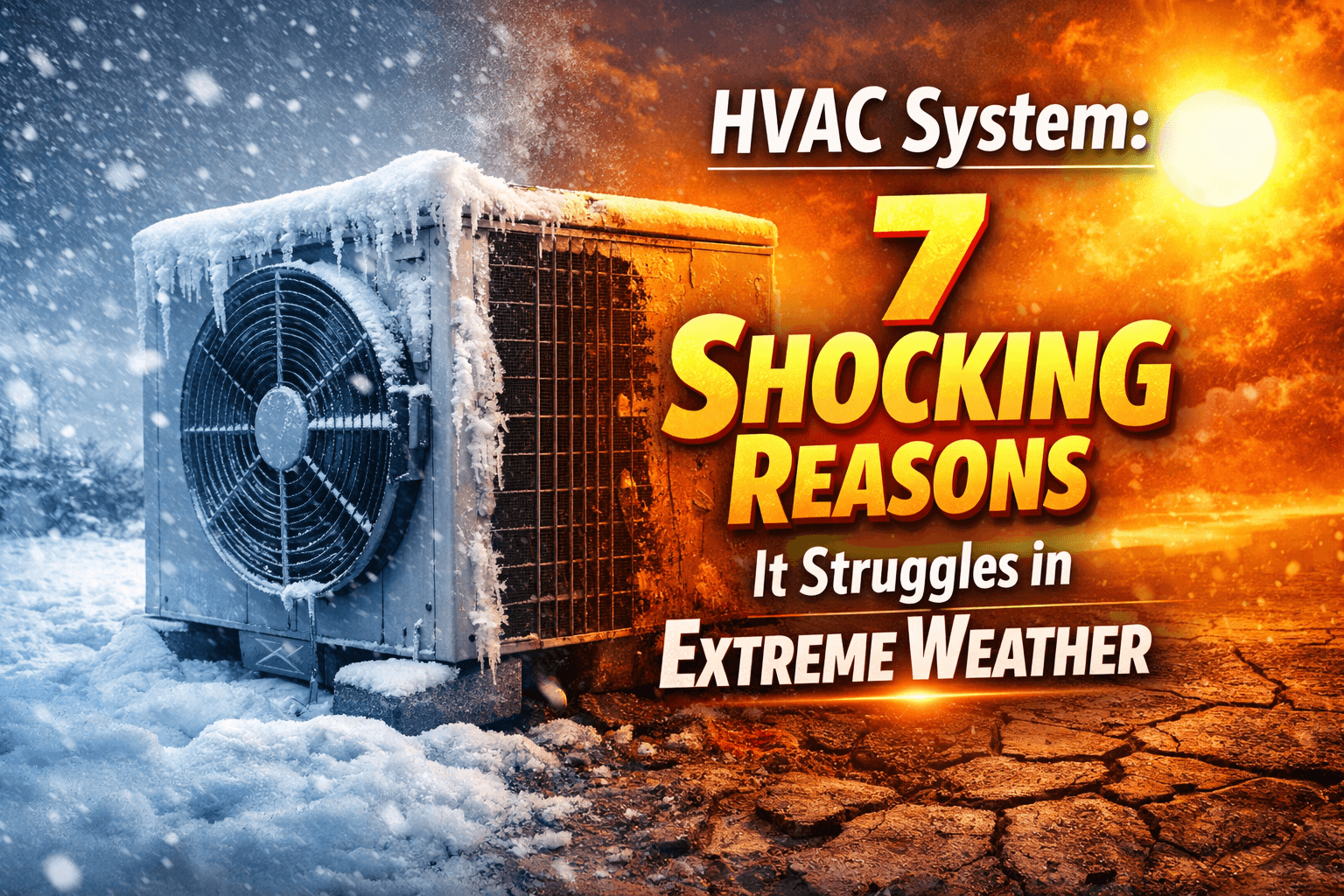
When outdoor temperatures swing to extremes—whether it’s relentless summer heat or bitter winter cold—your HVAC system is placed under significant pressure. During these periods, your HVAC system is no longer operating under normal seasonal conditions; instead, it is working at or near its maximum capacity for extended hours. While most HVAC systems are engineered to handle predictable climate variations, extreme weather events can push even a well-installed HVAC system beyond its optimal performance range.
In hot summer months, your HVAC system must continuously remove heat from indoor air while combating solar gain through windows, walls, and roofing. The hotter it gets outside, the harder your HVAC system has to work to maintain the temperature you’ve set on your thermostat. Similarly, during freezing winter conditions, your HVAC system must generate enough heat to offset constant heat loss through insulation gaps, ductwork, and building materials. When outdoor temperatures move far beyond seasonal averages, the workload on your heating and cooling system increases dramatically.
As this strain intensifies, small inefficiencies that might go unnoticed during mild weather become far more apparent. You may begin to notice inconsistent room temperatures, longer run cycles, unusual sounds, reduced airflow, or a steady increase in energy bills. These warning signs often indicate that your HVAC system is struggling to keep up with demand. In many cases, the issue isn’t sudden failure—it’s cumulative stress caused by extended operation under extreme conditions.
Extreme weather doesn’t just test the heating or cooling capacity of your HVAC system; it tests airflow, insulation support, refrigerant balance, electrical components, and thermostat accuracy all at once. If any part of your HVAC system is slightly underperforming, extreme temperatures will magnify the problem. What seemed like a minor airflow restriction in spring can turn into significant cooling loss during a heatwave. A small insulation gap that felt manageable in fall may cause major heating inefficiency in winter.
Understanding why your HVAC system struggles during extreme weather is the first step toward protecting its performance and extending its lifespan. Identifying these stress factors early allows you to take preventive action before minor issues become costly repairs. Below, we explore seven of the most common reasons your HVAC system may have difficulty performing during extreme weather—and practical steps you can take to restore efficiency, reliability, and consistent indoor comfort.
1. Undersized HVAC System
One of the most significant yet often overlooked reasons your HVAC system struggles during extreme weather is improper sizing. An undersized HVAC system may seem to function adequately during mild spring or fall conditions, but when temperatures reach intense highs or extreme lows, its limitations quickly become evident. Energy
An HVAC system must be properly sized based on a detailed load calculation that considers square footage, ceiling height, insulation quality, window placement, sun exposure, occupancy levels, and even local climate patterns. If these factors were not carefully evaluated during installation, your HVAC system may lack the capacity required to heat or cool your space efficiently during extreme weather.
When an HVAC system is undersized, it cannot produce enough conditioned air to offset the rapid heat gain in summer or heat loss in winter. As a result, the heating and cooling system runs continuously in an attempt to reach the thermostat setting. Instead of cycling on and off normally, the system operates for extended periods, sometimes without ever fully satisfying the desired temperature. This constant operation increases energy consumption and accelerates mechanical wear.
During a summer heatwave, for example, an undersized HVAC system may struggle to remove heat quickly enough, especially during peak afternoon hours when solar radiation is strongest. Indoor temperatures may slowly rise despite the HVAC system running nonstop. In winter, the same HVAC system may fail to maintain consistent warmth, leaving certain rooms noticeably colder than others.
This continuous strain affects critical components within the heating and cooling system, including the compressor, blower motor, and heat exchanger. Over time, the added stress reduces system lifespan and increases the likelihood of breakdowns during the most demanding weather conditions—precisely when reliability is most important.
Another issue with an undersized HVAC system is uneven comfort distribution. Some areas of your home may feel relatively comfortable, while others remain too warm or too cold. This imbalance often leads occupants to lower or raise the thermostat further, which forces the heating and cooling system to work even harder and compounds the problem.
If your HVAC system frequently runs without reaching the set temperature, struggles noticeably during temperature extremes, or causes unusually high utility bills, improper sizing may be the root cause. A professional HVAC evaluation can determine whether your HVAC system meets your building’s heating and cooling load requirements. In some cases, upgrading to a correctly sized HVAC system or adding supplemental solutions such as zoning can significantly improve performance during extreme weather.
Proper sizing is not just about comfort—it’s about efficiency, durability, and ensuring your HVAC system can handle both everyday conditions and the most challenging climate extremes.
2. Dirty or Clogged Air Filters
A dirty or clogged air filter is one of the simplest problems to fix, yet it is one of the most common reasons an HVAC system struggles during extreme weather. Your HVAC system depends on steady, unrestricted airflow to heat or cool your home efficiently. When the air filter becomes blocked with dust, dirt, pet dander, and debris, airflow is restricted, forcing the heating and cooling system to work much harder than necessary.
Under normal weather conditions, a slightly dirty filter may not immediately cause noticeable problems. However, during extreme heat or cold, your HVAC system requires maximum airflow to maintain indoor comfort. When airflow is restricted, the HVAC system cannot circulate conditioned air effectively, which reduces overall performance just when demand is at its highest.
In summer, a clogged filter can cause the evaporator coil inside your heating and cooling system to become too cold due to insufficient warm air passing over it. This can lead to ice buildup on the coil, further blocking airflow and severely reducing cooling capacity. As ice accumulates, the HVAC system becomes less efficient and may eventually shut down to prevent damage. ASHRAE
In winter, restricted airflow caused by a dirty filter can lead to overheating within the furnace component of the HVAC system. When airflow is limited, heat cannot properly disperse, causing internal temperatures to rise. Modern HVAC systems often have safety switches that shut the system off to prevent damage, which can result in inconsistent heating or frequent cycling.
Beyond performance issues, a clogged air filter increases energy consumption. Because the HVAC system must run longer and harder to compensate for restricted airflow, electricity or fuel usage rises. This not only increases utility bills but also adds unnecessary strain to essential components such as the blower motor and compressor.
Another overlooked consequence of a dirty filter is reduced indoor air quality. When airflow is blocked, dust and allergens may circulate unevenly, and the heating and cooling system may struggle to maintain proper ventilation. During extreme weather, when windows and doors remain closed for long periods, maintaining clean airflow becomes even more important.
Replacing or cleaning your air filter regularly is one of the easiest ways to support your HVAC system during extreme weather. Most residential HVAC systems require filter changes every one to three months, though homes with pets, high dust levels, or heavy system use may need more frequent replacement.
A clean air filter allows your HVAC system to breathe properly, maintain steady airflow, operate efficiently, and handle the added stress that comes with extreme temperatures. What may seem like a small maintenance task can make a significant difference in how well your HVAC system performs when you need it most.
Learn more : Clean Filters, Cleaner Air: What Your AC Says About Indoor Health
3. Poor Insulation and Air Leaks
Even the most advanced HVAC system cannot perform efficiently if the building itself is losing or gaining heat excessively. Poor insulation and hidden air leaks are major reasons an HVAC system struggles during extreme weather. When your home or building cannot retain conditioned air, your HVAC system is forced to compensate continuously, increasing strain and reducing overall efficiency.
Insulation acts as a thermal barrier, slowing down heat transfer between indoor and outdoor environments. During summer, proper insulation helps prevent hot outdoor air from penetrating walls, ceilings, and attics. In winter, it helps retain the warm air generated by your heating and cooling system. However, if insulation levels are insufficient or deteriorated, heat transfer accelerates. This means your HVAC system must work significantly harder to maintain the desired indoor temperature.
Air leaks compound this issue. Small gaps around windows, doors, attic hatches, plumbing penetrations, and electrical outlets allow conditioned air to escape and outdoor air to enter. While these leaks may seem minor, they become far more impactful during extreme weather. On a scorching summer day, hot air continuously infiltrates your space, forcing your HVAC system to cool incoming warm air repeatedly. During freezing temperatures, warm indoor air escapes just as quickly as it is produced. energystar
Ductwork leaks are another hidden contributor. If ducts running through attics, crawl spaces, or walls are not properly sealed, conditioned air may escape before it even reaches living areas. As a result, your HVAC system runs longer cycles to compensate for lost airflow, leading to uneven temperatures and higher energy consumption.
The effects of poor insulation and air leaks become especially noticeable during extreme weather events. Rooms may feel drafty, certain areas may never reach the desired temperature, and your HVAC system may seem to run constantly. Over time, this continuous operation increases wear on components such as the blower motor and compressor, potentially shortening the lifespan of your HVAC system.
Improving insulation and sealing air leaks can significantly reduce the workload placed on your HVAC system. Adding attic insulation, sealing gaps with weatherstripping or caulk, installing door sweeps, and sealing duct joints can dramatically enhance energy efficiency. When your building envelope is properly sealed, your HVAC system can operate under more stable conditions, even during temperature extremes.
In short, insulation and air sealing are not just structural improvements—they are critical partners to your HVAC system. Without them, even the most powerful HVAC system will struggle to keep up during extreme weather.
4. Refrigerant Issues
Refrigerant plays a critical role in your HVAC system’s ability to cool your home. It is the fluid responsible for absorbing heat from indoor air and releasing it outside, making it essential for effective air conditioning. When refrigerant levels are low, improperly charged, or leaking, your HVAC system’s cooling capacity drops significantly—an issue that becomes glaringly obvious during extreme heat.
During a hot summer day, the demand on your HVAC system increases as it works to remove higher volumes of heat from your living space. If the refrigerant is insufficient, the system cannot absorb enough heat, causing indoor temperatures to remain uncomfortably high. In some cases, low refrigerant can cause the evaporator coil to freeze, further restricting airflow and forcing the system to work even harder. This not only reduces comfort but also increases energy consumption, as the HVAC system struggles to compensate for its reduced efficiency. familyhandyman
Signs of refrigerant problems include uneven cooling, warm air blowing from vents, ice formation on coils, hissing sounds near the refrigerant lines, and unusually long cooling cycles. These symptoms often worsen during extreme weather because the HVAC system is operating at maximum capacity and cannot overcome the deficiencies caused by low refrigerant.
Refrigerant issues are not just about discomfort—they also impact the longevity of your HVAC system. A system forced to operate under stress due to low refrigerant is more likely to suffer from component fatigue or mechanical failure. The compressor, one of the most critical and expensive components in an air conditioner, is particularly vulnerable under these conditions.
Preventive maintenance is key. HVAC technicians can check refrigerant levels, inspect for leaks, and recharge the system if necessary. Ensuring that your system has the correct refrigerant charge allows your HVAC system to operate at peak efficiency, handle extreme temperatures effectively, and maintain consistent indoor comfort.
In extreme heat, even a minor refrigerant imbalance can transform a normally efficient HVAC system into one that struggles to keep your home cool. Addressing refrigerant issues promptly not only improves comfort but also protects your system from unnecessary wear and costly repairs.
5. Overworked Components
Extreme weather doesn’t just challenge your HVAC system’s capacity—it also places immense stress on its internal components. When temperatures soar in summer or plummet in winter, your HVAC system often runs for extended periods, sometimes continuously, to maintain the desired indoor conditions. This constant operation can overwork critical parts, leading to reduced efficiency, premature wear, or even unexpected breakdowns.
Key components affected include the compressor, blower motor, capacitors, fans, and heat exchangers. Each of these parts is designed to handle regular cycles of operation, not prolonged, nonstop activity. For instance, the compressor in an air conditioner or heat pump works to transfer heat effectively; when it runs continuously during a heatwave, it can overheat, which may trigger safety shutdowns or shorten its operational lifespan. Similarly, the blower motor responsible for moving air through ducts faces excessive strain when forced to circulate air for long periods, leading to increased wear or electrical failures.
Extended operation during extreme temperatures also impacts system efficiency. Components that are overworked generate more heat and friction, which requires additional energy to maintain performance. This not only increases utility bills but also contributes to the overall fatigue of the HVAC system. In some cases, overworked parts may fail at the peak of demand—leaving your home without heating or cooling precisely when it’s needed most. hvac
Another consequence of overworked components is system imbalance. HVAC systems rely on synchronized operation; if one component begins to falter due to overuse, the rest of the system must compensate. This can lead to uneven temperatures, inconsistent airflow, and erratic system cycles. For example, a struggling blower motor may not push enough air through the ducts, causing hot or cold spots throughout your home.
Preventive maintenance and timely inspections are critical to preventing overworked components from becoming a major issue. Regular check-ups allow technicians to identify worn parts, lubricate moving components, tighten electrical connections, and ensure that the system is running efficiently before extreme weather hits.
In short, an overworked HVAC system is like an overstrained athlete: it can perform under pressure, but sustained extreme conditions without proper support or maintenance will eventually lead to fatigue, inefficiency, and breakdowns. Ensuring your components are well-maintained and operating optimally is essential for reliable performance during the most demanding weather conditions.
6. Thermostat Calibration Problems
A properly functioning thermostat is essential for your HVAC system to maintain comfortable indoor temperatures, but even small issues with calibration or placement can cause major performance problems—especially during extreme weather. If your thermostat is misreading indoor temperatures or sending incorrect signals, your HVAC system may run inefficiently, cycle too often, or fail to reach the desired temperature.
Thermostat calibration problems occur when the temperature displayed on the thermostat does not match the actual room temperature. This can happen over time due to sensor drift, electronic malfunctions, or battery issues in digital units. Even a difference of a few degrees can cause your HVAC system to overcompensate, running longer than necessary or cycling excessively. During extreme heat or cold, these discrepancies are magnified because your HVAC system is already under heavy demand. ASHRAE
Placement of the thermostat also plays a critical role. A thermostat installed near a window, heat source, or in direct sunlight can receive inaccurate readings. For example, in summer, sunlight hitting the thermostat may cause it to register a higher temperature than the rest of the room, prompting the HVAC system to run excessively. In winter, a thermostat located near a drafty window or cold wall may underestimate the room temperature, causing the heating system to operate longer than necessary.
Incorrect thermostat settings or malfunctioning smart features can further complicate HVAC performance. Advanced programmable or smart thermostats are designed to optimize system operation, but if they are not properly configured or calibrated, they can inadvertently increase energy consumption and stress system components.
The consequences of thermostat problems during extreme weather include inconsistent temperatures, higher energy bills, unnecessary wear on system components, and general discomfort. In some cases, homeowners may mistakenly believe their HVAC system is failing, when the root cause is simply a faulty or poorly located thermostat.
Addressing thermostat issues is typically straightforward. Recalibrating the thermostat, relocating it to a more accurate position, replacing batteries, or upgrading to a modern smart thermostat with proper sensors can dramatically improve HVAC efficiency. Ensuring that your thermostat provides accurate temperature readings allows your HVAC system to operate correctly, maintaining comfort while reducing energy use—even during the most extreme weather conditions.
Learn more : 10 Advantages of Smart Thermostats for Home Comfort
7. Lack of Preventive Maintenance
One of the most critical factors that can cause your HVAC system to struggle during extreme weather is the absence of regular preventive maintenance. Even a well-designed and properly sized HVAC system will experience reduced efficiency and increased wear if routine inspections and upkeep are neglected. Extreme temperatures amplify the impact of minor issues that might otherwise go unnoticed during mild weather, making preventive maintenance essential for reliable performance. ASHRAE
Preventive maintenance involves a comprehensive check of all HVAC system components to ensure they are clean, lubricated, and functioning correctly. This includes inspecting and cleaning condenser and evaporator coils, checking refrigerant levels, tightening electrical connections, examining ductwork for leaks, testing system controls, and lubricating moving parts. When these tasks are performed regularly, your HVAC system can operate at peak efficiency and handle the increased demand of extreme weather with far less strain.
Without preventive maintenance, small issues—such as dirt buildup on coils, worn belts, or minor electrical faults—can escalate into significant performance problems. For example, a clogged coil can reduce heat transfer efficiency, forcing the system to run longer cycles and consume more energy. Similarly, neglected ductwork can leak conditioned air, causing uneven temperatures and overworking the HVAC system. In extreme heat or cold, these inefficiencies become immediately noticeable, leading to discomfort and higher energy bills. familyhandyman
Lack of maintenance also increases the likelihood of component failures. Parts such as compressors, blower motors, and heat exchangers are especially vulnerable when forced to operate under stress caused by unaddressed issues. During extreme weather, a failure of any of these components can leave your home without heating or cooling precisely when you need it most.
Regular maintenance not only improves efficiency but also extends the lifespan of your HVAC system. Scheduling seasonal inspections before summer and winter ensures that your system is ready to handle peak demands. Additionally, preventive maintenance allows technicians to identify potential problems early, preventing costly emergency repairs and minimizing downtime.
In essence, a lack of preventive maintenance transforms minor issues into major stress points for your HVAC system. Keeping up with routine inspections and upkeep ensures that your system remains reliable, efficient, and capable of maintaining consistent indoor comfort—even when outdoor conditions are at their most extreme.
Conclusion
Extreme weather places unavoidable stress on any HVAC system, revealing weaknesses that may go unnoticed during milder conditions. From an undersized system and clogged air filters to poor insulation, refrigerant issues, overworked components, thermostat problems, and lack of preventive maintenance, there are multiple factors that can compromise your HVAC system’s performance when you need it most.
The good news is that most of these challenges are preventable or manageable with proactive care. Regular maintenance, proper system sizing, clean filters, well-sealed and insulated spaces, correct refrigerant levels, and an accurately calibrated thermostat all work together to ensure your HVAC system operates efficiently under extreme conditions.
By addressing these issues early, you can reduce energy costs, extend the life of your equipment, and maintain consistent comfort year-round. A well-maintained HVAC system is not just a luxury—it’s a critical investment in your home’s comfort, efficiency, and reliability, especially during the most demanding weather.
