


Table of Contents
Maintaining proper Indoor Humidity and Comfort Levels is one of the most important yet often overlooked aspects of creating a truly healthy and energy-efficient indoor environment. Temperature alone does not define comfort. Even if a room feels warm or cool enough, unbalanced Indoor Humidity and Comfort Levels can cause the space to feel sticky, dry, heavy, or uncomfortable. When humidity is too high, the air feels damp and oppressive. When it is too low, the air becomes dry and irritating to the skin, throat, and respiratory system.
Balanced Indoor Humidity and Comfort Levels contribute directly to overall well-being. Proper humidity helps regulate how the body perceives temperature, allowing heating and cooling systems to operate more efficiently. When moisture levels are controlled, your HVAC system does not have to work as hard to compensate for excess humidity or overly dry air. This improves performance, lowers energy consumption, and extends the lifespan of your equipment. In addition, stable Indoor Humidity and Comfort Levels support better indoor air quality by limiting the growth of mold, mildew, bacteria, and dust mites that thrive in overly humid conditions.
On the other hand, poor Indoor Humidity and Comfort Levels can lead to a wide range of problems. Excess humidity may cause condensation on windows, peeling paint, warped wood flooring, and even structural damage over time. High moisture levels also create an ideal environment for mold growth, which can negatively affect both property and health. Conversely, air that is too dry can cause cracked furniture, static electricity buildup, irritated sinuses, and discomfort during colder months. These imbalances not only reduce comfort but may also increase maintenance and repair costs.
It is important to understand that many factors influence Indoor Humidity and Comfort Levels, and these factors often work together. Outdoor climate conditions, seasonal changes, ventilation systems, insulation quality, household activities, and even the number of occupants all play a role in determining how balanced your indoor environment will be. In both residential and commercial settings, identifying and managing these elements is essential for maintaining consistent and healthy Indoor Humidity and Comfort Levels throughout the year.
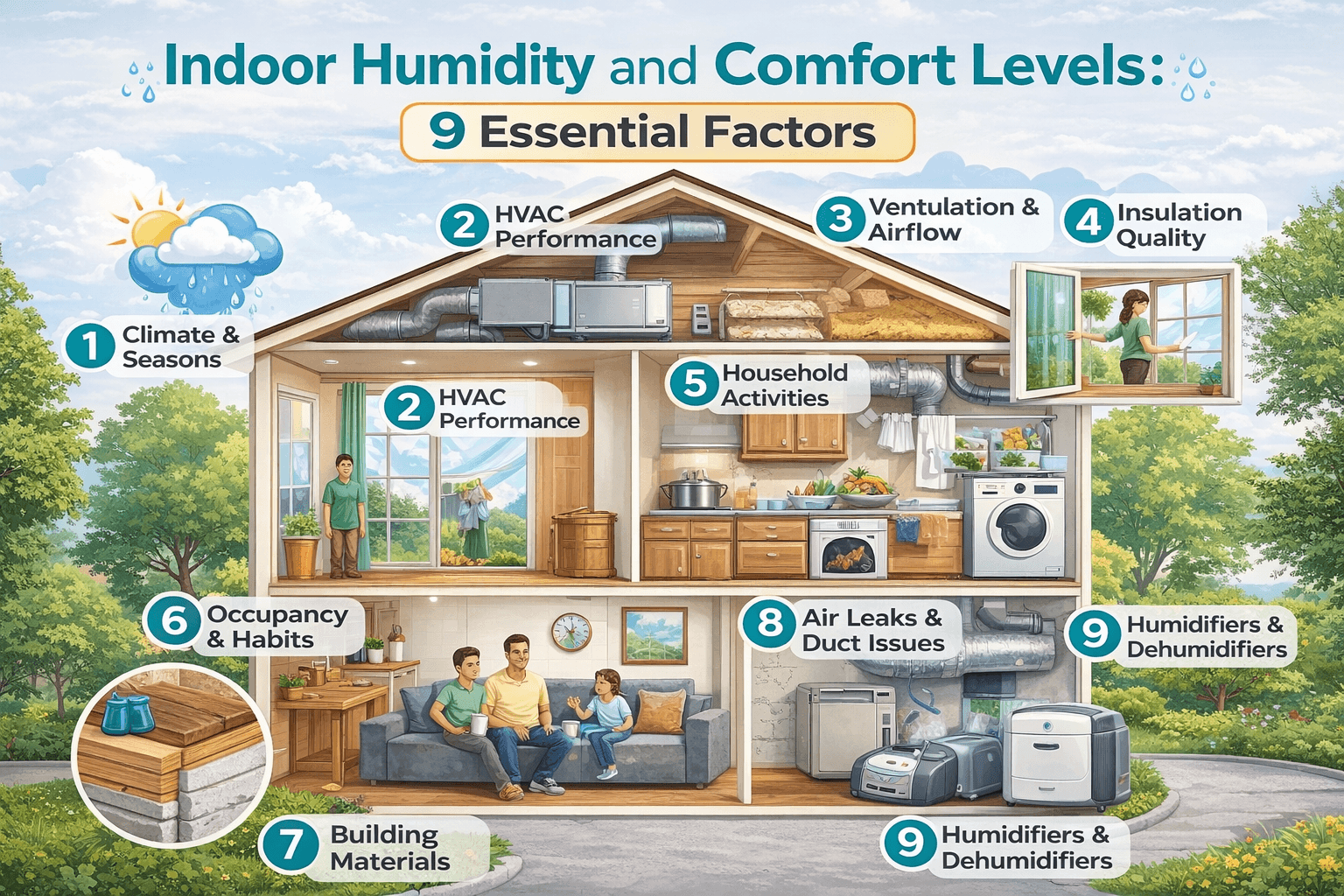
Below are nine key factors that directly influence Indoor Humidity and Comfort Levels in homes, offices, and commercial buildings. By understanding how each one impacts your indoor environment, you can take proactive steps to create a more comfortable, efficient, and healthier space.
1. Climate and Seasonal Changes
One of the most influential factors affecting Indoor Humidity and Comfort Levels is the outdoor climate and how it shifts throughout the year. Your home or building does not exist in isolation; it constantly interacts with external weather conditions. Temperature, rainfall, regional humidity patterns, and seasonal transitions all directly shape Indoor Humidity and Comfort Levels, sometimes in subtle ways and other times dramatically.
In naturally humid climates, especially in coastal or tropical regions, outdoor air already contains high levels of moisture. When this air enters a home through ventilation systems, open doors, windows, or small structural gaps, it raises indoor moisture levels. If not properly managed, this can lead to elevated humidity that disrupts Indoor Humidity and Comfort Levels, making rooms feel sticky, heavy, and uncomfortable. High humidity also reduces the body’s ability to cool itself through evaporation, which can make even moderate temperatures feel warmer than they actually are.
During the summer months, rising outdoor temperatures increase the air’s capacity to hold moisture. This often results in higher indoor humidity unless air conditioning systems are properly sized and functioning efficiently. If cooling systems are inadequate or poorly maintained, Indoor Humidity and Comfort Levels can quickly become unbalanced, leading to condensation on windows, damp odors, and potential mold growth. ikeuchi
In contrast, colder seasons bring a different challenge. Winter air is typically much drier because cold air holds less moisture. When this dry air enters a home and is heated, humidity levels can drop significantly. As a result, Indoor Humidity and Comfort Levels may shift toward excessive dryness. This can cause dry skin, irritated sinuses, static electricity, and even cracking in wooden furniture or flooring. While the air may feel warm due to heating, low humidity can still create discomfort.
Seasonal transitions—such as spring and fall—can also cause fluctuations in Indoor Humidity and Comfort Levels. These periods often involve rapid changes in temperature and rainfall, making it harder to maintain consistent indoor conditions. Homes without proper insulation, ventilation, or humidity control systems may experience noticeable swings in moisture levels during these times.
Understanding how local climate and seasonal patterns affect Indoor Humidity and Comfort Levels allows homeowners and building managers to take proactive measures. Installing whole-home humidifiers for winter, using dehumidifiers during humid summers, maintaining HVAC systems regularly, and improving insulation and air sealing can all help stabilize indoor conditions year-round.
Ultimately, climate and seasonal changes are unavoidable, but their impact on Indoor Humidity and Comfort Levels can be effectively managed with the right strategies and equipment. By adapting to environmental shifts, you can maintain a consistently comfortable, healthy, and energy-efficient indoor space throughout every season.
2. HVAC System Performance
The performance and condition of your heating, ventilation, and air conditioning system play a central role in regulating Indoor Humidity and Comfort Levels. While many people associate HVAC systems primarily with temperature control, they are equally important for managing moisture inside a building. When functioning correctly, an HVAC system helps maintain balanced Indoor Humidity and Comfort Levels, ensuring that indoor air feels comfortable, fresh, and healthy throughout the year.
Air conditioning systems, for example, do more than cool the air. As warm indoor air passes over the evaporator coil, moisture condenses and drains away, effectively reducing indoor humidity. This dehumidification process is essential for stabilizing Indoor Humidity and Comfort Levels, particularly during hot and humid seasons. However, if the system is improperly sized, poorly maintained, or outdated, it may fail to remove sufficient moisture. An oversized air conditioner can cool a room too quickly without running long enough to extract humidity, leading to cool yet damp conditions that negatively impact Indoor Humidity and Comfort Levels. reddiservices
Heating systems also influence Indoor Humidity and Comfort Levels, especially during colder months. When indoor air is heated without additional humidity control, moisture levels can drop significantly. This creates overly dry air that can cause discomfort, respiratory irritation, and static electricity. In such cases, integrating a humidifier into the HVAC system can help restore balanced Indoor Humidity and Comfort Levels while improving overall comfort.
Ventilation is another critical function of HVAC systems. Proper airflow ensures that stale, moisture-laden air is replaced with fresher air, preventing humidity buildup in areas like kitchens, bathrooms, and basements. Without adequate ventilation, Indoor Humidity and Comfort Levels can quickly become unstable, increasing the risk of mold growth and poor air quality.
Routine maintenance is essential for preserving optimal Indoor Humidity and Comfort Levels. Dirty air filters restrict airflow, reducing system efficiency and limiting moisture control. Clogged condensate drains can prevent proper water removal, leading to excess indoor humidity. Regular inspections, filter replacements, and professional servicing help ensure that the system continues to regulate Indoor Humidity and Comfort Levels effectively and efficiently.
Advanced systems equipped with smart thermostats and humidity sensors offer even greater control over Indoor Humidity and Comfort Levels. These technologies monitor indoor conditions in real time and automatically adjust operation to maintain ideal moisture and temperature balance. By optimizing performance, they enhance comfort while reducing energy consumption.
In summary, HVAC system performance is one of the most significant factors influencing Indoor Humidity and Comfort Levels. A properly sized, well-maintained, and technologically optimized system not only controls temperature but also manages moisture, improves air quality, and ensures consistent indoor comfort throughout every season.
Learn more : 10 Ways to Improve AC Performance During Hot Summers
3. Ventilation Quality
Ventilation quality is a critical yet often underestimated factor influencing Indoor Humidity and Comfort Levels. While heating and cooling systems regulate temperature, ventilation determines how effectively moisture, airborne pollutants, and stale air are removed and replaced. Without proper ventilation, humidity can accumulate indoors, creating conditions that disrupt Indoor Humidity and Comfort Levels and compromise overall air quality.
Everyday activities continuously generate moisture inside a home or commercial building. Cooking, showering, washing dishes, doing laundry, and even breathing release water vapor into the air. In tightly sealed modern buildings designed for energy efficiency, this moisture has fewer escape routes. If ventilation is inadequate, excess humidity lingers, gradually raising moisture levels and negatively affecting Indoor Humidity and Comfort Levels. Over time, this can lead to condensation on windows, damp odors, peeling paint, and even mold growth in hidden areas.
Bathrooms and kitchens are especially high-moisture zones. Without properly functioning exhaust fans, steam and humidity remain trapped indoors. High humidity in these areas can quickly spread to adjacent rooms, disturbing overall Indoor Humidity and Comfort Levels throughout the building. Installing and regularly maintaining exhaust systems ensures that moisture is effectively removed at its source before it spreads.
Natural ventilation, such as opening windows and doors, can also influence Indoor Humidity and Comfort Levels, depending on outdoor conditions. In dry climates, fresh air can help balance moisture levels. However, in humid environments, bringing in outdoor air without proper filtration or conditioning may worsen indoor humidity problems. Therefore, controlled ventilation systems are often more effective at maintaining stable Indoor Humidity and Comfort Levels.
Mechanical ventilation systems, including energy recovery ventilators (ERVs) and heat recovery ventilators (HRVs), are designed to improve airflow while managing moisture exchange. These systems help regulate Indoor Humidity and Comfort Levels by transferring heat and, in some cases, moisture between incoming and outgoing air streams. This process improves indoor air circulation without causing drastic humidity fluctuations or energy loss.
Poor ventilation not only disrupts Indoor Humidity and Comfort Levels, but it can also reduce overall comfort by trapping odors, allergens, and airborne contaminants. Excess humidity combined with limited airflow creates an environment where mold spores, dust mites, and bacteria can thrive. By improving ventilation quality, homeowners and building managers can stabilize Indoor Humidity and Comfort Levels, enhance respiratory comfort, and promote a healthier indoor environment.
Ultimately, proper ventilation serves as the backbone of moisture control. By ensuring consistent air exchange and removing excess humidity at its source, you can maintain balanced Indoor Humidity and Comfort Levels year-round while supporting both structural integrity and occupant well-being.
4. Insulation and Air Sealing
Insulation and air sealing play a fundamental role in maintaining stable Indoor Humidity and Comfort Levels. While many people associate insulation primarily with temperature control, it also has a significant impact on moisture regulation. A properly insulated and well-sealed building envelope helps prevent unwanted air exchange, which directly supports balanced Indoor Humidity and Comfort Levels throughout the year.
When a home has gaps, cracks, or poorly sealed joints around windows, doors, attics, or ductwork, outside air can easily enter. In humid climates, this allows moist air to infiltrate indoor spaces, raising humidity levels and disturbing Indoor Humidity and Comfort Levels. In colder regions during winter, dry outdoor air can enter and reduce indoor moisture, leading to overly dry conditions that affect comfort and air quality. These uncontrolled air leaks make it difficult to maintain consistent Indoor Humidity and Comfort Levels, regardless of how efficiently your HVAC system operates.
Insufficient insulation can also create temperature variations across walls, ceilings, and floors. When warm indoor air comes into contact with cold, poorly insulated surfaces, condensation can form. Over time, this moisture buildup can damage drywall, promote mold growth, and weaken structural components. Such issues not only disrupt Indoor Humidity and Comfort Levels, but also pose long-term risks to the building’s durability and indoor health.
Proper insulation acts as a barrier that slows heat transfer and reduces the likelihood of condensation. By maintaining more consistent surface temperatures, it helps stabilize Indoor Humidity and Comfort Levels and prevents moisture from accumulating in hidden areas such as wall cavities or attics. High-quality insulation materials, combined with vapor barriers when appropriate, create a more controlled indoor environment.homeenergysaveuk
Air sealing further enhances Indoor Humidity and Comfort Levels by minimizing drafts and uncontrolled airflow. Sealing gaps around plumbing penetrations, electrical outlets, duct connections, and window frames reduces unwanted moisture exchange. This allows humidity control systems and HVAC equipment to operate more effectively, since they are not constantly compensating for external air intrusion.
In energy-efficient buildings, the combination of proper insulation and thorough air sealing is essential for preserving balanced Indoor Humidity and Comfort Levels. It reduces energy waste, enhances temperature stability, and ensures that indoor moisture remains within the recommended range. Ultimately, investing in insulation upgrades and professional air sealing is not only about lowering utility bills—it is a key strategy for maintaining long-term comfort, structural integrity, and healthier indoor air.
5. Household Activities
Everyday household activities are a surprisingly significant factor that affects Indoor Humidity and Comfort Levels. While we often think of heating, cooling, and ventilation as the main drivers of indoor comfort, daily routines such as cooking, cleaning, showering, and laundry introduce considerable amounts of moisture into the air. Without proper management, these activities can create fluctuations in Indoor Humidity and Comfort Levels, making spaces feel uncomfortable or even unhealthy. ikeuchi
Cooking, for example, generates steam from boiling, simmering, and dishwashing. This added moisture increases indoor humidity, which can make rooms feel warmer and heavier than they actually are. Similarly, showers and baths release large amounts of water vapor, particularly in bathrooms with inadequate exhaust ventilation. Over time, this accumulated moisture can spread to adjacent rooms, impacting Indoor Humidity and Comfort Levels throughout the home.
Laundry and dishwashing also contribute to indoor moisture. Hot water use in washing machines and dishwashers produces steam that, if not vented properly, raises humidity levels and may cause condensation on walls or windows. Even seemingly small sources of moisture, such as indoor plants or aquariums, add to the overall humidity load.
Occupants themselves contribute to indoor humidity as well. Human respiration and perspiration release water vapor into the air, which can accumulate in spaces with limited airflow. In homes or buildings with multiple occupants, these natural contributions can meaningfully influence Indoor Humidity and Comfort Levels over time.
To mitigate the impact of household activities on Indoor Humidity and Comfort Levels, proper ventilation is key. Exhaust fans in bathrooms and kitchens, opening windows when outdoor conditions allow, and using dehumidifiers in high-moisture areas help maintain balanced indoor humidity. Even simple practices, such as covering pots while cooking or running bathroom fans during showers, can reduce excessive moisture buildup. ncbi
Ultimately, awareness of how everyday activities contribute to indoor moisture is critical for maintaining stable Indoor Humidity and Comfort Levels. By combining routine habits with proper ventilation and humidity control strategies, homeowners can protect both comfort and indoor air quality year-round.
6. Number of Occupants
The number of people living or working in a space is a surprisingly impactful factor when it comes to maintaining Indoor Humidity and Comfort Levels. Every individual contributes moisture to the indoor environment through natural processes like breathing, perspiration, and even everyday activities. In spaces with higher occupancy, this added humidity can accumulate quickly, affecting overall comfort and air quality if not properly managed. reddiservices
Human respiration alone releases water vapor into the air. In a single room with multiple occupants, this can noticeably increase indoor humidity over time. Perspiration, especially in warmer conditions or during physical activity, adds additional moisture to the air. Over the course of a day, these contributions can significantly influence Indoor Humidity and Comfort Levels, particularly in enclosed or poorly ventilated spaces.
High-occupancy environments such as offices, classrooms, gyms, or homes with large families often face challenges in balancing humidity. Without adequate ventilation and humidity control, moisture from occupants can combine with other sources—like cooking or showers—leading to excessive indoor humidity. This imbalance may result in discomfort, condensation on windows, or even the growth of mold and mildew, all of which disrupt Indoor Humidity and Comfort Levels.
Managing occupancy-related humidity requires a proactive approach. Properly sized HVAC systems, effective ventilation, and supplemental dehumidifiers can help mitigate the effects of high occupancy on Indoor Humidity and Comfort Levels. For example, ensuring that common areas or high-use rooms have sufficient airflow prevents localized humidity spikes and keeps the environment comfortable for everyone.
Even in residential settings, being aware of how occupancy impacts Indoor Humidity and Comfort Levels is important. During gatherings, events, or when multiple people are home for extended periods, small adjustments—like turning on exhaust fans or slightly increasing ventilation—can maintain balance.
In short, the number of occupants is a key factor that directly affects Indoor Humidity and Comfort Levels. By monitoring moisture contributions from people and adjusting ventilation and HVAC operation accordingly, it is possible to sustain a comfortable, healthy, and well-balanced indoor environment year-round.
7. Building Materials
The choice of building materials has a significant impact on Indoor Humidity and Comfort Levels, yet it is often overlooked. Different materials interact with moisture in distinct ways—some absorb water, some release it slowly, and others resist moisture entirely. These characteristics can either help stabilize Indoor Humidity and Comfort Levels or contribute to imbalances if not properly considered during construction or renovation.
Materials such as wood, drywall, and carpeting are hygroscopic, meaning they naturally absorb and release moisture depending on the surrounding environment. In humid conditions, these materials can trap excess moisture, raising indoor humidity and potentially making spaces feel damp and uncomfortable. Conversely, in dry conditions, they may release moisture, which can help mitigate low humidity but may also create inconsistent Indoor Humidity and Comfort Levels if the environment fluctuates frequently. sciencedirect
Concrete, brick, and stone, on the other hand, are less prone to moisture absorption but can still influence indoor humidity through condensation on cooler surfaces. For example, uninsulated concrete walls may collect moisture in humid climates, contributing to local humidity spikes that affect Indoor Humidity and Comfort Levels in the room.
The impact of building materials extends beyond walls and flooring. Insulation, ceiling materials, and even window frames play a role in how moisture is absorbed, retained, or blocked. Poor material choices or improper installation can create pockets of trapped humidity, increasing the likelihood of mold growth and reducing overall comfort.
To optimize Indoor Humidity and Comfort Levels, it is important to consider moisture-resistant materials, proper sealing, and the integration of vapor barriers where appropriate. Using engineered wood, treated drywall, or moisture-resistant flooring can help regulate indoor moisture and maintain more consistent humidity levels. Additionally, pairing these materials with effective HVAC systems and ventilation ensures that Indoor Humidity and Comfort Levels remain stable throughout seasonal changes.
In essence, building materials act as both a buffer and a source of moisture. Selecting and maintaining the right materials is a crucial step in achieving balanced Indoor Humidity and Comfort Levels, protecting the structural integrity of the building, and enhancing the comfort and health of occupants.
8. Air Leaks and Duct Issues
Air leaks and duct problems can significantly disrupt Indoor Humidity and Comfort Levels, even in homes with well-functioning HVAC systems. When conditioned air escapes through gaps in walls, ceilings, or ductwork, it allows unconditioned air from outside or unventilated spaces to enter. This uncontrolled airflow can introduce excess moisture or dry air, making it difficult to maintain stable Indoor Humidity and Comfort Levels.
Leaky ducts, in particular, are a common culprit. When air conditioning ducts are not properly sealed, cool, dehumidified air can escape before reaching its intended space, and warm, humid air can infiltrate the system. This not only reduces HVAC efficiency but also leads to inconsistent humidity levels in different parts of the building. Rooms near leaks may feel clammy, while other areas remain overly dry, creating discomfort and uneven Indoor Humidity and Comfort Levels.
Addressing air leaks and duct issues is essential for both comfort and energy efficiency. Sealing gaps, insulating ductwork, and repairing holes ensures that HVAC systems can operate as designed, maintaining consistent temperatures and controlled humidity. By minimizing unwanted air exchange, homeowners can stabilize Indoor Humidity and Comfort Levels throughout the home or commercial building. ikeuchi
Regular inspections and professional maintenance are key. Even small leaks in duct systems can have a cumulative effect on indoor humidity over time. By proactively repairing these issues, you not only improve Indoor Humidity and Comfort Levels but also reduce energy costs and extend the life of your HVAC equipment.
Learn more : 7 Reasons Your HVAC System Struggles During Extreme Weather
9. Use of Humidifiers and Dehumidifiers
Humidifiers and dehumidifiers are the most direct tools for managing Indoor Humidity and Comfort Levels. While HVAC systems influence humidity indirectly, these devices allow precise control over moisture, ensuring that indoor environments remain within the ideal 30–50% humidity range.
Humidifiers add moisture to dry indoor air, which is especially important during winter months when heating systems can cause excessively low humidity. Properly managed, they improve comfort, reduce static electricity, protect wooden furniture and flooring, and ease respiratory irritation. Conversely, dehumidifiers remove excess moisture in humid climates or during summer months, preventing the negative effects of high indoor humidity such as condensation, mold growth, and musty odors.
Using these devices strategically helps maintain consistent Indoor Humidity and Comfort Levels. For example, placing a dehumidifier in a basement prone to dampness or running a whole-home humidifier during dry winters can keep indoor air comfortable year-round. Many modern systems even allow automatic adjustment, responding to real-time humidity readings to maintain optimal balancetfa-dostmann
Ultimately, humidifiers and dehumidifiers empower homeowners and building managers to fine-tune Indoor Humidity and Comfort Levels, complementing HVAC systems and ventilation strategies. By using these tools effectively, it is possible to create a healthier, more comfortable indoor environment while protecting property and enhancing energy efficiency.
Conclusion
Maintaining balanced Indoor Humidity and Comfort Levels is essential for creating a healthy, comfortable, and energy-efficient indoor environment. As we’ve explored, a wide range of factors—from climate and seasonal changes to HVAC performance, ventilation quality, insulation, household activities, occupancy, building materials, air leaks, and the use of humidifiers or dehumidifiers—directly influence how comfortable and safe a space feels.
By understanding the role each factor plays, homeowners and building managers can take proactive steps to stabilize Indoor Humidity and Comfort Levels year-round. This includes proper HVAC maintenance, improving ventilation, sealing leaks, selecting moisture-resistant materials, and strategically using humidifiers or dehumidifiers.
Ultimately, controlling indoor humidity is not just about comfort; it is about protecting the building structure, enhancing indoor air quality, reducing energy costs, and promoting long-term health and well-being. By addressing all the factors that affect Indoor Humidity and Comfort Levels, it is possible to create a consistently comfortable and resilient indoor environment for everyone.
